Back to Journal

SM Journal of Nursing

How to Teach Research to Millennial Nursing Students using Effective Teaching Strategies

[ ISSN : 2573-3249 ]

Abstract Citation Introduction Literature review Conclusion References
Details

Received: 17-Sep-2018

Accepted: 08-Oct-2018

Published: 12-Oct-2018

Shabana Ali*

Senior Lecturer in Adult Nursing, Buckinghamshire New University, UK

Corresponding Author:

Shabana Ali, Senior Lecturer in Adult Nursing, Buckinghamshire New University, Uxbridge, UK, Email: Shabana.Ali@bucks.ac.uk

Keywords

Nursing Research, Millennials, Learner Centred Strategies, Teaching Strategies

Abstract

Background: Teaching research to undergraduate nursing students is a challenging experience for nurse educators as it is viewed as complex and boring by students.

Method: A number of engaging learning activities were created to meet the challenges of teaching research to millennial students and these were designed around student characteristics.

Results: The teaching and learning strategies were effective in engaging students in understanding research. The activities were fun, exciting and experiential students took ownership of their learning.

Conclusion: It is important to consider student characteristics and learning styles as well as their past experiences when designing teaching and learning activities.

Citation

Ali S. How to Teach Research to Millennial Nursing Students using Effective Teaching Strategies. SM J Nurs. 2018; 4(1): 1019.

Introduction

Teaching research is one of the most challenging subjects for educators in various disciplines due to the complexity of theoretical concepts. Additionally, negative attitudes are held by students who find research complex and boring [1]. Yet, evidence based practice is fundamental in the higher education curriculum for students nurses. A growing body of evidence suggests that graduates in nursing lack the confidence and ability to utilize research in their clinical areas [2]. There is some debate as to whether this may be due to how research is taught by faculty and consequently this has led to the emergence of innovative teaching and learning strategies, to break barriers and equip students with the knowledge, skills and confidence to become research literate.

Literature review

Research content is often described as academically abstract and challenging to teach [3]. The manner in which it is taught has implications for students. Moreover, student perceptions of research are that it is ‘boring, complex and difficult to understand’[4]. As a result students fail to recognize the correlation between research and practice [5]. Such beliefs need to be challenged and a positive attitude needs to be cultivated through engaging and meaningful teaching and learning. This is essential if students are to become research literate and equipped with research skills to support their practice [6]. Student characteristics should be carefully considered when planning learning strategies so that activities can be tailored to their needs which consequently may yield better results [7]. It is predicted that by 2025 millennials will make up 75% of the global workforce [8]. Millennials are described as the ‘first generation to have grown up with computers’ and are therefore ‘technologically advanced’. Millennials have a strong sense of self, are group focused and good at multitasking. They prefer ‘doing’ rather than’ knowing’[9]. Therefore the conventional pedagogy methods employed in higher education for example reading, lectures, and critiquing journal articles represent challenges to millennials and have little impact. Millennials prefer technology, collaboration, clarity, fun, excitement and experiential activities [7].

Student focused teaching strategies

A number of engaging learning activities were created to meet the challenges of teaching research to millennials. The first example which was implemented was a flipped classroom technique. In this strategy, the classroom is ‘reversed’; the teacher delivers the material before the class and class time is spent engaging students in active learning activities that include collaboration and interaction [10]. The students were provided material and questions on Randomised Control Trials (RCT) before the session. This allowed students to read the research method independently and digest a seemingly complex content. Class time was utilised to discuss RCT via socratic questioning and feedback was expressed via Padlet, an online collaborative tool that allows students to type their ideas/ feedback using their mobile phones. Other examples of student centred activities are word games and quizzes to check previous learning. Games are reported to be more ‘fun’ than a lecture [11] and can be used to reinforce research terminology [12]. An adapted form of charades was utilize to reinforce research terminology. This was achieved by dividing the class into two groups, whereby one member of each group sits on the hot seat facing their team; the lecturer writes a research terminology on the board behind the student and the rest of the team members provide verbal clues. This game instills a competitive edge, entertains and encourages teamwork as well as checking their understanding of the subject areas which may need a revisit. A class quiz was used to check learning using the Blockbuster template which can be found online. The students are divided into groups depending on size either two or more. The aim of the game is for one team to win by answering questions completing a path of hexagon tiles either vertically, horizontally and diagonally. A prize can be offered to the winning team. Classroom experiments also make the subject more stimulating for the students. The RCT lesson earlier also embedded an experiment to test the method. The class was randomly divided into control and treatment groups by students picking out a bag of two coloured sweets. The treatment group was provided with a wordlist of common language (Turkish or any other language which is not known to students) words and phrases to memorise for five minutes, whereas the control group was given nothing. At the end of five minutes, the wordlist was collected from the treatment group and a quiz was distributed to both groups. Another five minutes were provided for the class to complete the quiz based on Turkish words and phrases. The answers were read out and students marked each other’s work and added their scores, one point for each correct answer. The data was collected and a graph was created by students using Microsoft excel to display the results and a discussion followed. The students found it a fun and enjoyable experience to not only learn an unfamiliar language but to understand the process of RCT. This also enhances a deeper approach to learning rather than a surface approach to their understanding of the research method [13]. Experiments have been used as an innovative learning strategy that engage students and make a complex and boring subject more coherent and engaging for the students. Experiments have been reported in nurse education literature with examples of the infamous cookie experiment by Thiel in 1987 and more recently amended to music for online teaching. These inject fun and participation in the research process making it more easier to comprehend [14]. Lastly, the Poll Everywhere app was used to check understanding of subject matter either at the start of the lesson or at the end, questions were devised online with a yes/no, true/false categories for the students to answer via their mobile phone devices. The answers were displayed live in a Powerpoint slide.

Conclusion

Active learning can positively impact learning and empowers students. The discourse on teaching research focused on the need for new and innovative methods that are effective and help students develop an appreciation for research and equip them with skills and knowledge to foster research literacy. The flipped classroom approach appeared to be an effective and tested method that helped students takes ownership for their learning. The word game, quiz, experiment and polling app not only created ‘fun and excitement’ but also checked student understanding of research knowledge in a dynamic and experiential manner. It is important to consider the students’ characteristics, learning styles and past experiences when designing activities.

References

1. Jinks A, Ning M. Support for research. Nursing standard. 2010; 24: 61.

2. Callaghan L, Lea S, Mutton L, Whittlesea E. Enhancing health students’ understanding of generic research concepts using a web-bases video resource. Nurse education in Practice. 2011; 11: 375-379.

3. Tetley J, Glover J. Use of experiential methods to teach research in a pre-registration nursing curriculum. Nurse Education Today. 1999; 19: 633-638.

4. Liou S, Cheng C, Tsai H, Chang C. Innovative strategies for teaching nursing research in Taiwan. Nursing Research. 2013; 62: 335-343.

5. Meeker M, Jones J, Flanagan N. Teaching undergraduate nursing research from evidence based practice perspective. J Nurs Educ. 2008; 47: 376-379.

6. Zhang Q, Zeng T, Chen Y, Li X. Assisting undergraduate nursing students to learn evidence based practice through self-directed learning workshop strategies during clinical practicum. Nurse Education today. 2011; 32: 570-575.

7. McCurry M, Martins D. Teaching undergraduate nursing research: A comparison of traditional and innovative approaches for success with millennial learners. J Nurs Educ. 2010; 49: 276-279.

8. Loflin J. Millennials Don’t Want Work Life Balance. https://www.linkedin.com/ pulse/millennials-dont-want-work-life-balance-jones-loflin Published 2015 (Accessed 26.4.15).

9. Broom C. Entice, engage, endure: adapting evidence based retention strategies to a new generation of nurses. J Healthcare Leadership. 2010; 2: 49-60.

10. Mok H. Teaching tip: The flipped classroom. J Information Systems Educ. 2014; 25: 7-11.

11. Brook field S. Powerful techniques for teaching in the lifelong learning. Maidenhead: Open University Press; 2013.

12. Philips R. Creative classroom strategies for teaching nursing research. Nurs Educ. 2014; 39: 199-201.

13. Lublin J. Deep, surface and strategic approaches to learning.

14. Sternberger C. The Great Music experiment. Nurse Educ. 2002; 27: 106-108.

Other Articles

Article Image 1

Quality Improvement within an Academic-Community Partnership

As many researchers know, accessing your targeted population is imperative when doing personcentered research. After moving to a new area of the country and accepting a faculty position at a local university, my first priority was gaining access to local nursing homes for my recently funded research study. With this in mind, I called and scheduled introductory meet-and-greet meetings at several local nursing homes. These meetings led to the 2011 formation of the Geriatric Interest Group of Spokane or GIGS.

Neva L Crogan


Article Image 1

Virtual Online Orientation for a Graduate Nursing Program: A Process in Evolution

Background: The College of Nursing (CON) at a particular university admits over 500 students to the online graduate nursing program over three semesters in one year. To overcome the logistics and expense of on-campus orientation, the CON transitioned to a mandatory online orientation using the university’s learning management system.

Methods: Orientation was held through a course site which culminated in a live webinar experience. The course included content traditionally delivered during on campus orientation. During the webinar, faculty presented a coursework overview and allowed students feedback.

Results: Based on student feedback, changes were implemented to decrease limitations and weaknesses. Mandatory modules and quizzes were instituted in the course. Students received a webinar invitation after completing module content and earning 100% on quizzes.

Conclusion: The virtual orientation process resulted in decreased expenses and logistical concerns, increased student and faculty satisfaction and appropriate participation in the webinar.

Tracey Taylor-Overholts*, Heather Hall, and Todd Harlan


Article Image 1

Clinical Lumbar Instability: Part I

Low Back Pain (LBP) continues to be a major health problem and economic burden worldwide. The heterogeneous condition of LBP is categorized into subgroup. One significant subgroup of LBP is clinical lumbar instability.

Rungthip Puntumetakul


Article Image 1

Leadership Development and Personal Development: Is there a Connection?

Leaders play a critical role in leading an organization. May it be the direction of success or failure, onus for the results ultimately lies on the organizational leader. Hence it becomes imperative for the behaviors of these individuals in leadership positions to be closely tied to the future of the organizations they lead. Every human being is not equipped with leadership qualities and hence the need for aspiring leaders around the world to go to school to learn to be leaders. Therefore it is important to emphasize the impact of the role of personality traits and development as it encroaches itself upon the development of a leader.

Amita Avadhani


Article Image 1

Effect of a Self-Instruction Package on Cognitive Performance among Egyptian and Saudi Pediatric Nursing Students

Nursing educators should recognize the need to develop innovative teaching strategies that would enhance student learning. Aim: The study aimed to evaluate the effect of applying a self-instruction package on cognitive performance among pediatric nursing students in Egyptian and Saudi settings. Methods: This quasi-experimental study was carried out at the Faculty of Nursing, Cairo-University, Egypt and the College of Nursing, Hail University, Kingdom of Saudi Arabia (KSA) on a sample of convenience of 100 Egyptian and 90 Saudi nursing students. A self-instruction unit addressing lower respiratory infections, especially pneumonia was prepared and applied. The effectiveness was measured through pre-post-testing. Results: The results showed that the students in both samples had high levels of success in the posttests reaching in total 99.0% in the Egyptian sample and 100.0% in the Saudi sample. The lowest level of success in both samples were in the “compare” level of knowledge, 91.0% and 94.4% in the Egyptian and Saudi samples, respectively. As for the rates by question type, it reached 100.0% for “MCQ” and “list” types in both samples. Saudi students had significantly higher scores in the “know” level of knowledge (p=0.04), and in the “list” (p=0.02) and “compare/match” (p=0.004) types of questions, but with no statistically significant difference in total score (p=0.20). In multivariate analysis, the module was the main statistically significant independent positive predictor of the knowledge score improvement at all levels of knowledge. The Egyptian nationality was a positive predictor for the “know” and “analyze” levels. Meanwhile, the female gender was a positive predictor of the “apply” level of knowledge. Additionally, the Egyptian nationality was a positive predictor for the “MCQ” and “list” types. Conclusion: the self-instruction package is effective in improving the cognitive performance of nursing students in Egypt and Saudi Arabia in all cognitive levels and used various types of questions. The study recommends the use of the package in nursing schools, and development of similar ones in different topics.

Azza Abdel Moghny Attia* and Eman Abdel Fattah Hassan


Article Image 1

Assess patient

This research attempts to measure patient’s satisfaction of nurses working in counseling and nursing services centers under supervision of the Shahid Beheshti University of Medical Sciences. To do so, a descriptive and inferential study is conducted, in which 202 patients in such centers were surveyed. Cluster sampling was used to choose the sample. Moreover, a standard questionnaire was used to conduct survey. Thus, expert validity was checked and test retest method’s result was 0.73. Results showed that most of the patients (55.4%) were satisfied regarding nursing skills, and 73.3% were satisfied of emotional-communication aspects of the services. Regarding caring and training, 57.9% and 41.6% of the patients were almost satisfied of, respectively, nursing and training services. Moreover, emotional-communication and caring-training were significantly correlated. Results revealed that both of the mentioned aspects significantly affect patient’s satisfaction. However, home care services moderately satisfied the patients. Thus, it is highly advised that nurses pay attention to these two aspects in order to improve patient’s satisfaction.

Shokouh Kabirian Abyaneh¹ and Parvin Rezaei²*


Article Image 1

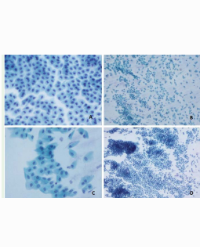
Collection Technique and Sample Processing for Impression Cytology of the Ocular Surface

Introduction: The impression cytology of ocular surface is a minimally invasive technique that allows the analysis of conjunctival and corneal cells, as an alternative to smears and punch biopsies. These specific guidelines will help health professionals, such as nurses and doctors, to ensure better samples of ocular surface without hurting patients, and will provide a new method of fixation for impression cytology of ocular specimens.

Objective: The aim of this study was to present a technique of collecting, fixing and staining for impression cytology of ocular specimens.

Materials and Methods: 50 samples of bulbar conjunctiva taken from 50 ESTeSL volunteers were analyzed. The material was collected on a strip of cellulose acetate from Millipore Corporation, then fixed on SureThin and stained with Papanicolaou stain. The slides were analyzed by three independent evaluators, using an evaluation grid with the following parameters: cell size, detail and nuclear membrane, detail and cytoplasmic membrane, ratio N / C and tinctorial affinity.

Results: The filter paper with apex helped to correctly position the paper in the eye and the procedure that was applied allowed an effective collection of cells with 50-70% of the filter surface being filled without the need for topical anesthesia. The SureThin fixative presented quality in cell preservation, in addition to being more economical. The Papanicolaou technique proved to be ideal in the coloring of ocular epithelial cells. This developed methodology presented a response of 80, 9% to a maximum score 2.

Conclusions: The presented method proved to be very effective in evaluating of ocular cell samples, while simultaneously proving to be a very cheap and comfortable technique for the patient.

Kátia Amaral Freitas and Paula Mendonça


Article Image 1

Application of the Omaha System in the Determination of Healthcare Needs of Individuals Receiving Home Healthcare Services

Home care services are generally provided to promote and protect an individual’s wellbeing or to restore his/ her to health either by health professionals or by family members in the person’s own home or the place where he/she lives. The aim of this study was to detect the needs of individuals receiving home healthcare and to create guidance data for initiatives to be planned for this purpose by demonstrating the availability of the Omaha system in determining the care needs of these people.

The sample of their search field of homecare services unit formed individuals (N=97). A total of 50 patients were included in the study. The data collection tools used in the study was the 5-item socio-demographic characteristics questionnaire and OMAHA Problem Classification Scheme (PCS).

According to the OMAHA PCS, 29 problems were identified. The problems identified, 49% were in the physiological domain, 28.8% in the health-related behaviors domain, 15.4% in the psychosocial domain and 6.8% in the environmental domain. With the nursing diagnoses, 2326 actual symptoms-signs were determined. It was determined that the OMAHA PCS could be used to identify healthcare needs of people receiving home care services.

Betül Aktaş¹, Medine Yilmaz², Nazife Kaplan³, and Banu Çankiri⁴


Article Image 1

Adverse Events on Hospitalized Patients: A Barely Known Reality

Introduction: Currently, the patient’s safety is a fundamental component of the health care quality, more specifically of the nursing care quality and it constituted a preoccupation to the hospital managers by the influence it has on the cost of the care. The incurrence of Adverse Events (AE) associated to the nursing care is underestimated in Portugal, not allowing a real knowledge about this issue.

Material and Methods: A descriptive study, cross-sectional and quantitative approach with a sample of 628 nurses, who work in 43 internment services at 8 Portuguese hospitals.

Results: The psychometric properties evaluation of the Subscale of Assessing Risk and Occurrence of Adverse Events, demonstrated its suitability to evaluate the phenomenon in study. The Risk/Occurrence of Medication Errors proved to be the typology of AE that occurs less frequently or which is less likely to occur (AE_7 M=2, 20). For its turn, the Risk/Occurrence of HCAI (Health Care Associated Infections) is the type of AE that showed a higher average value (AE_6 M=4, 21). The Risk of Falls and Pressure Ulcers is moderate (AE_8 M=3.07), but the Occurrence of Falls and Pressure Ulcers is low (AE_9 M= 2.33).

Conclusion: The characterization of AE associated to the nursing care in terms of typology and occurrence frequency is very relevant, allowing us to analyze its causes, to develop and implement corrective and preventive measures to minimize the damage and improve the patients’ safety.

Maria João Baptista dos Santos de Freitas PhD¹* and Pedro Miguel Dinis Parreira PhD²


Article Image 1

Experimentation of the FEHAP Quality Reference System in Initial and Continuous Training the Co-Author Learner in the Self-Assessment Process

Training organizations are invited to implement a quality approach and to demonstrate the quality of their training offer. Initiated since the Bologna agreements with regard to initial training and since decree 2015-790 of 30 June 2015 for continuing education, quality has become an unavoidable element. The challenge for the structures is to develop a quality culture by associating both their employees and their learners.

Sylvie LARSONNIER* and Franck CLUZEL