
Healthcare Access as a Determinant of Dengue Recovery: A Cross-Regional Study of Clinical and Hematologic Outcomes
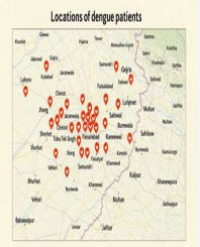
Background: Dengue fever remains a re-emerging threat to global public health, particularly in developing countries such as Pakistan, where inequalities in healthcare access influence disease outcomes. Aim: This study compared the clinical characteristics and hematology recovery patterns of dengue patients from urban and rural settings between 2020 and 2025. Method: A hospital based comparative observational study was conducted among 106 confirmed cases of dengue fever from four hospitals in Faisalabad (DHQ, Allied, Social Security, and Mujahid Hospitals). Clinical and hematological parameters, including platelet count(×10?/L), hemoglobin (g/dL), total leukocyte count (×10?/L), and differential white blood cell percentages, were collected at admission and discharge using structured perform as and hospital records. Data were analyzed using descriptive statistics and independent sample t-tests with a significance threshold of p < 0.05. Results: Urban patients showed higher mean platelet counts at admission compared rural patients (mean difference = 14,981 ×10?/L; 95% CI, 3,574–26,388; p = 0.03) while rural participants exhibited more stable leukocytes profiles. Male predominance was observed in both groups possibly reflecting occupational and environmental exposures. Although differences in packed cell volume, lymphocyte percentages and body temperature were noted, not all reached statistical significance. Conclusion: These findings suggest measurable disparities in dengue presentation and hematologic recovery between urban and rural populations in Pakistan, underscoring the need for improved surveillance and equitable healthcare access in rural regions. Graphical Abstract
Maryam Javed1, Muhammad Usman2, Khalid Hameed2*, Iqra Nawaz1, Pakeeza Ali1, Aleena Khadim1 and Zunaira Mubashir1