SM Dermatology Journal

Archive Articles

Article Image 1

Umbilical Melanoma: An Entity to Approach Thoughtfully: A Literature Review And Case Series

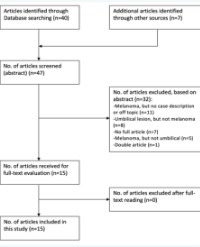
Umbilical melanoma is an extremely rare and underreported disease with a complex underlying anatomy and the requirement for a tailored, specific approach. Embryological remnants in this region render this tumor more prone to metastatic spread via these structures. Inadequate treatment of this specific tumor can therefore result in a more devastating prognosis. This makes a more radical approach, compared to other melanoma, a necessity. Our aim is to provide an in-depth inside into the unique characteristics of this disease, the underlying anatomy and pathophysiology, and the required approach in order to be able to adequately manage this tumor. In this respect, we performed a detailed literature search for this rare disease as well as presented a case series from our tertiary center.

Decraene Brecht1*, Stas Marguerite1,2 and Boecxstaens Veerle1,2

Article Image 1

GCProNet: Graph-Based Continual Prototypical Networks for Few-Shot Classification of Rare Skin Diseases

Prototypical networks have emerged as an effective approach for few-shot learn- ing, particularly in classifying rare skin diseases, by leveraging deep neural networks to create a feature space for classifying new, unseen classes. Nev- ertheless, obstacles such as the inability to fully retain or leverage long-term knowledge and inaccurate prototype estimation due to limited data reduce its ability to generalize well to new or unseen classes. To overcome these chal- lenges, we introduce GCProNet: Graph-Based Continual Prototypical Networks, a novel framework aimed at improving few-shot classification of rare skin dis- eases. GCProNet integrates support samples into the prototype network and captures the relational structure between these samples. The model transfers knowledge across tasks by adopting a continual learning strategy to improve classification accuracy. Initially, Convolutional Neural Networks extract fea- ture representations, which are then enhanced by graph-based techniques to capture dependencies among support samples. These graph aggregated features are preserved through Gated Recurrent Units (GRUs) to facilitate continuous task learning. The resulting expanded feature space, enriched by both previous task knowledge and relational dependencies, is subsequently utilized within the Prototypical Network to generate more precise class prototypes, particularly for challenging new and rare classes. Experimental results demonstrate that GCProNet surpasses existing models, achieving 80.5% accuracy on the ISIC 2018 dataset, 86.12% on the Derm7pt dataset, and 92.63% on the SD-198 dataset under 5-shot learning conditions. These results demonstrate the strong potential of GCProNet in enhancing skin disease classification when data availability is limited.

Abdulrahman Noman*, Zou Beiji*, Chengzhang Zhu, Mohammed Alhabib, Adnan Saeed and Raeed Al-Sabri