
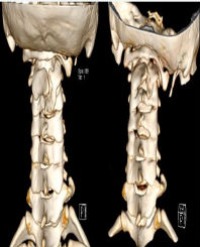
An Adolescent Refugee with Congenital Torticollis
A Burmese adolescent of refugee-background was referred to the paediatric refugee health service following resettlement with congenital right torticollis not previously investigated or managed. She was symptomatic with facial asymmetry, intermittent right-sided neck pain, paraesthesias and reduced strength distally in her right upper limb. Investigations subsequently diagnosed a congenital complex cranio-cervical junction abnormality with atlantoaxial instability. Other skeletal anomalies were also detected, however no underlying genetic cause has been identified. Presumption of benign torticollis was perpetuated by communication challenges due to limited interpreter availability for primary language, interrupted education and low health literacy. The resultant delay in diagnosis and management has had negative health consequences including concerns around adequate informed consent for surgical intervention. Adolescence is a high-risk time for diagnosis and management during transition to adult hospitals and/or primary care, requiring coordination of care across jurisdictions. Risks in the transition period to adult services for this adolescent were amplified, requiring paediatric advocacy for safe linkage and resettlement assessment.
Claire Breidahl1, Avisha Hamilton2,3 and Sarah Cherian3-6*