SM Journal of Pulmonary Medicine

Archive Articles

Article Image 1

Home-Based System for Recording Pulmonary Function and Disease-Related Symptoms in Patients with Chronic Obstructive Pulmonary Disease, COPD - A Pilot Study

Introduction: Many patients with Chronic Obstructive Pulmonary Disease (COPD) suffer from acute exacerbations characterized by an increase in symptoms beyond normal day-to-day variation. The prognosis of patients with frequent exacerbations is poor and effort to curb these worsening episodes has great potential to improve the patient’s quality of life and to reduce associated costs. Telemonitoring has been proposed as a promising strategy in this respect. However, information on what physical signs or symptoms that should be recorded and how recorded data should be interpreted is largely missing in the literature.

Methods: A new home-based system, based on a tablet computer, which can guide COPD patients to perform spirometry (inspiratory capacity, IC and forced expiratory volume in one and six seconds, FEV1 and FEV6) and record symptoms (COPD assessment test, CAT) was developed. The system was evaluated for 8-12 weeks in four patients with moderate to severe COPD with the aims to; i) assess the feasibility of the system to be used unsupervised by COPD patients and, ii) to evaluate the quality and ability of recorded parameters to reveal early signs of an exacerbation. Pearson bivariate correlation was performed between all outcome measures and descriptive information about inherent subject properties were presented.

Results: The system was well accepted by all study subjects and the study generated a total of 253 measurements of which 94.5% were considered acceptable for analysis. One of the subjects developed an acute exacerbation towards the end of the study, whereas the other three subjects remained stable. Descriptive analysis of the data suggest that trends in the CAT score may indicate changes in health status and that IC tends to be more responsive to these changes compared to FEV1.

Conclusion: The system developed in this study is well suited to be used unsupervised by COPD patients. Recorded data, in particular CAT, may be sensitive enough to detect early signs of an acute COPD exacerbation, although more data is needed to fully resolve the nature of such an association.

Ohberg F¹*, Karin Wadell², Anders Blomberg³, Kenji Claesson⁴, Urban Edstrom⁵, and Asa Holmner⁶

Article Image 1

Diaphragmatic Surgery in Patients with Advanced-Stage Ovarian Cancer: A Literature Review

Surgical management of advanced-stage ovarian cancer can require diaphragmatic surgery to achieve complete cytoreduction. If complete cytoreduction can be accomplished with the use of this procedure, it is conceivable that benefits in clinical outcomes may be offered to patients with aggressive, advanced ovarian cancer. Diaphragmatic surgery increases the rates of optimal primary debulking surgery and improves survival with an acceptable and manageable morbidity rate. The aim of this review is to evaluate the role of diaphragmatic debulking in the natural history of advanced-stage ovarian cancer and its survival benefit and the assessment of the relative post-operative complications.

Olivia Ionescu¹, Nicolae Bacalbasa²*, Paris Ionescu³, and Irina Balescu⁴


Article Image 1

Improvement in Exercise Capacity after Inspiratory Muscle Training is Related to Increased Calf Blood Flow during Inspiratory Load in COPD

Objective: Inspiratory Muscle Training (IMT) used in isolation confer several clinical and physiologic benefits in patients with Chronic Obstructive Pulmonary Disease (COPD). We investigated if improvement in exercise tolerance in COPD patients after IMT would be related to a possible increase in Calf Blood Flow (CBF) during Inspiratory Resistive Load (IRL).

Methods: Patients performed IMT (30% of maximal inspiratory pressure; MIP) using a pressure threshold device 30 min/day, 7 times/week, during 8 weeks. High intensity constant load cardiopulmonary exercise test and CBF measurements during IRL (60% of MIP until exhaustion) by venous occlusion plethysmography were evaluated before and after training. Patients were classified as “improvers” if presented the minimum clinically important improvement in exercise tolerance (Tlim) of 33% after IMT.

Results: Seven patients completed the full training period (8 wks) and performed all study evaluations (65.3±9.7yr; FEV1= 41±17%pred; MIP=97±34cm H2O). Three patients were considered “improvers”. There was no difference in baseline characteristics between groups (p>0.05). “Improvers” tended to reduce exercise dyspnea at isotime (p =0.056) and significantly improved their CBF during IRL protocol after IMT compared to “non-improvers” (p=0.015).

Conclusion: Patients who improved Tlim after IMT significantly increased their CBF during IRL compared to “non-improvers”.

Marina Axmann de Castro¹, Luiz Felipe Fröhlich¹, Gaspar R Chiappa², Marli M Knorst¹,³, J Alberto Neder⁴, and Danilo C Berton¹,³*


Article Image 1

Bilateral Congenital Choanal Stenosis and Changes in Sleep: A Case Report

Congenital choanal stenosis as a risk factor for the syndrome of Upper Airway Resistance (UARS) is not well described. The report case aim is to analyze disorders of sleep microstructure in a patient with choanal stenosis and UARS.

Man, 22 years, mouth breathing, with diagnosis of allergic rhinitis, Attention Deficit Hyperactivity Disorder and insomnia. Adenoid face, tonsils 2 + / 4 by Brodsky Classification, Modified Mallampati 1, high-arched palate, no craniofacial deformities. Obese Grade 1, 40cm of neck circumference, 98cm of waist circumference. Nasal endoscopy with bilateral choanal stenosis without other malformations. Epworth Sleepiness Scale = 2. In Polysomnography (PSG), there were null AHI, 9/h of respiratory disturbance index, by elevated RERA index. No oxyhemoglobin desaturation, reduced sleep efficiency, reduced percentage of REM sleep. Increased arousal rate (16/h), nasal cannula with permanent flattening of the curve and Cyclic Alternating Pattern (CAP) in stage 2 non-REM sleep.

The congenital bilateral nasal stenosis undiagnosed in the neonatal period is relevant. The consequence of this adaptation to airflow limitation in the upper airway is noticed by the adenoid face, neuromuscular and cognitive changes. Nasal flow is not well defined as a risk factor for Obstrutive Sleep Apnea Disorders. Also it is not related to significant oxyhemoglobin desaturation, or apnea / hypopnea. However, it can improve CPAP adaptation. The microstructure of sleep shows arousals and CAP. The later is an event of cerebral electrical activity with periods of activation and inhibition during the second phase of non-REM sleep. It’s a partial activation of the brain and indicates instability of sleep, being related to reduce quality of sleep and also insomnia. It’s possible that the increased number of awakenings compromises REM quality and quantity, causing a possibly non-restorative sleep and sleep fragmentation.

CAP inclusion in AASM manual may increase PSG sensitivity and diagnosis neglected disorders

Araujo-Melo MH¹,²*, Neves DD¹,³, Joffily L², Migueis DP¹, Rodrigues FA², Lemes LNA⁴, and Bilouro PVS¹


Article Image 1

Pulmonary Rehabilitation and BODE Index in Patients with COPD

The BODE index is an important component that assesses the systemic manifestations of COPD. Patients with this disease have impaired quality of life; an important component that measures the quality of life is the SF-36 Questionnaire. This study aimed to verify the changes of the index BODE occurred in the period of 1 year in Pulmonary Rehabilitation and current analysis of their quality of life. The study was attended by ten patients with COPD in staging me, II, III and IV, of both gender, average age 71.6 ± 9.1, participants of the PRP in the period of 1 year. The results showed that BMI, BDI and DP6 had a small increase, the FEV1 and handgrip a small reduction, but without significant difference. The index BODE and values on the scale of the MMRC decreased, but this decline is a factor for improvement. Patients with severe disease III and IV received greater airflow obstruction, BODE index higher quality of life and more damaged. Reconnecting the index BODE with areas of the SF-36 Questionnaire, we found that the larger the field SA, the more peripheral muscle strength, and how much better mental health, lower intensity of dyspnea. A lower score in the BODE index showed relationship with greater functional capacity. We conclude that patients with more advanced staging of the disease (III and IV) have bigger commitments spirometry and scores of the index BODE and impaired quality of life more than patient with staging II and I.

Adriane Muller Nakato¹, Mauricio Longo Galhardo¹, Darlan Muller Nakato¹, Bruna Rubi Ramires², and Márcia Maria Faganello¹*


Article Image 1

Pulmonary Vessels Remodeling in Chronic Obstructive Pulmonary Disease

Our aim was to measure the loss and the compliance of the pulmonary vessels in the different GOLD stages of COPD and to assess the relationship between these and the Pulmonary Artery Pressure (PAP). Patients affected by COPD with Pulmonary Hypertension (PH) (n=39, FEV1 39±15%, PaO2 60±12 mmHg, PaCO2 46±10 mmHg, PAP 33±8 mmHg) and without PH (n=39, FEV1 43±21%, PaO2 62±12 mmHg, PaCO2 39±9 mmHg, PAP17±5 mmHg) were studied in stable state and divided in three groups belonging to stage I-II, III and IV GOLD stage respectively. Each subset was compared to healthy people (n=13). PAP and pressure / flow relationship (PAP/Q) were measured by catheterization of pulmonary artery and effort test. Vessels loss was measured by perfusive scintigraphy. Lung vessels loss is significant even in former stages, showing a progressive trend (20±4, 28±4, 30±5 in stages I-II, III and IV resp.; 3±1% in healthy people (h.p.)) and a significant relationship with airways obstruction. In patients with PH it was higher even in I stage (30%). The apico-basal gradient of perfusion was significantly inverted (1.87±0.4 in COPD, 1.86±0.6 in COPD+PH and 0.625±0.2 in h.p.). Compliance was slightly higher in PH (PAP/Q= 1.8+1.2 mmHg/L/m vs 1.6+0.9 in COPD and h.p.). Vessels loss was found not to be significantly related to PH. Under effort higher pressures due to lesser vessel recruitment and a leftward shift of P/Q trace could be observed. Vascular rarefaction is an early feature of COPD. PH looks not dependent solely upon vessels loss but upon different pathways such as organic remodelling and vasospastic response to hypoxia.

Giuseppe Valerio¹*, Donato Lacedonia², Pierluigi Bracciale³, Anna Grazia D’Agostino⁴, and Fabio Valerio¹


Article Image 1

How to Minimize Wound Trauma in Single Incision Thoracoscopic Surgery

Single Incision Thoracoscopic Surgery (SITS) aims to provide effective surgical treatment for thoracic disease within the thoracic cavity; it strives to minimize access-related morbidity while maximizing the cosmetic advantage.

Hee Chul Yang¹*, Duk Hwan Moon¹, Jae Hyun Jeon¹, Moon Soo Kim¹, and Jong Mog Lee¹


Article Image 1

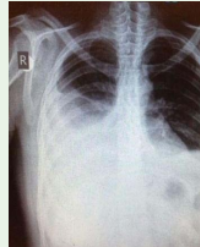
Extraordinary Presentation of an Uncommon Case for Thoracic Surgeons: Ovarian Hyperstimulation Syndrome

An isolated unilateral pleural effusion as the only presentation of Ovarian Hyperstimulation Syndrome (OHSS) is very rare. Here, we report an unusual case with an isolated unilateral pleural effusion without ascites after In-Vitro Fertilization (IVF) by ovarian stimulation with a review of the literature.

Deniz Gürer¹*, Rıza Serdar Evman¹, Erşan Demirag², and İrfan Yalçınkaya¹