Back to Journal

SM Journal of Medicinal Plant Studies

Ethno-Medicinal Survey of Indigenous Medicinal Plants used by the Local Population of Goleen Valley, Chitral, Pakistan

[ ISSN : 2638-4698 ]

Abstract
Details

Received: 31-Jul-2017

Accepted: 23-Sep-2017

Published: 28-Sep-2017

Hammad Ahmad Jan¹*, Samin Jan¹, Nadeem Ahmad², and Munazzah Aysha³

¹Department of Botany, Islamia College, Pakistan
²Department of Botany, University of Peshawar, Pakistan
³Department of Chemistry, Shaheed Benazir Bhutto Women University Peshawar, Pakistan

Corresponding Author:

Hammad Ahmad Jan, Department of Botany, Islamia College, Pakistan

Keywords

Ethnomedicinal study; Medicinal plants; Informant consensus factor; Goleen valley

Abstract

The study was conducted with the aim to document the indigenous practices of therapeutic plants of Goleen Valley, Chitral, Pakistan. Ethnomedicinal data was obtained from inhabitants of the area through face to face interviews and semi-structured questionnaires. To analyze data quantitatively, Familiarity index, Family Importance Value, Consensus-index, Informant consensus factor indices were applied. A total of 36 medicinal plants were documented. The recurring habit forms were herbs (53%), shrubs (25%), trees (19%) and climbers (3%). The most frequently utilizing plant part was the leaves (36%). The mode of preparation was dominated by decoction (26.19%). The Familiarity index value has been dominated by Zea mays (0.54), followed by Peganum harmala (0.46). Family Malvacea has the maximum FIV value (60.31). The value of “CI” was highest for Zea mays (++++). The ICF value was high for Muscu-skeletal disorders (0.818), next to it was digestive diseases (0.78) and Fever-malaria-typhoid (0.76). The present study shows that the practice of therapeutic plants for the cure of various diseases is still prevalent in the study area. The high degree of consensus among the local population reveals that the information/knowledge about the uses of therapeutic plants is still living in the study area. Therefore, awareness about the conservation of medicinal flora should be raised among the local communities.

Citation

Jan HA, Jan S, Ahmad N and Aysha M. Ethno-Medicinal Survey of Indigenous Medicinal Plants used by the Local Population of Goleen Valley, Chitral, Pakistan. SM J Med Plant Stud. 2017; 1(1): 1004.

Other Articles

Article Image 1

Activity Evaluation of Leaves’ Extracts of Funtumia Africana Stapf (Apocynaceae) towards Methicillin-Resistant Staphylococcus Aureus (MRSA) and Phytochemical Screening

Funtumia africana Stapf. (Apocynaceae) is among the diverse medicinal plants of Ivorian National flora used for several pathologies’ treatment. Complexity in curing some of the diseases associated with bacteria resistance, brought up inefficiency of a great number of current antimicrobial drugs. The present study evaluates the antibacterial activity of the crude extracts of the leaves of F.africana against methicillin-resistant Staphylococcus aureus. Additionally, secondary metabolites were screened out to discover new groups of molecular compounds responsible for specific activity. Bioassay experiments used were disk diffusion and Muller-Hinton broth dilution methods, to respectively determine the inhibition zone diameters and antibacterial key factors. As for the phytochemical investigation, test tubes colorimetric method was performed. Results showed that hydro-alcoholic and aqueous extracts of F.africana displayed strong activity with respective inhibition zone diameter comprised between 17.4 mm and 25.7 mm, and 16.7 mm and 19.7 mm. For both types of extracts, the Minimum Inhibition Concentration (MIC) varied from 0.046 to 1.56 mg/mL, demonstrating as a result, a bactericidal effect against the majority of strains tested. The current work, therefore justifies the use of F.africana as traditional medicine against bacterial infections

Kouadio NJ¹,²,⁴, BG Kipre¹,²,⁴*, Guessennd NK¹,³, Kouassi KA²,⁴, Yao K²,⁴, and Kone MW¹,²,⁴

Article Image 1

In-vitro Antimalarial and Antileishmanial Studies of Markhamia platycalyx Sprague Leaves

Bignoniaceae is rich in active metabolites and includes numerous genera of high economic and therapeutic values. One of these plants is Markhamia platycalyx. The petroleum ether fraction of the total ethanol leaf extract of M. platycalyx exhibited IC50 26760 ng/mL against Plasmodium falciparum D6 and 22430 ng/mL against P. falciparum W2 in the 2nd phase assay. It did not show any cytotoxic activity against the VERO mammalian cells, indicating the safety of the petroleum ether fraction. Additionally, the dichloromethane fraction of the same extract was the most active fraction against Leishmania donovani amastigotes in THP1 with 86% inhibition in the 1ry phase assay, which was higher than Amphotericin B.

Basma Khalaf Mahmoud¹, Ashraf Nageeb El-Sayed Hamed¹*, Mamdouh Nabil Samy¹, Amira Samir Wanas¹,², Mohamed M. Radwan², Mahmoud A. ElSohly²,³, Mohamed Salah Kamel¹


Article Image 1

Evaluation of the Differences in Morphometry and Biomass of Abelmoschus Esculentus (L.) Moench Cultivated under Three Conditions of Manuring in Abakaliki Peri-Urban Area, South-Eastern Nigeria

The difference in morphometry and biomass of Abelmoschus esculentus (Okra) cultivated under different conditions of manuring; cow dung, chicken droppings, NPK fertilizer and control was evaluated. The experiments were laid out in a Randomized Complete Block Design (RCBD) with three replications. The germination rate of Abelmoschus esculentus treated with three different manure showed that the highest percentage of germination rate was (97.66 ± 10.40 %) among those treated with NPK fertilizer followed by (93.23 ± 5.20 %) of those treated with cow dung, While the least was (61.66 ± 2.88 %) of the control. The morphometric parameters measured showed a significant increase in the height of okra among the treated groups than the control groups. The highest plant height was (73.10 ± 12.12cm) among the treatment group with the application of NPK fertilizer. The lowest plant height (51.21 ± 3.21 cm) was recorded among the control group. There was an increase in leaf length (26.24 ± 4.03cm) of NPK fertilizer than chicken dropping and cow dung but the lowest leaf length was observed among the control group with mean value of (23.01 ± 1.10 cm). The girth of okra showed a significant increase with the okra treated with chicken dropping, cow dung and NPK fertilizer. Hence the highest girth of (6.87 ± 0.34 cm) was recorded among the okra treated with NPK fertilizer. While the girth of those treated with cow dung (5.26 ± 0.81 cm) was higher than the girth (4.98 ± 0.54 cm) measurement of the control groups. There was a gradual increase in the leaf area of okra moving from control to the treatments. The highest leaf area was (48.72 ± 4.31cm) among the okra plant treated with NPK fertilizer while lowest leaf area was (36.31 ± 1.21 cm) among the control. There was a significant difference among the fresh weight and dry weight moving from the control to treatments. The biomass of okra had the highest (137.54 ± 73.30 cm) among the group treated with NPK fertilizer while a lower value of (101.45 ± 25.51 cm) was observed among those treated with chicken dropping. The results indicate that the growth parameter of the okra treated with NPK fertilizer had the highest growth in height, girth, leaf area and biomass. This is because of the essential nutrients contained in NPK fertilizer which are released more quickly and readily available for plants growth. Therefore, NPK fertilizer is recommended to farmers since its application boosts the yield performance of crops

Okereke CN¹*, Iroka CF², Doris CN³, Mediatrix NE³, Christiana NI³, and Ukpaka CG⁴


Article Image 1

Stevia Rebaudiana: A Potential Boon for Human Health

A high potency low calorie bio-sweetener “Stevia” has been grown in many countries around the globe for its sweetening and health promoting properties. Besides of making the world a sweeter place, stevia is well known for its efficient therapeutic and pharmacological agents. This review article summarizes the existing literature on nutritional, therapeutic and pharmacological properties of stevia and its metabolites to provide a baseline for new research on this phenomenal plant

Khazina Amin¹, Senay Ozgen¹, and Zeliha Selamoglu²*


Article Image 1

Ethnobotanical Study of Medicinal Plants used to treat Human Diseases in Enarj Enawga District, East Gojjam Zone, Amhara Region, Ethiopia

Background: Traditional plant remedies are still the most important sources of therapeutics for nearly 80% of the Ethiopian population. Like other communities in Ethiopia, traditional plant remedies play a vital role in the primary healthcare system of Enarj Enawga District, Amhara Region, Ethiopia. Thus, the aim of the present study was to document and analyze the use and conservation statuses of medicinal plants in Enarj Enawga District.

Methods: Ethnobotanical data were collected using semi-structured interviews, focus group discussions and field observations. Informant Consensus Factor (ICF), preference/priority ranking exercise and Direct Matrix Ranking (DMR) exercise were used to analyze the data.

Results: 111 medicinal plant species belonging to 97 genera and 50 botanical families were reported in the District. Asteraceae (9.01%) was found to be the most dominant plant family in the study area. Most of the medicinal plants belong to the herb (47.75%) and shrub (31.53%) categories. Roots (39.53%) and leaves (35.81%) were the most frequently used plant parts for the preparation of remedies. The study also revealed Securidaca longepedunculata as the most threatened medicinal plant in the District.

Conclusion: Although their future use is hampered by poor conservation practices, the diversity of medicinal plants and the associated indigenous knowledge is so immense in the District, promoting appropriate conservation strategy in the study area, Enarj Enawga District.

Yihenew Simegniew Birhan¹*, Sintayehu Leshe Kitaw¹, Yihalem Abebe Alemayehu¹, Nakachew Minuye Mengesha²


Article Image 1

Ethnobotanical Investigation of Traditional Medicinal Plants in Dugda District, Oromia Regio

Background: Ethiopia has rich flora with different plant species having medical importance in health care system based on local indigenous knowledge. Methods: Ethnobotanical data were gathered using semi-structured interviews, field observations and group discussions with local traditional medicine practitioners. Data were analyzed using descriptive statistics. Moreover, informant consensus factor, fidelity level, preference ranking were computed following standard procedures.

Results: Ethnomedicinal use of 88 plant species distributed in 81 genera and 47 families was documented. Highest number of species (6) was under family Fabaceae, Asteraceae, Euphorbiaceae and Solanaceae. Habit wise, 38.2% were herbs followed by shrubs (32.5%) tree species (22.8%) and climbers (3.3%). Plants were used mostly in fresh for remedy preparation. The most widely used method of preparation were pounding (44.1%),crushing (26.4%) and cooking/boiling (19.5%), were the major remedy preparation methods reported. Route of administration mainly oral followed by dermal. Malaria and headache, intestinal parasite, diarrhea, amoebiasis, and stomach ache and common cold and cough had the highest ICF value > 90.

Conclusions: Indigenous people of the study area have their own ways of managing health problems of human and livestock as they are endowed with specific culture, tradition and ethical norms. Biochemical profiles of plant species used for diseases categories of high ICF should be investigated for screening of the active principles.

Mekonen Wolditsadik Beyi


Article Image 1

Evaluation of morphological diversity promised Russian grapevine in Iran

Aim of study: The introduction of new varieties and its adaptation is one of the breeding programs.The aim of this study was to compare 50 qualitative and 8 quantitative traits of Russian grape cultivars at Grape Vineyard.

Area of study: Research Station grade1 Takestan, Qazvin, Iran

Material and method: Evaluation of 50 quality traits of grapes was done in 2014, 2015 and 2018 Study qualitative traits of the grape are in the growth stages of the grape tree, which are: bud, young shoot, young leaf, current year shoot, flower, full leaf, fruit and woody branch.Whole leaf with 16 traits and fruit with 14 traits had the highest traits and bud with 2 traits had the least traits.

Results: In the study of quantitative traits, spike(n) traits, yield, maturity fruit, soluble solids (Tss), acidity (Ph), total acid (Ta), seed(n) and seed(w) were measured. Analysis of variance showed that the effect of cultivar on all traits was slightly significant. Anapiski Ramphi and Epozoski Ramphi had the highest yield (34370 and 30980 kg / tod,).

Research highlights: Due to the fact that the performance attribute is indexed compared to other attributes, the Epozoski Ramphi cultivar, which has the highest value compared to other cultivars, is selected

Mahdi Tajalifar¹*, Jafar Ahmadi², Valiollah Rasoli³, Mohammad Mehdi Zarrabi⁴


Article Image 1

Effects of Seed Rate and Nitrogen Fertilizer Rate on Nutritive Value of Oat (Avena sativa L.) at Sirinka, Ethiopia

The present study was conducted to assess seed rate (SR) and nitrogen rate (NR) effects on nutritional quality of oat (Avena sativa L.) at Sirinka Agricultural Research Center, North Eastern Amhara, Ethiopia on July 2018. Levels of SR were 60, 80 and 100 kg/h and that of NL were 50, 100 and 150 kg/ha in the form of Urea (46% N). The experiment was conducted in a 3x3 factorial arrangement of treatments in a Randomized Complete Block Design (RCBD) with 3 replications giving a total of 27 plots, each measuring 2×1.4 m2 . Chemical composition for forage quality measurements were analyzed. Results showed that the interaction between seed rate and nitrogen rate had a significant (p<0.05) effect on almost all quality parameters measured. Increasing trend for crude protein content with increasing levels of seed rate and level of nitrogen were recorded, with the crude protein content ranging 7.4 to 8.6%. The NDF, ADF and cellulose contents ranged 51-58, 30-33 and 26-29%, respectively, and tended to increase with increasing seed rate and nitrogen rate of fertilization. Thus, high seed rate and nitrogen rate leads to improved forage quality. Generally, combination of 100 kg/ha seed rate and 150 kg/ha nitrogen recorded higher forage yield with higher quality and higher net return and benefit cost ratio (2.56) over rest of the combinations. Thus, seed rate of 100 kg/ha and nitrogen fertilizer rate of 150 kg/ha Urea can be recommended for better nutritional quality use by farmers in Sirinka area and other areas having similar agro-ecologies and soil type.

Yidersal Erega*, Fasil Nigusie and Getachew Animut


Article Image 1

Pollen morphology, in vitro germination and another culture of Coix lachrymal-jobi L cultivars

To identify ?the optimal in vitro conditions for pollen germination, anther culture and callus proliferation and differentiation of job’s tear (Coix lachrymal-jobi L) cv, features of pollen microspores at different flowering stages were observed, pollen germination conditions identified and anthers cultured to identify callus-forming and differentiating conditions. Pollen vigor and germination rates were determined and compared. Results showed that the late uni-, di- and tri-nucleate pollen grains were coexisting in the early flowering stage; and the pollen grains were homogeneously spherical and the vigor was the highest at the peak flowering stage. Single-tube pollen germination was observed. The optimal conditions for pollen germination was 10~15% sucrose + 0.01% boric solution at 25 for 5~7 hrs. The rates of callus induction from the late uninucleate anthers differed significantly among the cv. Calluses were successfully induced in the Murashige-Skoog medium+ 2, 4-dichlorophenoxyacetate1~2 mg/L + Kinetin1.5 mg/L. And some were differentiated into short cluster buds in the medium of Murashige-Skoog medium + indole-3-acetic acid 0.5 mg/L + Kinetin 2 mg/L. This represents the first report of the morphology, vigor, optimal germination conditions for pollen microspores of C. lachrymal-jobi L of this understudied and underutilized yet economically important food and medicine homologous crop

Guanrong Li¹*, Baohong Cao², Jie Feng¹, Wei Liu¹, and Yanyan Yin¹


Article Image 1

Plant miR157 inhibits the Proliferation of Hepatoma Cells HepG2 by Targeting MTDH

Background: MicroRNAs (miRNAs) play key regulatory roles as oncogenes or anti-oncogenes at the posttranscriptional level in human cancers. Plant miRNAs can regulate mammalian systems across kingdoms. The present study investigated the effects of plant miRNA157 (miR157) on the viability and proliferation of human hepatoma cells and the underlying mechanisms.

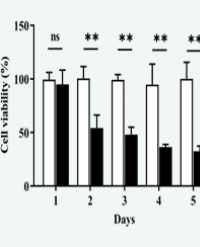
Method: The potential targets of miR157 were predicted by bioinformatics methods; the targeted regulatory relationship between miR157 and MTDH was detected by dual luciferase reporter assay; hepatoma cells HepG2 were cultured in vitro and divided into control group (transfected with negative control SNC mimics) and miR157 transfection group (transfected with miR157 mimics). After transfection, cell counting kit-8 and colony formation were used to detect cell proliferation ability, and RT-qPCR and Western blot were used to detect the effect of miR157 on MTDH expression in HepG2 cells.

Results: miR157 had an inhibitory effect on the proliferative capacity of hepatoma cells HepG2 (P<0.05); dual-luciferase reporter gene assay showed that MTDH is a target gene of miR157; miR157 could be directly targeted to down-regulate the expression of MTDH (P<0.01).

Conclusion: These preliminary pieces of evidence suggest that miR157 inhibits the proliferation of HepG2 cells by targeting MTDH.

Yang Lou, Shuyang Li, Jingling Li, Yutian Wang, Hongwei Xue, Juan Lu¹* and Xi Chen¹*