Back to Journal

SM Dermatology Journal

Efficacy of Lasers on Vascular Lesions and Rejuvenation

[ ISSN : 2575-7792 ]

Abstract
Details

Received: 16-Feb-2017

Accepted: 01-Apr-2017

Published: 05-Apr-2017

Maria Voyatzi*1 , Julia Grammatikopoulou1 , Eleni Karlafti2 , Androniki Mavroudi1 ,

Foteini Lamprou1 , Genovefa Kypri1 , Theodosia Gkentsidi1 and Maria Tsirmigka1

1Department of Dermatology and Venereology, Private office, Dermatologist-Venereologist, Greece

2Department of Internal Medicine, AHEPA Hospital, Greece

Corresponding Author:

Maria Voyatzi, private office,

dermatologist-venereologist,

kalamaria thessaloniki, 55132,

Greece, Tel: +302310443318;

Keywords

Telangiectasias; Hemangiomas; NdYAG laser; Fractional laser; Rejuvenation

Abstract

Our purpose is to study the efficacy of the NdYAG Laser (1064 nm) when treating telangiectasias and hemangiomas, and the efficacy of the NdYAG Laser and fractional laser on rejuvenation. We used data from our private office from the past five years (2011-2015). We also studied the side effects of the therapies. We treated 500 patients with telangiectasias and 300 patients with hemangiomas with NdYAG Laser. As far as telangiectasias were concerned, the results were much better when the face was treated. In contrast, the recurrence rates were much higher when the legs were treated. The results were impressive in almost all cases of cherry hemangiomas. The combination of NdYAG Lasers and fractional lasers on a monthly basis had satisfactory results in rejuvenation.

Citation

Voyatzi M, Grammatikopoulou J, Karlafti E, Mavroudi A, Lamprou F, Kypri G, et al. Efficacy of Lasers on Vascular Lesions and Rejuvenation.

SM Dermatolog J. 2017; 3(1): 1009.

Other Articles

Article Image 1

Melanoma Incidence Yesterday and Today - Where are we Going?

Skin cancer is the most common cancer in the United States of America, including melanoma and non-melanoma skin cancer. Malignant melanoma, being ranked as the fifth most common cancer within the US shows a yearly incidence of 73,870 cases and remains the most aggressive form of all skin cancers with a mortality rate of 2.7 per 100,000 [1,2]. Fortunately, over the last decade melanoma treatment options have tremendously improved. Progress in areas such as immunotherapy and targeted therapies has lead to increased melanoma survival rates, rising from 82% (1975-1977) to 93% (2004-2010) [3]. In consequence, the cost of skin cancer treatments, specifically for melanoma treatments increased from an average annual total cost of $864 million in 2002 to $3349 million in 2011 [4].

Yusuke Suita and Elisabeth M Roider*

Article Image 1

Targeted Molecular Therapies for Non-Melanoma Skin Cancer

Non-melanoma skin cancer (NMSC) is the most common cancer among Caucasian populations worldwide. More than 1 million new NMSCs are diagnosed each year, making it the most common cancer in the United States. Basal cell carcinomas (BCCs) account for about 80% of NMSCs, and most of the remainder are squamous cell carcinomas (SCCs) [1]. The treatment of advanced-stage NMSCs is challenging as surgical excision becomes impossible. Recent advances in the treatment of these tumors include targeted molecular therapies against epidermal growth factor receptor (EGFR) and hedgehog signaling pathway.

Nataliya Lutay*


Article Image 1

Nevus Spilus: A Review of the Literature

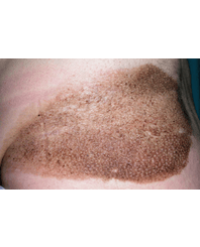
Nevus spilus (NS) is usually the term given to a pigmented skin lesion, either congenital or acquired, consisting of a large light tan patch, containing macules or papules. Usually, these superimposed lesions are numerous, small circumscribed, dark brown in color, flat or slightly raised. Nevus spilus can be seen anywhere on the body surface, but the most common location is on the chest and upper limbs. NS was first described by Burkley in 1842 as evenly pigmented patches and Ito and Hamado in 1952 were the first to apply the term NS to speckled lesions. For a long time, NS was believed to be a benign lesion. However, more than one case of melanoma arising in NS has been published. As a rule, NS is not considered a precursor of melanoma, but to this day, despite the wide range of publications, it is still necessary to clarify the relationship between NS and melanoma, in terms of the risk factors of turning malignant. We will describe the clinical features, the evolution and the management of NS, in view also of the recent genetic findings.

Maria Teresa Corradin1 , Veronica Cacitti2 , Erika Giulioni1 , Maria Martina Patriarca1 , Angelo Vettorello3


Article Image 1

A Woman with Hyperpigmentation of the Forehead

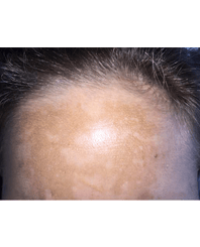
A 32-year-old woman presented with asymptomatic hyperpigmentation of her forehead cosmetically concerning to the patient. It worsened during summer months and lessened during the winter. It has been present for five years. Her medical history was significant for ADD managed with stimulants. She has been on the same estrogen/progesterone combination oral contraceptive for ten years. Physical examination revealed a tan, macular rash on forehead without raised borders or scale. Urine HCG was negative.

Jason Ramirez1*


Article Image 1

Lichen Simplex Chronicus: Easy Psychological Interventions that Every Dermatologist Should Know

Lichen Simplex Chronicus (LSC) is a chronic skin disease characterized by lichenified plaques, which occur as result of constant scratching or rubbing of skin. Pruritus is the predominant symptom that leads to the development of LSC. Frequent pruritus triggers include mechanical irritation, environmental factors, such as heat and sweating, and psychological factors, such as stress and anxiety.

From a psychodermatology point of view, the interruption of the never-ending itch-scratch cycle, which characterizes LSC, is of supreme importance for patient’s recovery. Furthermore, emotional tensions, as seen in patients with anxiety, depression, or obsessive-compulsive disorder, may play a key role in inducing a pruritic sensation, leading to scratching that can become self-perpetuating.

Referral to a psychiatrist or a psychotherapist might be required in many cases. However, this referral could be difficult in daily practice, given the patient’s unwillingness to seek mental health counseling. Therefore, the dermatologist should focus and be able to perform, at least at a very basic level, some easy psychological interventions that would help patients to end with the itch-scratch cycle, while helping the patients to accept the need to seek for mental help.

In this article, we describe easy cognitive behavioral techniques to address the factors that exacerbate and maintain itch-scratch cycle in LSQ patients. Moreover, we stress in the need that dermatologists should be trained in the usage of these techniques in order to help LSQ patients, especially when referral to a psychiatrist is hindered because of the patients’ reluctance of seeking mental help.

Julio Torales1*, Iván Barrios2 , Liz Lezcano3 and Beatriz Di Martino4


Article Image 1

Polymethyl Methacrylate Microspheres in the Treatment of Facial Rejuvenation: A Large Retrospective Series

Study Background: Soft tissue temporary and semi-permanent fillers continue to increase in popularity worldwide for facial rejuvenation. The study aims to review the cosmetic use and complication rate in large retrospective case series of Polymethyl Methacrylate (PMMA) microspheres in facial rejuvenation.

Methods: The study is a retrospective case series of 779 patients that underwent PMMA filler by one senior provider (NM) for facial rejuvenation to 7 consistent and reproducible areas of the face determined from chart review in order of preference: Peri-oral (589), Infra-orbital (395), Nasolabial folds (379), Temporal (212), Cheek (161), Glabella (99), and Scar area (8) from February 2009 to September 2015 and the chart review was completed in May 2016.

Results: The average age at first injection was 51.4 years old with standard deviation of 12.2 years. Seven hundred and six patients were female and 73 were male. Forty-three (5.4%) patients injected with PMMA had nodular complications. The average time to first sign of complication was 1.2 years with a range of .02 to 4.61 years. Prior blepharoplasty, rhytidectomy, rhinoplasty, Fitzpatrick skin classification, or history of autoimmunity was not significant to nodular complication. Thirty-four patients resolved with multiple steroid injections averaging 3.7 injections to resolution. Five were lost to follow up. Four have had ongoing injections with one undergoing surgical resection for multiple infra-orbital and peri-oral nodules.

Conclusions: Injection of permanent PMMA filler using a subdermal technique in the context of facial rejuvenation is possible with clinically significant cosmetic benefit. Since this is an off-label use of PMMA filler, caution must be taken with full disclosure to the patient leading to informed consent.

Nasrin Mani1*, Majid Mani2 , Daniel N Sauder2 and Marcella R Bothwell3


Article Image 1

Sclerodermatous Skin: An Immunohistochemical Study

Objective: Systemic Sclerosis (SSc) is primarily characterized by autoimmunity, microangiopathy, and tissue fibrosis. Hypoxia, a powerful stimulator of Vascular Endothelial Growth Factor (VEGF), may be responsible for excessive expression of chronic VEGF in SSc. The oxygen-regulated α-subunit of HypoxiaInducible Transcription Factor-1 (HIF-1α) plays an important role in transcriptional regulation of VEGF. The protein phosphatase and tensin homolog (PTEN) is responsible for dephosphorylation of proteins and thereby promotes tissue repair.

The present study aimed to examine the expressions of HIF-1α, PTEN, and VEGF in patients with scleroderma in an attempt to estimate prognosis and guide therapeutic decisions. We therefore studied the expressions of HIF-1α, VEGF, and PTEN in skin samples exhibiting the features of scleroderma.

Methods: Skin biopsies of patients were obtained and samples were stained with primary antibodies following PTEN, VEGF and HIF-1α, immunohistochemically.

Results: The SSc and the control group were compared with respect to staining of epidermal keratinocytes, fibroblasts, and the endothelial cells for the antibodies. SSc patients displayed a reduced VEGF expression in endothelial cells. The lesion group showed a significantly lower staining of epidermal cells and endothelial cells for PTEN. SSc group was also characterized by a significantly weaker HIF-1α expression compared to the control group.

Conclusion: In scleroderma skin samples, manipulated expression of these molecules at varying stages of the disease may affect the prognosis of scleroderma.

Rabia Bozdogan Arpaci1*, Tuba Kara1 , Yasemin Yuyucu Karabulut1 , Didar Gursoy1 , Yalçın Polat2 , Gulhan Orekici3 and Umit Tursen4


Article Image 1

Role of Erythroid Differentiation Regulator 1 (Erdr1) On Inflammatory Skin Disorders: A Review

Inflammatory skin diseases remain as one of the most common problems in dermatology. Skin inflammation is a complex process that starts with the introduction of a stimulus such as an allergen or an antigen that triggers the skin to produce inflammatory substances called cytokines and chemokines. At present, the approved drugs for treating inflammatory skin conditions are corticosteroids, yet these can have negative side effects on the skin. Erythroid Differentiation Regulator 1 (Erdr1) is a cytokine previously thought to be connected with hemoglobin synthesis only but was recently found to be involved in inflammation. This review examined the role of Erdr1 as a therapeutic target in the treatment of inflammatory skin disorders. By reviewing previous studies, it was evident that Erdr1 has pro-apoptotic activities; it is able to induce apoptosis in melanoma cells by the regulation of factors such as Bcl-2 and Bax. Treatment with Recombinant Erdr1 (r Erdr1) was also able to inhibit rosacea by inhibiting blood vessel growth or angiogenesis and preventing further infiltration of inflammatory cells. There was also significant reduction of erythema, inflammatory cell infiltration, and microvessel density with Vascular Endothelial Growth Factor (VEGF). Altogether, these studies suggest that Erdr1 has a therapeutic effect on inflammatory skin diseases, particularly psoriasis, rosacea and other skin disorders.

Saad Sami AlSogair*


Article Image 1

Refining Techniques in Eyebrow Transplantation

There has been a growing demand for facial hair restoration including eyebrow hair transplantation. The demand for non-scalp hair restoration is reflective of the cultural trends where full eyebrows are in vogue. Our clinic has seen a large increase in non-scalp hair restoration. Given the large experience allowed by our patient population, we have been able to refine our techniques for optimal results in eyebrow restoration. Presented in this article are our techniques developed from over 1,000 eyebrow transplantations.

Anthony Bared* and Jeffrey S. Epstein


Article Image 1

Safety and Efficacy of a New Regimen in Homogenizing and Brightening Skin Complexion Among Filipino Women

Objectives: To evaluate the safety and efficacy of a new regime of treatment based on the combination of two technologies: Retinsphere® and Fernblock®, topical and oral respectively, in decreasing the visibility of skin blotches and creating a more even complexion. Secondly, the anti-aging effects were also assessed.

Methods: Randomized, double blind, vehicle-controlled study. 80 women aged between 35 and 55 years old were recruited and grouped in 4 arms of 20 subjects: (A) topical single treatment, (B) oral single treatment, (C) combined (oral and topical treatment) and (D) control. Efficacy was objectively evaluated with non-invasive devices (Chromameter®, Mexameter®, Tewameter®, Corneometer®, Triplesense®, SkinSys® and DermaLab®). Baseline values were compared to outcomes obtained at T30 and T90, and also each group (A, B and C) to control group (D). Subjective assessment was performed at the end of the study by the investigator as well as the patient, using a questionnaire especially developed for this purpose. Adverse events were monitored and followed up throughout the 90-day study period.

Results: Active regimens (A, B and C) were significantly better improving skin brightness, lightening and aging signs compared to control. They were also scored positively by the investigator and the patients regarding skin lightening, wrinkle correction and firmness. The overall safety evaluation revealed good tolerance for all regimens. Two patients of combined treatment arm (C) reported mild to moderate erythema and itchiness.

Conclusions: Globally, the outcomes obtained with the combined regime (C) were superior to single treatments separately (A and B). Furthermore, subjects that received combined regimen obtained faster results, reaching better scores within the first month. This could lead to improvement of the patient’s adherence.

Truchuelo MT1*, Gabriel MT2 , Chan HP2 , Chan GP3 and Vitale M4