Back to Journal

SM Dentistry Journal

Oral Manifestations of Squamous Cell Carcinoma of Maxillary Sinus

[ ISSN : 2575-7776 ]

Abstract
Details

Received: 23-Sep-2016

Accepted: 09-Nov-2016

Published: 15-Nov-2016

Cobo-Vazquez C1*, Molinero-Mourelle P1, Garcia-Morcote CA2, Martínez JM1 and J Lopez-Quiles J1

1Department of Medicine and Oral Surgery, School of Dentistry, Universidad Complutense de Madrid, Spain

2Service of Pathological Anatomy.12 de Octubre University Hospital, Spain

Corresponding Author:

Cobo-Vazquez C, Department of Medicine and Oral Surgery, School of Dentistry, Universidad Complutense de Madrid, Pza. Ramón y Cajal, 3, 28040, Madrid, Spain

Keywords

Squamous cell carcinoma; Maxillary sinus; Extraction; intraoral

Abstract

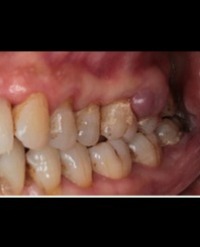
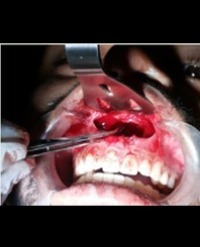
The present article describes the evolution of a squamous cell carcinoma of the maxillary sinus that produced as its first clinical appearance intraoral signs and symptoms. The patient had visited her primary dentist due to advanced mobility of the upper left second molar. Following its extraction, the signs and symptoms of a malignant lesion appeared. A review of the literature is presented following this case. The objective of this article is to describe the intraoral signs and symptoms of squamous cell carcinomas of the maxillary sinus, for their early diagnosis and treatment to improve their prognosis.

Citation

Cobo-Vazquez C, Molinero-Mourelle P, Garcia-Morcote CA, Martínez JM and Lopez-Quiles JJ. Oral Manifestations of Squamous Cell Carcinoma of Maxillary Sinus. SM J Dent. 2016; 2(1): 1008.

Other Articles

Article Image 1

Achieving Harmony between Pink and White in Fixed Prosthodontics

Aesthetic restorations are designed to create morphological and color harmony with natural teeth, gingiva, lips and face. Disciplines including Prosthodontics, Periodontology and dental technology are involved in accomplishing the treatment goals. To achieve an optimal aesthetic result, the dentist must be familiar with characteristics such as tooth shape, color and gingival aesthetic features as important elements involved in creating aesthetic smile. As gingival levels have direct impact on aesthetics, there is no doubt that establishing the correct one for each individual tooth is the key in the creation of harmonious smile those evaluation is the f irst step in oral rehabilitation. Periodontal therapy plays a great role in correcting gingival defects. It provides the opportunity to recreate a harmonious gingival architecture and correct Zenith location with reference to normal anatomy. In addition, it offers more retention for the restoration by increasing the prepared tooth surface which is beneficial for etention.

Nissaf Daouahi1* and Dalenda Hadyaoui2

Article Image 1

Periodontal Splinting with Ribbond

One of the critical manifestations of periodontal diseases is the sequel of mobility that results from such a clinical situation. Mobility, as extremely slowly developing phenomenon, leads to drastic consequences (especially tooth migration and occlusal trauma) that can be corrected.Depending on clinical conditions, tooth mobility can be treated by combination of several treatment modalities, such as periodontal and restorative therapeutics. T he periodontic therapy is directed toward the etiologic factors including plaque, and calculus. Root planning and subgingival debridement are performed to help to reduce inflammation, and bleeding. A few months after initial debridement, the tissue response is assessed. The periodontist will determine if the periodontal statue is stable enough to proceed with restorative treatment (splinting).

Dalenda Hadyaoui1*and Amina Khiari2*


Article Image 1

Gingival biotype: Clinical signification

T he success of esthetic restorations depends not only on teeth arrangement but also gingival biotype. This fact makes gingival thickness a subject of considerable interest and its evaluation essential in treatment planning. Therefore, when the clinician receives a new patient with aesthetic desire, he must be aware and have knowledge not only regarding teeth but also gingiva. Identifying each gingival biotype, using reliable methods, is important because they present different healing tendencies and it has been shown that differences in gingival and osseous architecture present a significant impact on the outcome of restorative [1,2]. Clinicians face difficulty associated with the correct identification and categorizing of the patient’s gingival biotype because of several classifications that have been established. Theses classifications are depending on numerous observations and measurements, such as the height of keratinized tissue, the bucco lingual thickness and various invasive and non invasive methods are available to measure this thickness. In the same context, placing a periodontal probe in the gingival sulcus and observing the transparency seems to be the simplest method to evaluate/determine tissue thickness.

Dalenda Hadyaoui and Nissaf Daouahi*


Article Image 1

Retrospective Study of the Relationship between Obesity as BMI and Periodontal Disease

The objective of this research was to determine the relationship between periodontal disease and obesity as calculated by BMI in a retrospective population of patients at the University Of Pittsburgh School Of Dental Medicine.

Background: Obesity is a major global public health problem affecting both developed and developing societies. Obesity is an individual health condition with a societal component and any reduction in the epidemic would have worldwide public health benefits. Obesity is a complex multifactorial chronic disease arising from an interaction of genotype and the environment. Being overweight as an individual is an established predisposing risk factor for many chronic systemic conditions. Our understanding of how and why obesity develops is incomplete, but involves the integration of social, behavioral, cultural, physiological, metabolic, and genetic factors.

Materials and Methods: Data for 3058 patients regarding the relationship between BMI and periodontal condition were extracted from the electronic health record maintained by the University of Pittsburgh School of Dental Medicine. For each patient record, variables including age, gender, BMI, smoking history, diabetes condition, and periodontal condition were extracted and categorized.

Results: Logistic regression was used to control for age, sex, race, diabetes condition, and smoking condition. Patients with Body Mass Index ≥ 30 were 1.22 times more likely to develop periodontal disease. Controlling for all variables except gender and periodontal condition, male patients have a higher chance for periodontal disease than females have. (p< 0.01).

Conclusion: Findings further establish the positive correlation between periodontal disease and obesity as measured by Body Mass Index (BMI). Obese patients, BMI ≥ 30, had a greater chance of developing periodontal disease (p<0.01), with the probability increasing for male patients. The prevalence of periodontal disease in the presence of obesity likewise increased with age

Vitolo RA*


Article Image 1

Peripheral Giant Cell Granuloma Treatment with Guided Tissue Regeneration: A Case Report

T he peripheral giant cell reparative granuloma has been described for many years in literature under a variety of names. It also named with peripheral giant cell tumor and giant cell epulis [1]. T he etiology of Peripheral Giant Cell Granuloma (PGCG) is not clear. It can be considered an over exuberant local response of tissue to injury. PGCG is known as asymptomatic, hyperplastic lesion of the attached gingiva or alveolar mucosa. Clinically lesion located on the gingival or edentulous ridge and the most common site is posterior area. Mostly, lesions are asymptomatic but the chief complaint is bleeding due to trauma. Treatment of PGCG consists, removal of the lesion and eliminating traumatic factors

Selin Genc and Abdullah Seckin Ertugrul*


Article Image 1

Rescinding a Pugnacious Judgment

T he highest court in India recalled its controversial verdict of 2013 quashing a Medical Council of India (MCI) notification mandating a common National Entrance-cum-Eligibility Test (NEET) both for undergraduate and postgraduate medical and dental courses in government and private institutions. A bench of Justice Dave, Singh and Goel said that NEET did not infringe upon the rights of the state governments or the private institutions and the single-window test must be applied from this academic year itself [1]. This signifies that no college, together with more than 600 privately run and minority medical institutions, will be allowed to conduct its own entrance examination for selection of students. The bench made its decision on the basis of a petition filed by the MCI. Medical and Dental Council of India, 2010 amended the regulations on Medical and Dental Education Act, 1997 to make provision for a single eligibility examination test named National Eligibility Entrance Test (NEET) for admission to medical and dental courses. Central Board of Secondary Education was notified to be the institute to conduct NEET [2]. The single window NEET was articulated and implemented based on the prototype and model of the single exam conducted in United States and few other developed countries. The NEET would give students an all-India ranking and a state ranking and students could be admitted either on the basis of their all-India or the state performance if they were to opt for the state quota. The state quota could be used by only those who met the domicile criterion. The NEET had been welcomed by all including the students, parents, medical teachers and general public at large.

Bharathi M Purohit1 and Abhinav Singh2*


Article Image 1

Oral Health Knowledge, Attitude and Practice among Indian Preschool Teachers

Aim & Objective: Schools are the valuable platform for promotion of oral health and preschool teachers can prove to be beneficial in disseminating oral health education for children because of the vulnerability to dental diseases during this period. Hence, the objective of the study was to evaluate the oral health knowledge, attitude and self-practices of the preschool teachers. Material and Method: A cross sectional study was conducted among hundred preschool teachers in Bhopal, India. Schools were randomly selected and the teachers were invited to participate in the study. Results: Ninety f ive percent school teachers had knowledge about importance of oral health care for children. 92.1% of them felt it is important to prevent deciduous teeth from caries. 80.2% of them were aware of the different aids used in oral health care of children like rinsing mouth with water, tooth brushing, tongue cleaning and mouthwashes; 91.1% of the teachers advised the child to rinse his/her mouth after meals, 81.2% knew a child should brush his / her teeth twice daily and 68.3% of them reported about the dental problem in the child to his/her parent. 57.4% responded that the amount of toothpaste applied over the toothbrush for children should be pea sized and 51.5% responded circular technique should be used while brushing the teeth of children. Conclusion: Preschool teachers possess satisfactory knowledge regarding dental caries and few of them knew about the importance of regular visit to the dentist. Most of the schools were not linked with a dental school for children’s regular dental checkup and most of the preschool teacher’s required training in oral health care of children.

Abhishek Purohit*, Garima Nichlani, Gaurav Patil, Fariha Rizvi, Garima Uikey and Bharathi M Purohit


Article Image 1

Nasopalatine Duct Cyst: A Rare Case Report

There are several developmental cysts derived from embryonic structures or faults in their remnants located in oro-facial region. Nasopalatine Duct Cyst (NPDC) is the most common of all the developmental, epithelial and non-odontogenic cysts of the maxilla. This cyst originates from epithelial remnants from the nasopalatine duct. The cells could be activated spontaneously during life, or are eventually stimulated by the irritating action of various agents (infection, etc.). Generally, the patients present without clinical signs and symptoms. Therefore, the tentative diagnosis “nasopalatine duct cyst” is often based on a coincidental radiological finding on a routine panoramic view or occlusal radiograph. Although NPDC is not rare, it is mostly misdiagnosed. The definite diagnosis should be based on clinical, radiological and histopathologic findings. We report a case of a nasopalatine duct cyst in a 21-yearoldmale patient. The typical radiologic and histologic findings are presented.

Nagaraja A, Govind Raj kumar N and Arif M*


Article Image 1

In-vitro Comparative Evaluation of Cariostatic Potential and Marginal Microleakage of Commonly-used Glass-Ionomer Restorative Materials as Interim Therapeutic Restorations

In-vitro Comparative Evaluation of Cariostatic Potential And Marginal Microleakage Of Commonly-Used Glass-Ionomer Restorative Materials as Interim Therapeutic Restorations.

Introduction: Glass ionomer cements (GIC) can ideally serve many restorative purposes in paediatric dentistry as it has advantages of chemical adhesion to tooth structure, as well as fluoride release and uptake into hard tissues.

Aims: To compare four commercially available conventional GIC based on the amount of fluoride release, marginal integrity and ability to increase microhardness of underlying artificial dentinal caries via remineralization.

Methods and Material: Standardized cavities were prepared on the buccal surface of 60 extracted sound premolars and artificial caries were induced onto the dentinal floor. Specimens randomized into four groups of fifteen teeth and restored with Fuji VII®, Riva Protect®, Riva Self Cure® and Fuji IX GP® Extra respectively. Measurement of fluoride release was done for 60 days. Subsequently, similar restorations prepared on lingual surface for microleakage test according to standard protocols.Dentin underlying buccal restorations were subjected to microhardness test while lingual restorations were evaluated for marginal microleakage.

Results: One-way ANOVA statistical analysis revealed significant difference was found in the amount of f luoride release between materials on all days of measurement (p<0.05). Riva Protect® released the highest amount of fluoride, followed by Fuji VII®, Riva Self Cure® and Fuji IX GP® Extra. Wilcoxon signed-rank test showed Riva Protect has theability to significantly improve the microhardness of artificial caries to the depth of 100 µm (p<0.05). There was a significant difference in the marginal sealing ability between materials with more microleakage seen with low-viscosity materials, analysed by Pearson’s Chi-Square test.

Conclusions: All materials possess cariostatic potential. However, Riva Protect® is suggested to exert the greatest cariostatic effects among the test materials

Nurulnazra MA, Mahyuddin A and Sockalingam SNMP*


Article Image 1

Effect of Eutectic Mixture of Local Anaesthetics (EMLA) on Pain Perception During Scaling & Root Planing (SRP) Split-Mouth, Controlled, Randomized Clinical Trial

Background: Scaling and Root Planning (SRP) is the most commonly used procedure for treating gingivitis and periodontitis, which may be perceived as painful. The fear of pain during treatment has been identified as a major factor in preventing patients from seeking dental care. Pain control is considered to be an extremely important outcome measure for successful periodontal therapy.

Methods: Local application of Eutectic Mixture of Local Anaesthetic agent (EMLA) having higher concentration of local anaesthetic agent, considered as an effective way to reduce pain.

Results: The mean Visual Analogue Scale (VAS) when EMLA cream was used was lower compared to when EMLA cream was not used. The mean Verbal Rating Scale (VRS) was also lower when EMLA cream was applied.

Conclusion: The results of the present study warrant the use of EMLA in routine practice.

Patel KR*, Bhavsar NV and Brahmbhatt NA