SM Journal of Neurology and Neuroscience

Archive Articles

Article Image 1

Global Evidence for the Key Role of the Dopamine D2 Receptor Gene (DRD2) and DRD2 Receptors in Alcoholism

It has been over 27 years since Blum & Noble discovered the first association of the DRD2 A1 allele in severe alcoholism, suggesting reward as the real phenotype, not alcoholism. This has been acknowledged by an explosion of research in the arena of Psychiatric Genetics. To date, a PubMed search listed 6,839 studies (5-15- 17). The A1 allele has been associated with substance use disorders other than alcoholism, including cocaine, nicotine dependence, polysubstance abuse and many Reward Deficiency Syndrome (RDS) behaviors substance and non-substance related. Certainly following extensive controversy, the emerging evidence suggests that the DRD2 is a reinforcement or reward gene. In fact, it could represent one of the most prominent single-gene determinants of susceptibility to severe substance abuse/reward deficiency. While, however, the environment through epigenetic impact and other genes, when combined, still play the larger role, targeting the DRD2 gene through the novel genetic rewriting of the DNA code at the mRNA level may hold the greatest promise to date for potentially “curing” the RDS phenotype.

Kenneth Blum¹⁻⁹˒¹²*, Mark S Gold²˒¹⁵, Lloyd G Mitchell¹⁰˒¹¹, Kareem W Washington¹⁰, David Baron², Panayotis K Thanos¹³, Bruce Steinberg¹⁴, Edward J Modestino¹⁴, Lyle Fried⁷, and Rajendra D Badgaiyan¹²
Article Image 1

Depression in Alzheimer

Background: Pharmacological treatment for AD and depression are unfortunately few and of limited efficacy to cure the disease.

Objectives: To assess the combined effects of rivastigmine and citalopram on Alzheimer’s Disease.

Methods: Longitudinal clinical prospective study with 1278 AD patients on rivastigmine 9,5mg/patch and citalopram 20-40 mg/day over 48 months was assessed on the basis of NINCDS-ADRDA, MMSE, DSM-IV, FRSSD, GDS, HRS-D and follow up of the patients.

Results: Four years after the baseline assessment, there were no significant differences in MMSE, Geriatric depression scale and Hamilton rating scale for depression between patients treated with rivastigmine alone or combined rivastigmine with citalopram with or without depression (p>0.05). Functional Rating Scale for symptoms of dementia, Activities of Daily Living of patients with AD and depression treated with rivastigmine was significantly worse than patients treated with rivastigmine and no depression (p=0.027).

Conclusions: The combination of rivastigmine and citalopram had no better results than rivastigmine alone in patients with AD.

Magda Tsolaki*, Krishna Prasad Pathak, Eleni Verikouki, Chaido Zchou Messini, Tara Gaire, and Paschalis Devranis


Article Image 1

Anxiety and Its Features in Parkinson

Anxiety is one of the most clinically significant psychiatric syndromes in Parkinson’s Disease (PD). It is estimated to affect up to 50% of individuals with PD and is associated with higher levels of dependency and poorer quality of life. Although it is common, it remains widely under recognised by patients, carers and clinicians, and has not been extensively studied [1]. Therefore, in spite of its significant impact, the symptomatology, chronology, and neurobiology of anxiety in PD are not well understood.

Recently, anxiety in PD has been associated with increases in motor fluctuations and gait disturbances including freezing. Freezing of gait (FOG) is the temporary inability to walk and is one of the most debilitating symptoms of PD. It is associated with an increase in falls, injuries and dependency. The associations with motor symptoms have significant consequences for the quality of life of people living with PD. This review summarizes the most recent data on the epidemiology, associated features and possible mechanisms underlying anxiety in PD.

Perri Carlson-Hawke¹˒²*, Belinda Brown², and Simon Hammond¹


Article Image 1

Brainstem Radiculitis - A Complication of Post Herpes Zoster infection

Ramsay hunt syndrome arises from a constellation of cranial nerve involvement, commonly facial nerve and trigeminal nerve along with erythematous rash in ear/ over the eye secondary to Varicella Zoster Virus (VZV) reactivation. We describe an unusual presentation of herpes zoster in an immunocompetent individual with several brainstem nuclei involvement mimicking a brain stem stroke. This presentation is termed as brain stem radiculitis.

Sushma R Yerram*


Article Image 1

Treatment Avenues for the Juvenile and Adult Onset Mitochondriopathies Alpers Syndrome, Ataxia Neuropathy Spectrum, MEMSA and PEO Caused by Polymerase-Gamma Mutations Ala467Thr and Trp748Ser

Defects in the only human mitochondrial polymerase, the Polymerase Gamma (Polγ) encoded by the POLG gene, cause mitochondriopathies like Alpers Syndrome or MEMSA typically leading to medication resistant fatal seizures. Pathomechanistically, depletion of mitochondrial DNA leads to mitochondrial malfunction. Depending on the mutation and the degree of mitochondrial DNA depletion, age of onset can vary between 30 days and 64 years, but most children affected decease within infancy (overall median age of death 3.5 years). Here we review therapeutic avenues for patients with the two most frequent mutations, Ala467Thr and Trp748Ser. In these patients symptoms appear at a relatively late age (median 14 and 17 years, respectively) and patients also decease at a relatively late age (median 20 and 25 years, respectively) when homozygous for one of these mutations. Proposed treatments may also be beneficial for other mitochondriopathies like Friedreich Ataxia.

Hans Zempel¹˒²*, Bernard Sadzot³ and Natja Haag⁴*


Article Image 1

Word Recognition Semantic Processing Defects in Chinese Children with Developmental Dyslexia: An Event-Related Potential Study

This study reports the neurophysiological and behavioral correlates of lexical decision processes in Chinesespeaking dyslexic and non-dyslexic readers in order to understand the neural basis of dyslexia. Eighteen dyslexic children (ages 12~14) and 18 matched control children were tested, and the Event-Related Potentials (ERPs) to real words and pseudo-words were recorded simultaneously with behavioral measures. The results showed that both groups had significantly longer response time for the pseudo-words. Furthermore, overall performance (in terms of lower accuracy and longer response time) was significantly worse among the dyslexic group during the lexical decision task. The differences between the dyslexic and control groups were mainly in the N130, RP, N400, and P600 components. The results suggest that Chinese dyslexic children have semantic processing defects. From a time course point of view, the early stages of processing reflect the Chinese dyslexic children’s morpheme integration and category sorting capacity deficiencies, while the middle stages show their semantic integration difficulties. The later stages of processing show that during semantic processing, decision-making is difficult among these children. Based on Chinese characters and phonetic system similarities, we suggest there are semantic processing defects in Chinese dyslexic children.

Enguo Wang*, Chenguang Du and Haiwei Huang


Article Image 1

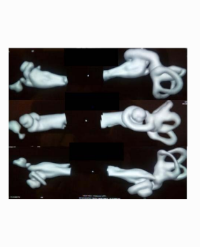
Relative Preservation of Ocular Stability in a Severe Posterior Labyrinth Malformation Case

We present the case of a patient with a malformation of the inner ear, proposing hypotheses to explain the relative preservation of ocular stability when exist a severe posterior labyrinth malformation.

Sergio Carmona¹* , Manuel Gallardo-Flores² , Carlos Vera-Miaciro³ and Guillermo Zalazar¹


Article Image 1

Ageing Markers in Primary Fibroblasts of Healthy Middle Aged Persons and their Psychological Correlates: Review and Four Case Studies

The paper presents preliminary results of a novel methodology of systematic analysis of ageing markers by healthy middle-age volunteers, and their possible psychological correlates. Ageing markers detected in diploid fibroblasts were divided into three groups representing different types of normal ageing. Psychological processes possibly linked to these groups, especially primitive types of psychological defense strategies, intrinsic religious attitudes, and levels of psychological activation, are discussed. The paper is centered upon four case studies, accompanied by selected experimental data, and preceded by literature review.

Spivak I¹, Mikhelson V¹, Pleskach S¹, Zakharchuk A², Smirnova T¹ and Spivak D³*


Article Image 1

Cryptococcal Meningitis with Behavioral Changes as Presentation

Cryptococcal meningoencephalitis in immunocompetent patients is a very rare presentation. The most common clinical manifestations are headache, nausea, vomiting, seizures and meningeal signs. Here we present an 89 year old healthy male presenting with rapid cognitive decline, ataxia, frequent falls and tremor as presenting signs which delayed diagnosis. The purpose of the article is to stimulate direction of rapid cognitive decline work up in the pathway of infectious cause’s especially indolent cryptococcal meningitis.

Sushma R Yerram¹* and Mullaguri Naresh²


Article Image 1

Huntington

Huntington’s Disease (HD) is a genetically inherited autosomal dominant neurologic disorder that occurs when an expanded CAG repeat in the Huntingtin Gene (HTT) is passed down to offspring. The disease is characterized by cognitive, behavioral, motor and psychiatric problems. No effective treatment currently exists for HD despite the fact that many clinical trials have been performed on human patients and various studies have been done on animal models. Although the function of HTT and the corresponding Huntingtin protein (Htt) have previously been studied. In this short communication we summarize several original studies published within the last year that describe the use of new technology and techniques to gain a more in depth understanding of the pathogenesis of the disease and to develop potential treatments. These studies include the development and application of new inhibitors of various aspects of Htt pathogenesis, the use of patient-derived induced Pluripotent Cells (iPSCs) and Neuronal Stem Cells (NSCs), the nano particles, and CRISPR-Cas9, a new technology for gene editing.

Fran Norflus¹* and Claire-Anne Gutekunst²


Article Image 1

Periictal MRI Findings of Hypervascularity with Restricted Diffusion Contralateral to Gaze Deviation

We present a case report of a child who had a seizure that began during a Magnetic Resonance Image (MRI) scan of her brain. The MRI showed restricted diffusion on Apparent Diffusion Coefficient (ADC) and increased perfusion on Maximum Imaging Projection (MIP) sequence correlating with the area of ictal discharges on electroencephalogram (EEG). Neuroimaging has become crucial in the diagnosis and understanding of seizures, however correlating it with an acute seizure is seldom able to be obtained. In particular, MRI sequences such as Diffusion Weighted Image (DWI), ADC, fluid attenuated inversion-recovery (FLAIR) and MIP images have proven useful in determining the extent and severity of cortical injury in various disease processes.

Rita S Marshall¹*, Sharon Kim and Mary Zupanc


Article Image 1

Electromyography

Electromyography (EMG) is the electrophysiological study of the neuromuscular system. It is a complementary test, and prolongation of the clinical neurological study. Given the broad neuromuscular system and brain, in Spain there is a specific and specific pathway via MIR of Neuromuscular which is called Clinical Neurophysiology which includes EEG, EMG, Multimodal Potentials (PEAT, PEV, PESS) and Intraoperative Monitoring. In addition to sleep pathology, and polysomnography and is taught by physicians via MIR with 4 years of training within this specialty.

Ángel Molina León*


Article Image 1

A Technical Update in Mechanical Thrombectomy: Aspiration, Stent Retriever or Both?

Recent large trials in endovascular thrombectomy have demonstrated significant benefit compared to thrombolysis alone in acute ischaemic stroke. Data comparing technical success and clinical success for various techniques is limited. Though Stent retriever devices have been most commonly deployed in recent landmark thrombectomy trials, large bore intermediate catheters are increasingly used for direct aspiration of thrombi. We review the literature regarding the main interventional techniques described. Recanalization rates did not differ significantly in the first randomized study comparing aspiration with stent retriever thrombectomy. Reported clinical outcomes appear similar for currently applied techniques though comparative studies with long term morbidity and mortality data are necessary. Further research is required to ascertain complications rates and determine the most appropriate first line patient specific technique.

Dylan Roi¹*, Charlie Hall and Kyriakos Lobotesis


Article Image 1

First Person Accounts of Cerebral Palsy; Adding Phenomenological to Medical and Social Models of Chronic Conditions

This paper considers the experiences of two of its authors who each live with a form congenital cerebral palsy and are also philosophers. They describe how their conditions require a first person narrative for full understanding and that the techniques they have developed to ameliorate their impairments are also personal and so not conventional medical interventions. We suggest that, while medical models of impairment and social models of disability are useful, a third phenomenological - model is also required, which allows an understanding of each person’s subjective experience as well as their needs in relation to their condition. This may be particularly important for people with chronic conditions.

Jonathan Cole¹*, Minae Inahara² and Michael Peckitt³