SM Journal of Nursing

Archive Articles

Article Image 1

Adverse Events on Hospitalized Patients: A Barely Known Reality

Introduction: Currently, the patient’s safety is a fundamental component of the health care quality, more specifically of the nursing care quality and it constituted a preoccupation to the hospital managers by the influence it has on the cost of the care. The incurrence of Adverse Events (AE) associated to the nursing care is underestimated in Portugal, not allowing a real knowledge about this issue.

Material and Methods: A descriptive study, cross-sectional and quantitative approach with a sample of 628 nurses, who work in 43 internment services at 8 Portuguese hospitals.

Results: The psychometric properties evaluation of the Subscale of Assessing Risk and Occurrence of Adverse Events, demonstrated its suitability to evaluate the phenomenon in study. The Risk/Occurrence of Medication Errors proved to be the typology of AE that occurs less frequently or which is less likely to occur (AE_7 M=2, 20). For its turn, the Risk/Occurrence of HCAI (Health Care Associated Infections) is the type of AE that showed a higher average value (AE_6 M=4, 21). The Risk of Falls and Pressure Ulcers is moderate (AE_8 M=3.07), but the Occurrence of Falls and Pressure Ulcers is low (AE_9 M= 2.33).

Conclusion: The characterization of AE associated to the nursing care in terms of typology and occurrence frequency is very relevant, allowing us to analyze its causes, to develop and implement corrective and preventive measures to minimize the damage and improve the patients’ safety.

Maria João Baptista dos Santos de Freitas PhD¹* and Pedro Miguel Dinis Parreira PhD²

Article Image 1

Effect of a Self-Instruction Package on Cognitive Performance among Egyptian and Saudi Pediatric Nursing Students

Nursing educators should recognize the need to develop innovative teaching strategies that would enhance student learning. Aim: The study aimed to evaluate the effect of applying a self-instruction package on cognitive performance among pediatric nursing students in Egyptian and Saudi settings. Methods: This quasi-experimental study was carried out at the Faculty of Nursing, Cairo-University, Egypt and the College of Nursing, Hail University, Kingdom of Saudi Arabia (KSA) on a sample of convenience of 100 Egyptian and 90 Saudi nursing students. A self-instruction unit addressing lower respiratory infections, especially pneumonia was prepared and applied. The effectiveness was measured through pre-post-testing. Results: The results showed that the students in both samples had high levels of success in the posttests reaching in total 99.0% in the Egyptian sample and 100.0% in the Saudi sample. The lowest level of success in both samples were in the “compare” level of knowledge, 91.0% and 94.4% in the Egyptian and Saudi samples, respectively. As for the rates by question type, it reached 100.0% for “MCQ” and “list” types in both samples. Saudi students had significantly higher scores in the “know” level of knowledge (p=0.04), and in the “list” (p=0.02) and “compare/match” (p=0.004) types of questions, but with no statistically significant difference in total score (p=0.20). In multivariate analysis, the module was the main statistically significant independent positive predictor of the knowledge score improvement at all levels of knowledge. The Egyptian nationality was a positive predictor for the “know” and “analyze” levels. Meanwhile, the female gender was a positive predictor of the “apply” level of knowledge. Additionally, the Egyptian nationality was a positive predictor for the “MCQ” and “list” types. Conclusion: the self-instruction package is effective in improving the cognitive performance of nursing students in Egypt and Saudi Arabia in all cognitive levels and used various types of questions. The study recommends the use of the package in nursing schools, and development of similar ones in different topics.

Azza Abdel Moghny Attia* and Eman Abdel Fattah Hassan


Article Image 1

Assess patient

This research attempts to measure patient’s satisfaction of nurses working in counseling and nursing services centers under supervision of the Shahid Beheshti University of Medical Sciences. To do so, a descriptive and inferential study is conducted, in which 202 patients in such centers were surveyed. Cluster sampling was used to choose the sample. Moreover, a standard questionnaire was used to conduct survey. Thus, expert validity was checked and test retest method’s result was 0.73. Results showed that most of the patients (55.4%) were satisfied regarding nursing skills, and 73.3% were satisfied of emotional-communication aspects of the services. Regarding caring and training, 57.9% and 41.6% of the patients were almost satisfied of, respectively, nursing and training services. Moreover, emotional-communication and caring-training were significantly correlated. Results revealed that both of the mentioned aspects significantly affect patient’s satisfaction. However, home care services moderately satisfied the patients. Thus, it is highly advised that nurses pay attention to these two aspects in order to improve patient’s satisfaction.

Shokouh Kabirian Abyaneh¹ and Parvin Rezaei²*


Article Image 1

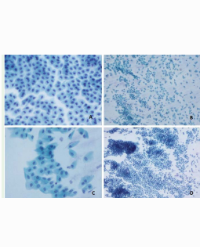
Collection Technique and Sample Processing for Impression Cytology of the Ocular Surface

Introduction: The impression cytology of ocular surface is a minimally invasive technique that allows the analysis of conjunctival and corneal cells, as an alternative to smears and punch biopsies. These specific guidelines will help health professionals, such as nurses and doctors, to ensure better samples of ocular surface without hurting patients, and will provide a new method of fixation for impression cytology of ocular specimens.

Objective: The aim of this study was to present a technique of collecting, fixing and staining for impression cytology of ocular specimens.

Materials and Methods: 50 samples of bulbar conjunctiva taken from 50 ESTeSL volunteers were analyzed. The material was collected on a strip of cellulose acetate from Millipore Corporation, then fixed on SureThin and stained with Papanicolaou stain. The slides were analyzed by three independent evaluators, using an evaluation grid with the following parameters: cell size, detail and nuclear membrane, detail and cytoplasmic membrane, ratio N / C and tinctorial affinity.

Results: The filter paper with apex helped to correctly position the paper in the eye and the procedure that was applied allowed an effective collection of cells with 50-70% of the filter surface being filled without the need for topical anesthesia. The SureThin fixative presented quality in cell preservation, in addition to being more economical. The Papanicolaou technique proved to be ideal in the coloring of ocular epithelial cells. This developed methodology presented a response of 80, 9% to a maximum score 2.

Conclusions: The presented method proved to be very effective in evaluating of ocular cell samples, while simultaneously proving to be a very cheap and comfortable technique for the patient.

Kátia Amaral Freitas and Paula Mendonça


Article Image 1

Application of the Omaha System in the Determination of Healthcare Needs of Individuals Receiving Home Healthcare Services

Home care services are generally provided to promote and protect an individual’s wellbeing or to restore his/ her to health either by health professionals or by family members in the person’s own home or the place where he/she lives. The aim of this study was to detect the needs of individuals receiving home healthcare and to create guidance data for initiatives to be planned for this purpose by demonstrating the availability of the Omaha system in determining the care needs of these people.

The sample of their search field of homecare services unit formed individuals (N=97). A total of 50 patients were included in the study. The data collection tools used in the study was the 5-item socio-demographic characteristics questionnaire and OMAHA Problem Classification Scheme (PCS).

According to the OMAHA PCS, 29 problems were identified. The problems identified, 49% were in the physiological domain, 28.8% in the health-related behaviors domain, 15.4% in the psychosocial domain and 6.8% in the environmental domain. With the nursing diagnoses, 2326 actual symptoms-signs were determined. It was determined that the OMAHA PCS could be used to identify healthcare needs of people receiving home care services.

Betül Aktaş¹, Medine Yilmaz², Nazife Kaplan³, and Banu Çankiri⁴


Article Image 1

Experimentation of the FEHAP Quality Reference System in Initial and Continuous Training the Co-Author Learner in the Self-Assessment Process

Training organizations are invited to implement a quality approach and to demonstrate the quality of their training offer. Initiated since the Bologna agreements with regard to initial training and since decree 2015-790 of 30 June 2015 for continuing education, quality has become an unavoidable element. The challenge for the structures is to develop a quality culture by associating both their employees and their learners.

Sylvie LARSONNIER* and Franck CLUZEL


Article Image 1

Teaching Disaster Nursing in the Online Environment

Nursing has a vital role in disaster management and assistance. Nurses are the largest group of health care professionals available to meet the needs of individuals affected by disasters and public health emergencies.

Judith M Hochberger* and Nancy Bryan


Article Image 1

To Pee or Not to Pee, That is the Question: The Effectiveness of Bladder Scanning in Body Weight Measurement for Patients with Anorexia Nervosa

Weight restoration is critical in the management of Anorexia Nervosa. Achieving accurate body weight readings is crucial during weight restoration of patients with Anorexia Nervosa. This clinical improvement project aims to improve the efficiency in the decision making process relative to weight restoration by exploring a novel method in achieving accurate body weight readings for patients with Anorexia Nervosa

Lean Six Sigma (LSS) approach was used to facilitate the improvement process. A within-subjects design was utilized in the inpatient setting in an acute psychiatric unit. Each patient was subjected to both urine test and bladder scan for each weigh-in. A paired-samples t-test was conducted to compare the number of hours taken to carry out urine SG test to that of bladder scan.

Efficiency of decision making process is markedly improved with the quick results of obtaining an accurate body weight through the use of a designated bladder scanner as part of the weigh-in procedure. Results also showed significant differences in body weight readings. Medical treatment can be promptly initiated within 20 minutes from the time of order where waiting time has been reduced by 93.25%.

Netty Ryanie Binte Kamaruzaman*


Article Image 1

Nursing Students

Background: Mental health disorders are highly prevalent in the U.S. Nursing students’ perceptions regarding the stigma of mental illness will impact the quality of care delivered and the patients’ outcomes.

Method: Data was collected from 64 sophomore students. Five open ended questions were distributed to the students during the first class. All the surveys were collected by a volunteer student and were placed in the instructor’s mailbox in a sealed envelope.

Results: The results revealed three categories: students ‘perceptions of the causes of mental illness stigmatization, their own perception of mental illness, and their perception on how to break the cycle of stigmatization of mental illness.

Conclusion: Nursing students provided insightful perceptions regarding the causes of the stigma and possible interventions. Collaborative efforts to break the stigma of mental illness include: education, acceptance, increasing awareness, and better portrayal in the media.

Abir K Bekhet¹*, Carolyn J Murrock², Qiyan Mu¹, and Harpreet Singh-Gill³


Article Image 1

Psychosocial Care of a Type 2 Diabetes and Hypertension Diagnosed Patient: A Case Report

The aim of this study is to determine the effect of psychosocial nursing approach application with the motivational interview method on the negative disease perception and the adaptation behavior to the treatment regimen of an elderly female patient diagnosed with Type 2 diabetes and hypertension. The patient and her spouse were the subjects of the interviews contemplated in the form of home visits. Both subjects were informed about the interview process before their written and verbal consents were obtained. In order to promote therapeutic cooperation with the subjects and help them gain a healthy behavior, a program based on motivational interviewing principles was engaged. This program consisted of successive four interviews each lasting 40 minutes on average. The basic principles of motivational interview, such as showing empathy, revealing contradictions, ambivalence, change speech, supporting self-efficacy, were included in the interview process. The patient with ineffective management of treatment regimen was communicated about its reasons and the methods of coping with it throughout this interview process. At the end of the interview process, the patient gained a healthy behavior. In terms of patient’s dietary habits, areas for possible improvements and handicaps for change were joint-evaluated and respective action planning was made. The patient, who was unable to carry on outside exercises on her own, was motivated to continue with home exercises to the maximum extent possible. On the other hand, her husband took active part in responsibilities such as running errands, accompanying physician checks, assisting drug applications so that the patient could sustain a healthy lifestyle effectively.

Melike Ertem*


Article Image 1

The Anesthetizing and Mimetic Power of Photographs: Representation of Reality in Photo-Stories

Humans use metaphors in thinking. Most metaphors are visual. In processing information stimuli the mind depends partly on visual codes. Information is processed and stored through two channels: one for non-verbal information and another for verbal information.

Jan Sitvast*