SM Journal of Pulmonary Medicine

Archive Articles

Article Image 1

The Overview of the Clinical Significance of Interferon-Gamma Release Assays for the Diagnosis of Tuberculosis

Due to lack of the practical application guidelines for Interferon-Gamma Release Assays (IGRAs), the testing result of IGRAs may be misinterpreted in clinical practice in China. Therefore, we clarify some important issues related to IGRAs based on the available evidences in this review. The available data reveals that IGRAs can be used to assist the diagnosis of Latent TB Infection (LTBI) and combined with HIV infection; while for the definite diagnosis and therapeutic monitoring of active TB have no value. In addition, IGRAs showed no better performance than TST in low income countries. It should make practical guidelines to TB diagnostic tools and further strengthen the training and guide for the clinicians the low income countries, so as to more scientifically manage TB.

Yulu Gao¹#, Shencong Mei²#, Jun Wang⁴#, Zhonghua Liu⁶, Qinyun Li³, Zongshuai Gao³, Changtai Zhu³,⁶, and Yongning Sun⁵


Article Image 1

Obesity and Breathing Related Sleep Disorders: Concise Clinical Review

The increasing prevalence of obesity has lead to an increase in the prevalence of sleep disordered breathing in the general population. Obesity is a serious disorder resulting in significant health impairment. Obese adults are at increased risk of morbidity and mortality from acute and chronic medical conditions. Obesity is associated with anatomic alterations that predispose to upper airway obstruction during sleep. Obesity and sleep related breathing disorders occur to a particular subgroup that includes obese patients with hypoventilation correlated with Hypercapnic-OSA (obstructive sleep apnea), Hypercapnic-OSA with OHS (hypoventilation syndrome) and OHS without OSA.

OHS is a disease entity distinct from simple obesity and OSA. OSA is a common disorder. Obesity and particularly central adiposity are potent risk factors for OSA. They can increase pharyngeal collapsibility through mechanical effects on pharyngeal soft tissues and lung volume, and through central nervous system–acting signaling proteins (adipokines) that may affect airway neuromuscular control. Specific molecular signaling pathways encode differences in the distribution and metabolic activity of adipose tissue.

The OHS is characterized by the combination of obesity (BMI>30 kg/m2 ), daytime awake hypercapnia and hypoxemia , in the presence of sleep-disordered breathing without other known causes of hypoventilation, such as severe obstructive or restrictive parenchymal lung disease, kyphoscoliosis, severe hypothyroidism, neuromuscular disease, and congenital central hypoventilation syndrome. It is estimated that 90% of patients with OHS also have OSA. Patients with OSA typically have normal control of breathing and obesity is not a necessary condition; patients with OHS are morbidly obese, have hypoventilation during wakefulness with increased arterial PCO2 and decreased arterial PO2 , as well as nocturnal hypoventilation. The gold standard for the diagnosis is monitored polysomnography during sleep. In stable hypercapnic patients therapeutic choice will depend on two factors: underlying diagnosis (presence or absence of OSA) and severity of hypercapnia.

Ines Maria Grazia Piroddi¹, Sofia Karamichali², Cornelius Barlascini³, and Antonello Nicolini¹*


Article Image 1

Tracheal Diverticulosis Presenting as Chronic Cough

A 62 year old female patient with mild intermittent asthma was seen in the pulmonary clinic with a history of a productive cough for two years. She had required multiple courses of antibiotics over the past year. She underwent a CT scan of the chest which showed central bronchiectasis and multiple discrete diverticula projecting posteriorly from the membranous trachea measuring up to 2.3 x 1.7 x 1.7 cm.  The diverticula involved nearly the entire course of the trachea (Figure 1). A bronchoscopy was performed which showed tracheal pouches and indentations (Figure 2). There were no prior scans and therefore it is unclear for how long she had the diverticula. Her symptoms improved with antibiotics and she remains relatively well with chest physiotherapy and bronchial hygiene.

Humam Farah¹*, Parth Parikh¹, Michael Bukstein¹, and Ruxana T Sadikot²,³


Article Image 1

Emphyema Due to Hepatic Abscess

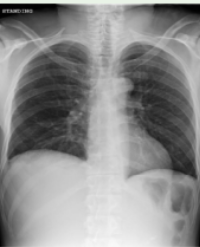
A 36 year-old man with previous biliary surgery due to pancreatitis with pseudo cyst formation five years earlier, had one week of right upper-quadrant pain. Although the pain was pleuritic, he had no respiratory symptoms and a normal chest radiograph.

Joseph R Shiber¹* and David Skarupa²


Article Image 1

Primary Soft-Tissue Nocardial Abscess with a Complication of Severe Pneumonia: A Case Report and Literature Review

Although very rare, nocardiosis is considered as an important opportunistic infection, especially in immunocompromised patients with long-term corticosteroid use or organ transplantation. Lung and skin involvements are frequent, but primary soft-tissue nocardiosis is very rare. Herein, we described a 48 year-old Chinese man with a primary soft-tissue nocardial abscess caused by multidrug-resistant nocardia asteroides, which was sensitive only to imipenem and resistant to trimethoprim-sulfamethoxazole and other antibiotics like amikacin and vancomycin.An initial treatment with a combination of surgical drainage and imipenem was conducted, but a secondary severe pneumonia was complicated two weeks later. Then, the antimicrobial regimen was shifted to sulbactam sodium/cefoperazone and itraconazole injection for the severe pneumonia. For nocardiosis, drainage was continued and minocycline was administered instead of imipenem for maintenance therapy for 9 months. Eventually, the patient recovered well from the primary soft-tissue nocardial abscess and the secondary severe pneumonia. To our knowledge, this is the first case with a combination of primary softtissue nocardial abscess, multidrug-resistant nocardia asteroides and complication of severe pneumonia.

Shufang Zhang¹#, Feifei Zhou²#, Xiuhui Lin³, Liuhong Wang⁴, Wei Cui³, and Gensheng Zhang³*


Article Image 1

Superior Vena Cava Obstruction in Lung Carcinoma

We report a case of Pancoast tumor with Superior vena cava obstruction and thoracic outlet syndrome in 60 year old patient who has been diagnosed to have undifferentiated lung carcinoma on evaluation. Patient was a chronic smoker from 40 years on treatment for chronic obstructive pulmonary disease and presented with hoarseness of voice, puffiness of face, pain in right arm and chest.

Chest radiography and computerized tomography of thorax showed homogenous density in right upper lobe extending in to superior mediastinum with involvement of multiple groups of lymphnodes. CT guided biopsy confirmed diagnosis of undifferentiated large cell carcinoma. Patient developed clinical features of superior vena caval obstruction in a period of 15 days.

Sreenivasa Rao Sudulagunta¹*, Shyamala Krishnaswamy Kothandapani², and Mahesh Babu Sodalagunta³


Article Image 1

The Role of Lung Function and the Importance to Measure Small Airways Modifications

Normally in clinical practice the evaluation of lung pathophysiology follows a functional and mechanical evaluation primarily through spirometry and plethysmography. The Small Airways (SAW) are one of the most important targets for respiratory diseases and various studies underline their strict relations with chronic diseases like asthma or COPD, although it is nowadays recognized their role in a lot of other pathological entities. The evaluation of SAW is not always easy and often more than one functional test must be done. So, the possibility to known the “scenario” of available functional respiratory tests, both in clinical and research setting, represents a central point in the respiratory world. Moreover the correct interpretation of the lung function tests is necessary not only to better evaluate the actual clinical status of the respiratory disorders but also to allow the appropriate therapeutic choice. The aim of the current review is to direct the readers attention to the importance of lung function evaluation and its specific role both in clinical and research setting.

Dejan Radovanovic¹,², Giovanni Marchese², and Pierachille Santus¹,²*


Article Image 1

Saber Sheath Trachea: Functional and Clinical Correlations

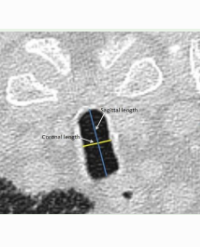
Saber sheath trachea refers to diffuse coronal narrowing of the intra-thoracic portion of the trachea with concomitant widening of the sagittal diameter. It is considered to be widely associated with Chronic Obstructive Pulmonary Disease (COPD). The diagnosis is based on the calculation of the tracheal index which is the ratio of coronal to sagittal length in the axial plane measured 1cm above the upper margin of the aortic arch. Saber sheath trachea is considered to be present when the tracheal index is less than 0.67. The tracheal index has been associated with severity of obstruction and most notably with hyperinflation and extent of emphysema in COPD patients. Thus, it can have clinical importance. The presence of saber sheath trachea and its clinical implications should be further explored in COPD as well as in other diseases in which emphysema represents a major component, as Combined Pulmonary Fibrosis Emphysema (CPFE).

Vasilios Tzilas¹ and Demosthenes Bouros¹*


Article Image 1

Impact of Poor Glycemic Control on Severity and Clinical Course of Chronic Obstructive Pulmonary Disease in Patients with Co-Existing Type 2 Diabetes Mellitus - One Year Prospective Study

Background: Chronic Obstructive Pulmonary Disease (COPD) and type 2 Diabetes Mellitus (DM) are common and under diagnosed chronic non-communicable medical conditions in India. The escalating epidemic of DM is a great challenge for the clinicians treating COPD as large number of patients have Poor Glycemic Control (PGC). We undertook this trial to study the influence of PGC on severity and disease outcome in COPD subjects with concomitant DM.

Materials and methods: COPD patients either known or newly diagnosed DM cases as per WHO criteria were enrolled in the study and grouped into patients with PGC and Optimal Glycemic Control (OGC) based on HbA1c measurements. Subjects were closely monitored for 1 year.

Results: Of the 490 subjects analyzed, 336 (68.57%) had PGC and 154 (31.43%) had OGC. COPD patients with PGC had more severe disease compared to OGC (Mean FEV1% predicted 48.47 ± 13.7 vs 67.4 ± 13.86, p= 0.0061) and also DOSE score (4.35 ± 1.88 vs 3.18 ± 2.30 p= 0.0052) at the baseline. After 1 year, patients with PGC had statistically significant high rates of exacerbations. The mean DOSE scores were statistically greater in PGC patients after 12 months suggesting worsening of COPD symptoms and quality of life. Hospitalization was significantly frequent and longer in PGC patients. (6.56 ± 1.70 vs 4.16 ± 1.26 p= 0.0004).

Conclusion: Patients with PGC had more severe COPD, poor lung function, high symptom score, and increased risk of exacerbations with frequent and prolonged hospitalizations.

Vinay Mahishale*, Ajith Eti, Bhagyashri Patil, Mitchelle Lolly, and Sujeer Khan


Article Image 1

Use of Telehealth Data in Multidisciplinary Team Review of COPD

Chronic Obstructive Pulmonary Disease (COPD) is a significant illness that lends itself well to telehealth – the remote monitoring of patients at home. Currently, COPD telehealth is usually led by community nurses. Given the multifaceted needs of patients with COPD, we argued that a Multidisciplinary Team (MDT) approach is a better way of holistically managing patients on telehealth. We present our experience of working as part of a community MDT to review patients already undergoing COPD telemonitoring. We collected data on the MDT activity during a six months period with the aim of highlighting deviations from best practice. The MDT prospectively reviewed 95 patients and issued 141 recommendations which were fed to the patient’s usual General Practitioner (GP) or directly implemented by the telehealth staff. We concluded that a multidisciplinary review of COPD telehealth patients is feasible and has the potential to add value to what is largely a technology-led service.

Ghassan A Hamad¹*, Michael Crooks², and Alyn H Morice³