
The Profiles of Time Perception and Inter-Temporal Choice in Alcohol-Dependent Patients with Smoking Behavior and the Effect on Re-Drinking
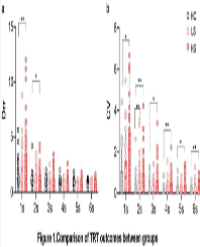
Objective: This study explored time perception and intertemporal decision-making profiles in Alcohol Dependent (AD) patients during chronic withdrawal, and their effect on re-drinking, including tobacco-use influence. Methods: Using convenience sampling, participants included AD patients with light smoking (LS, n=22), AD patients with heavy smoking (HS, n=42), and healthy controls (HC, n=42). Withdrawal severity was assessed using CIWA-Ar. Time perception was measured using Time Reproduction (TRT) and Time Discrimination (TDT) tasks; intertemporal choice was assessed via a Delayed Discounting Task (DDT). Results: AD patients showed significantly higher Drr values (TRT) for 1s/2s intervals and higher Coefficient of Variation (CV) values across all six intervals compared to HC (P<0.05). The AD group had a lower b value (TDT) than HC (P<0.01). Significantly higher delay discounting rates (k values) were found in the AD group versus HC for both small (SS=10) and large rewards (SS=100) (P<0.05). Critically, the HS subgroup had higher k values than the LS subgroup (P<0.01). The intertemporal choice index (k) was identified as a risk factor for alcohol re-drinking (OR=1.383, P<0.05). Conclusion: AD patients exhibit significant biases in time perception and intertemporal choice. Heavy smoking AD patients show a particularly pronounced intertemporal decision-making bias. Higher delay discounting (k) may be a risk factor for re drinking.
Xiaoyuan Han1#, Yangyang Xu2#, and Xu Chen3*