Global Burden of Alcohol Use Disorder in Adolescents and Young Adults, 1990-2021: Systematic Analysis of the Global Burden of Disease Study 2021
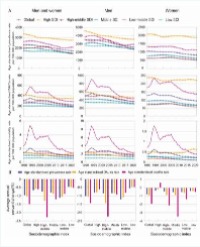
Background: Alcohol Use Disorder (AUD) imposes a significant health burden on adolescents and young adults, contributing to both physical and mental health challenges. With varying impacts based on sociodemographic index (SDI) levels, this study provides a comprehensive assessment of the global and regional AUD burden, revealing critical patterns that influence public health strategies. To evaluate global trends in the burden of AUD among adolescents and young adults (aged 15-39 years) from 1990 to 2021. This study aims to assess prevalence, disability-adjusted life years (DALY), and mortality related to AUD, analyze disparities across sociodemographic categories, and identify factors associated with increased risk, focusing on the influence of socioeconomic and demographic factors on AUD. Methods: This study is a systematic analysis based on the 2021 Global Burden of Disease (GBD) dataset, encompassing individuals aged 15-39 years across 204 countries and territories over a 30-year period (1990-2021). A range of statistical approaches, including Age-Period-Cohort (APC) analysis, decomposition, frontier analysis, and predictive modeling, was employed to assess the trends in AUD burden by SDI, age, sex, and geographic location. The primary outcomes measured were age-standardized prevalence, DALY, and mortality rates for Alcohol Use Disorder among people aged 15-39 years. Results: Globally, age-standardized prevalence, DALY, and mortality rates for AUD among adolescents and young adults showed a declining trend from 1990 to 2021, with Average Annual Percent Changes (AAPC) of -0.97%, -1.03%, and -1.5%, respectively. Males consistently exhibited higher prevalence and DALY rates compared to females. High SDI regions demonstrated higher AUD burdens, while low and low-middle SDI countries showed slower reductions, with population growth being a significant factor in increasing AUD DALY in these regions. Conclusions: The findings underscore the need for targeted and context-sensitive interventions to reduce AUD burden, particularly in high-SDI regions where social and lifestyle factors increase risks, as well as in low-SDI regions facing limited resources. Tailoring prevention and intervention strategies to meet the unique socioeconomic and demographic needs of various populations could enhance the effectiveness of AUD management and public health outcomes globally.
Congyi Zhang1, Pengpeng Ye2, Yuan Yang1, Jianli Wang3, Sheng Tai4, and Changhao Sun1*