Case Report | Volume 7 - Issue 1 | Article DOI :
Download PDF
Garcia-Quintero Ximena, MD, MSc¹, Claros Angélica, MD³, Bolaños Jhon, MD³, Cuervo María, MD, MSc¹, and Urcuqui Luz, MD²
¹Fundación Valle de Lili, Pediatric Palliative Care Program, Cra. 98 # 18-49, Cali 760032, Colombia
²Fundación Valle de Lili, Pediatric Oncology, Cra. 98 # 18-49, Cali 760032, Colombia
³Centro de Investigaciones Clínicas (CIC), Fundación Valle del Lili, Cra. 98 # 18-49, Cali 760032, Colombia
Corresponding Author:
Ximena García-Quintero MD, Director Pediatric Palliative Program, Avenida Simón Bolívar. Cra. 98 No.18-49, Fundación Valle del Lili., Tower 6, 7th Floor. Cali, Colombia, Email: ximena.garcia@ fvl.org.co
Keywords
Adolescent; Pediatrics; Ewing’s sarcoma; Metastatic; Metronomic chemotherapy; Palliative treatment; Quality of life
Abstract
There are currently conventional therapies that have shown a decrease in mortality of pediatric patients diagnosed with cancer, however, some of them suffer from poor prognosis pathologies. In these, the range of available therapies is limited, this is why the use of metronomic chemotherapy as a palliative treatment option has been described. The following is a case report of an adolescent patient with metastatic Ewing’s Sarcoma (ES) that was managed with metronomic chemotherapy (ME) and had a positive impact on functionality, quality of life and opioid requirement
Citation
Ximena GQ, Angélica C, Jhon B, María C Luz U (2021) It’s not black or white! Metronomic chemotherapy as a therapeutic option in Metas tasis Ewing’s Sarcoma: Case Report. SM J Case Rep 7: 4.
Abbreviations
ES: Ewing’s Sarcoma; MC: Metronomic chemotherapy
Introduction
ES is a high-grade, soft tissue and bone tumor that is responsible for 10% of childhood malignancies [1]. Primary tumor treatment includes multimodal therapy; however, despite extensive therapy, approximately one quarter of patients have relapse due to aggressive the nature the tumor [2]. The prognosis is worse if the initial disease is metastatic since it’s associated with a higher probability of relapse and a low chance of long term survival [2].
It is known that in patients with metastatic ES and conventional chemotherapy, reach survival rates of less than 30% at 5 years [3]. In recent years, different treatment schemes for ES have been described, including intensive chemotherapy, local control through surgery, radiotherapy, mixed therapy, bone marrow transplant, among others. However, there is still no consensus on what is the best treatment option in patients with advanced disease or in terminal stages. This has led to the development of new chemotherapeutic options for the treatment of these patients.
MC has emerged as a new therapeutic and palliative option, especially in solid tumors, focused on inhibiting angiogenesis, increasing the immune response to malignant cells, causing injury to the microenvironment around the tumor, and increase tumor latency [5,6]. It consists in using a biological optimized dose instead of the maximum tolerated dose of a chemotherapeutic drug in a regular dosing regimen without prolonged interruptions in order to generate an antitumor activity [5,6]. This differs substantially from conventional chemotherapy, which is designed to use MTD of cytotoxic drugs in order to rapidly inhibit tumor cells, administered at defined intervals in order to allow medullary recovery between cycles [6,7].
MC is an option, but is still in its early stages of research even though there are some reports of its feasibility and possible effectiveness [5,9], few report the pharmacological combination that we will describe in our case report [10]. In this article we report the clinical characteristics and results of an adolescent who was initially treated with conventional chemotherapy with palliative intent and who finally underwent MC in order to improve quality of life.
Case Report
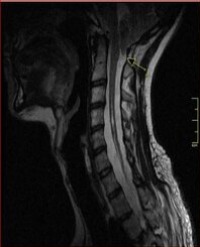
A 15-year-old patient, with metastatic ES of the left humerus, skull, ciliary region, left malar and T12 vertebra (Figure 1). At admission, she presented with severe headaches and osteo muscular pain with a strong opioid-requirement. Due to the extent of the lesions, management with chemotherapy with the POG protocol # 9354 / CCG # 7942 and cranial radiotherapy with curative intention but poor prognosis was initiated. She completed 15 weeks of chemotherapy in 5 months. The pediatric palliative care team began follow-up from the moment of diagnosis.

Figure 1: Brain MRI T1-weighted sequences with axial (a), coronal (b) and sagittal (c) contrast, showing in the bilateral frontal and right occipital region lesions dependent on the bony table with intense and heterogeneous enhancement with contrast medium, which infiltrate the meninges and compress the brain parenchyma without apparent signs of infiltration.
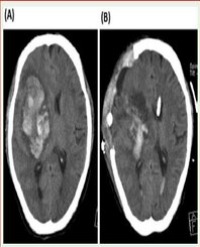
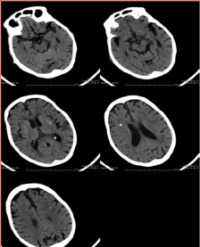
Through the treatment, she presented with multiple infectious complications and Grade IV hematological toxicity, requiring admission to the intensive care unit. Interim evaluations (Induction and maintenance), revealed a partial response (Figure 2), leading to a clinical discussion of the case, where the pediatric oncology and palliative care team, decided to continue with MC with vincristine, methotrexate, cyclophosphamide and valproic acid (Figure 3) with a palliative intent. A rapid improvement of her functionality (Lansky Scale with Traditional chemotherapy of 50% Vs. 100%), was evidence, as well as a significant pain reduction, decrease and subsequent discontinuation of opioids, absence of toxicity and hospitalizations, and significant impact in her quality of life for 36 months.

Figure 2: Brain MRI, T1-weighted sequences with contrast in the axial (a), coronal (b) and sagittal (c) planes, persisting lesions with less enhancement with respect to the previous study.

Figure 3: MQ Protocol.
Discussion
This case report, in particular, has the purpose of highlighting that MC can impact not only the quality of life, but also the survival of patients with metastatic ES, however, the current evidence is divergent. For example, Robison et al. [11] conducted a multicenter study of 97 pediatric patients with oncological diagnoses as leukemia/lymphoma, bone tumors, neuroblastoma, CNS Tumors, and myelogenous tumors [11], which were managed with different combinations of five chemotherapeutic drugs in metronome doses including thalidomide, celecoxib, fenofibrate, etoposide and cyclophosphamide, evidencing progression of disease especially in patients with metastatic bone tumor in the 91% of patients within the first 9 weeks after initiation of therapy; concluding, that there was no response in patients with bone tumors. Additionally, recent evidence from a controlled clinical trial [13] in which MC was studied in pediatric patients diagnosed with sarcomas, showed disease progression in a 100% within the placebo group and 94.6% in the MC group over a period of 2.9 months.
Our patient reached a survival of 36 months after the start of the MC. To our knowledge, this is the longest survival reported with the use of this type of chemotherapy. To date, the level of evidence for the use of MC in children is poor, which limits its use. However, there are reports that show that the administration of MC is well tolerated11, decreases the need for pain medication [12], improves quality of life [13] and may even increase survival [14]. Porkholm et al. reported a case series of 17 patients with central nervous system tumors and solid tumors, treated with a regime of thalidomide, etoposide and celecoxib in a metronomic scheme. They reported an increase in survival in this group of patients [15]. In the same line, A.M. Ali et al., [14] reported 64 patients diagnosed with solid tumors in relapse or with disease progression, in whom a MC regimen consisting of celecoxib, vinblastine, cyclophosphamide and methotrexate was given, and survival of up to 62% was observed during the first-year sin treatment [16].
According to these survival projections, the early integration of palliative care in cancer patients becomes even more important. The American Academy of Pediatrics (AAP) has advocated that children with high-risk cancer and other life-threatening conditions have access to “an integrated model of palliative care, from the time of diagnosis and continued throughout the course of the disease, whether the result ends in cure or death” [17]. In this case report we want to highlight the importance of multidisciplinary management which opens a door to clinical discussion to alternative therapies: neither black nor white, in which the quality of life is prioritized where the goal is “live as long as possible, as well as possible” (shades of gray).
Conclusion
In children with advanced cancer disease, it is important to consider the possibility of intermediate therapies with palliative intent. Metronomic chemotherapy represents a therapeutic alternative that can improve functionality, reduce symptoms, prevent rapid disease progression and possibly increase survival.
Funding
The author(s) received no financial support for the research, authorship, and/or publication of this article.
Declaration of conflicting interests
The authors declare that they have no competing interests. This manuscript has not been published and is not under consideration for publication elsewhere. Additionally, all of the authors have approved the contents of this paper and have agreed to the journal’s submission policies.
Authors’ contributions
All authors have read and approved the manuscript, and significantly contributed to this paper: Conception and design, literature review, manuscript writing and correction, final approval of manuscript.
Ethics approval and consent to participate
This manuscript was written in compliance with the ethical standards of the institutional ethics committee and with the 1964 Helsinki Declaration. We have approval of the Ethics Committee in Biomedical Research from Fundación Valle del Lili. This is supported in letter No. 436 of 2019. Act No. 25 of December 4, 2019, which is available if needed with the Corresponding Author.
Consent for publication
Written informed consent was obtained from patient for publication of this case report and any accompanying images. A copy of the written consent is available for review by the Editor in-Chief of this journal.
References
1. Miller RW, Young JL, Novakovic B. Childhood cancer. Cancer. 1995; 75(S1): 395-405. doi: 10.1002/1097-0142(19950101)75: 1+<395:: AID-CNCR2820751321>3.0.CO;2-W
2. Van Mater D, Wagner L. Management of recurrent Ewing sarcoma: Challenges and approaches. Onco Targets Ther. 2019;12:2279-2288. doi:10.2147/OTT.S170585
3. Gaspar N, Hawkins DS, Dirksen U, et al. Ewing sarcoma: Current management and future approaches through collaboration. J Clin Oncol. 2015;33(27):3036-3046. doi:10.1200/JCO.2014.59.5256
4. Klement GL, Kamen BA. Nontoxic, fiscally responsible, future of oncology: could it be beginning in the Third World? J Pediatr Hematol Oncol. 2011;33(1):1-3. doi:10.1097/MPH.0b013e3182024918
5. André N, Carré M, Pasquier E. Metronomics: Towards personalized chemotherapy? Nat Rev Clin Oncol. 2014;11(7):413-431. doi:10.1038/ nrclinonc.2014.89
6. Kareva I, Waxman DJ, Lakka Klement G. Metronomic chemotherapy: an attractive alternative to maximum tolerated dose therapy that can activate anti-tumor immunity and minimize therapeutic resistance. Cancer Lett. 2015;358(2):100-106. doi:10.1016/j.canlet.2014.12.039
7. Bahl A, Bakhshi S. Metronomic chemotherapy in progressive pediatric malignancies: Old drugs in new package. Indian J Pediatr. 2012;79(12):1617-1622. doi:10.1007/s12098-012-0759-z
8. Kieran MW, Turner CD, Rubin JB, et al. A feasibility trial of antiangiogenic (metronomic) chemotherapy in pediatric patients with recurrent or progressive cancer. J Pediatr Hematol Oncol. 2005;27(11):573-581. doi:10.1097/01.mph.0000183863.10792.d4
9. Pasquier E, Kavallaris M, André N. Metronomic chemotherapy: New rationale for new directions. Nat Rev Clin Oncol. 2010;7(8):455-465. doi:10.1038/nrclinonc.2010.82
10. Traore F, Togo B, Pasquier E, Dembélé A, André N. Preliminary evaluation of children treated with metronomic chemotherapy and valproic acid in a low-income country: Metro-Mali-02. Indian J Cancer. 2013;50(3):250-253. doi:10.4103/0019-509X.118741
11. Robison NJ, Campigotto F, Chi SN, et al. A phase II trial of a multi-agent oral antiangiogenic (metronomic) regimen in children with recurrent or progressive cancer. Pediatr Blood Cancer. 2014;61(4):636-642. doi:10.1002/pbc.24794
12. André N, Abed S, Orbach D, et al. Pilot study of a pediatric metronomic 4-drug regimen. Oncotarget. 2011;2(12):960-965. doi:10.18632/ oncotarget.358
13. Choi LMR, Rood B, Kamani N, et al. Feasibility of metronomic maintenance chemotherapy following high-dose chemotherapy for malignant central nervous system tumors. Pediatr Blood Cancer. 2008;50(5):970-975. doi:10.1002/pbc.21381
14. Ali AM, El-Sayed MI. Metronomic chemotherapy and radiotherapy as salvage treatment in refractory or relapsed pediatric solid tumours. Curr Oncol. 2016;23(3):e253-e259. doi:10.3747/co.23.2873
15. Porkholm M, Toiviainen-Salo S, Seuri R, et al. Metronomic therapy can increase quality of life during paediatric palliative cancer care, but careful patient selection is essential. Acta Paediatr Int J Paediatr. 2016;105(8):946-951. doi:10.1111/apa.13338
16. Ali AM, El-Sayed MI. Metronomic chemotherapy and radiotherapy as salvage treatment in refractory or relapsed pediatric solid tumours. Curr Oncol. 2016;23(3):e253-e259. doi:10.3747/co.23.2873
17. AAP, American Academy of Pediatrics. Committee on bioethics and committee on hospital care. Palliative care for children. Pediatrics 2000;106:351–357.