Back to Journal

SM Surgery Journal

A deadly combination of the point mutation A1298C in the MTHFR gene, and the 4G/5G polymorphism in the PAI-1 gene of a young patient with a left MCA infarct. A case presentation and review of the literature

[ ISSN : 3067-9931 ]

Abstract
Details

Received: 25-Sep-2017

Accepted: 19-Oct-2017

Published: 23-Oct-2017

Ioannis Siasios1,4*, Aggeliki Fotiadou1 , Aspasia Tsezou2 , Charalambos Gatos1 , Dimitrios Papadopoulos3 , Vassilios Dimopoulos4 and Konstantinos Fountas1

1Department of Neurosurgery, University Hospital of Larisa, Greece

2Department of Cytogenetics and Molecular Genetics, University Hospital of Larissa, Greece

3Intensive Care Unit, General Hospital of Larisa, Greece

4Department of Neurosurgery, University at Buffalo, USA

Corresponding Author:

Ioannis Siasios, Jacobs School of

Medicine and Biomedical Sciences,

State University of New York, University

at Buffalo Neurosurgery, 100 High Street,

Suite B4 Buffalo NY 14209, New York,

USA, Tel: 716-218-1000;

Fax: 716-218-1010;

Keywords

Decompressive craniectomy; ICU; Malignant infarct; MCA; Prothrombotic genes

Abstract

Background: Cerebral infarction is a potentially fatal pathological entity, which has been associated with numerous risk factors, such as family history of stroke, hypertension, dyslipidemia, diabetes mellitus, smoking and trauma. On the contrary, the role of prothrombotic gene polymorphisms as risk factors of stroke has not been yet fully established.

Case presentation: A 24-year old man with a thrombophilic profile sustained a left sided Middle Cerebral Artery (MCA) infarction. He was intubated due to his rapid clinical aggravation and underwent initially a left sided hemicraniectomy and soon after that a right sided hemicraniectomy without any significant response. He died due to severe sepsis in the ICU (Intensive Care Unit) the eleventh day after his admission. The laboratory exams showed that he was homozygote for the point mutation A1298C of the methylenetetrahydrofolate reductase (MTHFR) gene, and heterozygote for the 4G/5G polymorphism of the Plasminogen Activator Inhibitor-1 (PAI-1) gene.

Conclusions: Both mutations may have an association with the development of a stroke. Thus genetic testing could possibly assist physicians in prognosis and treatment strategizing of patients with stroke.

Citation

Siasios I, Fotiadou A, Tsezou A, Gatos C, Papadopoulos D, Dimopoulos V, et al. A deadly combination of the point mutation A1298C in the MTHFR gene, and the 4G/5G polymorphism in the PAI-1 gene of ayoung patient with a left MCA infarct. A case presentation and review of the literature. SM J Surg. 2017; 3(2): 1016.

Other Articles

Article Image 1

A Laparoscopic Extraperitoneal Approach to an Incisional and Inguinal Hernia Repair: A Case Report

Extraperitoneal hernia repair has become increasingly popular for inguinal hernia repair. Incisional hernia repairs are routinely repaired through an open procedure or a transabdominal laparoscopic approach. We present a patient who presented with both inguinal hernias and an incisional hernia. Our patient underwent a totally extraperitoneal hernia repair of both his inguinal hernias and his incisional hernia.

Ravinder Bamba1 , Jeremy Wolfson2 and Parag Bhanot1*


Article Image 1

Parapharyngeal Space Myofibroma: A Case Report and Review of the Literature

Myofibroma is a rare, benign tumor of soft tissues representing the most common fibrous tumor of infancy. It has a wide array of presentations, most commonly in the head and neck region, constituting unique diagnostic and therapeutic challenges. Myofibromas have typically a predilection for the mandible, and parapharyngeal involvement is extremely rare. This is the case of a six-year-old girl with an unusual presentation of myofibroma in the right parapharyngeal space compressing on the trachea and causing stridor and dyspnea. The patient was treated surgically and the mass was excised due to mass effect. She presented several months later with recurrence of the mass and the patient had to undergo a right modified radical neck dissection for better exposure and access of the tumor. This is the second case of parapharyngeal myofibroma reported in the literature and the first to have been excised using a modified radical neck dissection approach.

Alain Sabri1 , Zeina Korban1 , Samer Abou Rizk2 and Randa Al Barazi2*


Article Image 1

Spontaneous Small Bowel Evisceration through Vagina with Uterine Prolapse: A Case Report and Review of Literature

Background: spontaneous small bowel evisceration through vagina is an extremely rare condition.

Case: A 57 years old alone female brought to the emergency department with the complaints of irreducible mass protruding through vagina since 12 hours. There was no significant past history elicitable due to lack of recalling from her. The small bowel loops were put back into abdominal cavity by laparotomy and the pelvic floor defect was sutured per vaginally with correction of uterine prolapse. The postoperative recovery was uneventful.

Conclusion: spontaneous vaginal evisceration of small bowel with uterine prolapse is an emergency condition which needs immediate surgical intervention.

Parth Vaghela1*, Dharmendra Shah2 and Rajshree Vaghela3


Article Image 1

A Typical Presentation of Sebaceous Cyst, Report of 4 Cases

Sebaceous cyst is common in daily surgical practice. But it can presents with very unusual way. Here we have reported 4 such cases of very rare presentation.

Sudeb M1*, Pramathanath D2 and Suhana D3


Article Image 1

Comparing Oncotype DX Recurrence Score Categories with Immunohistochemically Defined Luminal Subtypes

Background: At the 13th St Gallen International Breast Cancer Conference in 2013, a new definition of luminal A-like and luminal B-like breast cancer was proposed, involving the expression of Estrogen Receptor (ER), Progesterone Receptor (PgR), and Ki-67. We examined the rate of concordance between the risk groups using the Oncotype DX Recurrence Score (RS) and the previous and newly proposed luminal subtypes with the standardized Ki-67 assessment.

Method: The relationship between a previously and newly proposed, immunohistochemically defined luminal A and B subtype with the Oncotype DX RS of 41 cases of T1-2 N0-1 M0 (ER positive, HER2 negative) breast cancer was assessed. We first classified the patients into the previously defined luminal A and B subtypes, according to the level of Ki-67 as either “low” (<14%) or “high” (≥14%), as assessed by local pathologists. Next, to consider the necessity for standardizing Ki-67 measurement methods, we re-examined Ki-67 with a central review. By introducing PgR positivity (≥20%), we classified these patients to newly proposed luminal subtypes and compared them with the risk groups stratified by Oncotype DX RS.

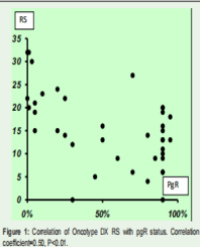
Results: In the previously proposed luminal subtypes, the concordance rate between luminal A and the low RS category was 76.5% according to local pathologists and 90.1% by central review, whereas the rate between luminal B and the intermediate to high RS category was 46.7% and 45.8%, respectively. In newly proposed luminal subtypes, the concordance rate between luminal A and low RS category was 100% and between the luminal B and intermediate to high RS category was 53.6%.

Conclusion: Although this study was based on a retrospective chart review of a small sample size, the newly proposed luminal subtypes, including addition of PgR positivity, appeared to improve the precision of selecting patients with intermediate to high RS categories.

Yoshio Mizuno1*, Hiromi Fuchikami1 , Naoko Takeda1,2, Junichi Yamada3 , Yuko Inoue2 , Hiroshi Seto4 and Kazuhiko Sato1


Article Image 1

Two Stage Repair Using Lateral Avancement Flaps (Skin and Fat) for Medium-Large Perineal Defects

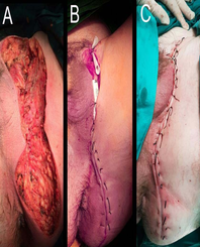
We present the case of a 40-year-old man treated for Fournier gangrene. After the resection of necrotic tissues, a large perineal defect remained, extending to the left inguinal area (Figure 1A). A two-stage repair was performed, using lateral advancement flaps, with the detachment of skin and fat. In the first stage, lateral flaps of skin and subcutaneous tissue were detached from the posterior perineum for advancement and closure, and brought towards the anterior perineal area (Figure 1B), in preparation for the second stage, in which complete closure was achieved, applying the same technique (lateral skin-and-fat flaps) (Figure 1C).

Pérez Lara FJ1*, Ferrer Berges A2 , Hernández González JM1 , Espejo Reina MJ3 and Oliva Muñoz H4


Article Image 1

Periareolar Closure Techniques: A Review and Recent Advances

All breast reduction and mastopexy procedures employ a periareolar closure. No matter the surgical technique, whether it is a periareolar mastopexy, short scar technique or wise pattern reduction, the periareolar closure is ever present and forms a vital component of the procedure. The periareolar closure component is often described as the most complex part of the operative closure [1,2]. There is evidence that periareolar closures completed with an absorbable suture may be prone to significant widening, hypertrophy and/or areolar distortion, and in an effort to avoid this some surgeons use a non-absorbable/permanent suture material. This in turn opens the door to other potential risks including suture infection and extrusion. A review of current techniques used in periareolar closure and recent advances has been undertaken. At this time there is no significantly superior technique and this area warrants further study.

Jade Chapman BN* and Scott Ingram


Article Image 1

Spontaneous Diaphragmatic Hernia-A Case Report and Review of Literature

Background: Spontaneous diaphragmatic hernia without any apparent history of trauma is a very rare condition.

Case: A 38year old female who was admitted to emergency department with abdominal pain, nausea and constipation for 5 days and was diagnosed with spontaneous diaphragmatic hernia. There was no significant past history of trauma. The patient was treated with laparotomy and the diaphragmatic defect was repaired primarily.

Conclusion: Spontaneous acquired diaphragmatic hernia due to lax and thinned out diaphragm is very rare condition and very difficult to diagnose unless a very high index of suspicion is kept in mind. Surgical repair is the definitive treatment.

Rushabh Shah*, Dharmendra Shah, Mihir Shah and Jagrut Patel


Article Image 1

Dermatofibrosarcoma Protuberans (DFSP): Case Report and Literature Review

Dermatofibrosarcoma Protuberans (DFSP) is a slow-growing, low-grade, malignant fibroblastic mesenchymal tumor that arises from the dermis and invades deeper tissues. The precise origin of DFSP is not well known but evidence hints that the cellular origin is fibroblastic, histiocytic, or neuroectodermal.Cytogenetic abnormalities have been found in patients with DFSP, such as reciprocal translocations of chromosomes 17 and 22, t(17;22), and supernumerary ring chromosomes composed of interspersed sequences from bands 17 (17q22) and 22 (22q12). It is a relatively uncommon soft tissue neoplasm with an estimated incidence of 4.2 to 4.5 cases per million persons per year in the United States. DFSP may present as an asymptomatic, skin-colored plaque with possible dark red or blue discoloration. Clinical suspicion is confirmed by biopsy. Histologically, DFSP shows a storiform or fascicular proliferation of bland spindled cells that extend from the dermis into the subcutaneous tissues. Almost all cases of DFSP are CD34-positive (Figure 1) and factor XIIIa- negative. The treatment of choice for a DFSP is wide local excision. Every effort should be made to completely remove the tumor at the time of initial operation, considering the proclivity that DFSP has for irregular and frequently deep subclinical extensions. The margins of resection vary in the medical literature anywhere between with 2 to 4 cm. Imatinib mesylate was approved by the FDA for the treatment of unresectable, recurrent, and/or metastatic DFSP. We are reporting a case of a 28-year old male patient with a DFSP treated by our multidisciplinary team.

Rodrigo Arrangoiz*, Fernando Cordera, David Caba, Manuel Muñoz, Eduardo Moreno and Enrique Luque de Leon


Article Image 1

Amyand

Amyand’s hernia is defined by the presence of an appendix in an inguinal hernia. This presentation was previously deemed rare but it was noted that an increasing number of cases are being reported each year. A left sided Amyand’s hernia however is still relatively rare compared to the right variant. Appendectomy during hernioplasty is debatable and there is mixed views from surgeons worldwide.

Here we present our experience with acase series of three Amyand’s hernia that was seen in a span of three months.

Samuel Tay H’ng Chuan*, Norfaidhi Akram Bin Mat Nor, Lim Hiong Chin and Ros’aini Paijan