Protection by Resveratrol against DEHP-Induced Testicular Cellular Senescence is Mediated by Inhibiting PTEN Loss
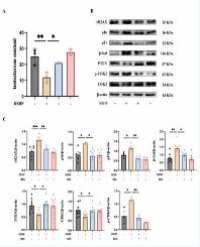
Di(2-ethylhexyl) phthalate (DEHP) is recognized as an endocrine-disrupting compound and is widely adopted as a plasticizer. Evidence links its reproductive toxicity to the tumor suppressor PTEN, genomic stability is crucially maintained by DNA damage repair (DDR). PTEN loss promotes DNA damage accumulation and cellular senescence. Resveratrol (RES), a natural polyphenol, exhibits antioxidant and anti-inflammatory activities and shows protective potential for the male urogenital system. Nevertheless, the mechanisms associated with testicular senescence due to DEHP exposure and RES protection remain incompletely understood. This study employed in vivo and in vitro models, including cell viability assays, testosterone ELISA, cell cycle distribution analysis, senescence marker staining, Western blotting, and PTEN modulation. DEHP exposure significantly reduced testosterone levels in rat testis and TM3 cells, which was ameliorated by RES. DEHP/MEHP treatment upregulated senescence markers (β-Gal, p21, p16, γH2AX), downregulated PTEN and CDK2, and increased p-CHK2. These changes were reversed by RES. PTEN overexpression attenuated MEHP-induced senescence, G1 arrest, and testosterone reduction, while PTEN inhibition abolished RES protection. These findings elucidate the mechanism by which RES protects against DEHP-induced senescence via inhibiting PTEN loss.
Xinyu Yan1, Qing Tian1, Jiawei Xu1, Jiaxuan Ma1, Xiance Sun2, Jing Li3, Ningning Wang1, Xiaofeng Yao2, Tianming Qiu2, Cong Zhang1, Haoyuan Deng1, and Guang Yang1*