Annals of Environmental Science and Ecology

Archive Articles

Article Image 1

Response of Rain-Fed Upland Rice (Oryza Sativa L.) to Different Rates of Nitrogen and Phosphorus Nutrients on Vertisols of North Western Amhara, Ethiopia

A field experiment was carried out at Metema and Tach Armachiho districts of North Western Amhara to investigate the effect of nitrogen and phosphorous fertilizer rates on yield and yield components of upland rice during the main cropping season of 2020/2021. At both experimental sites, a factorial combination of four levels of nitrogen (0, 46, 92 and 138kg ha-1) and three level of P2 O5 (0, 23, 46 kg ha-1) were tested in randomized complete block design with three replications. A combined analysis of variance revealed highly significant (p<0.01) difference among the traits panicle length, number of effective tillers and grain yield for the interaction effect of Nitrogen and Phosphorus nutrients rates while thousand seed weight was significant (p<0.05). For other traits recorded, non-significant interaction effect was observed while significant for one or two of the nutrient rates applied. The combined application of 92 and 46 kg N - P2 O5 ha-1 gave yield of 6170 kg ha-1 which is higher than other fertilizer rate interactions. The partial budget analysis also indicated that the application of 92 and 46 kg N - P2O5 ha-1 had the highest net benefit (Birr 119,245.3 ha-1), with acceptable marginal rate of return (1151.48%) as compared to other treatments. Therefore, application of 92 kg N ha-1 and 46 kg P2 O5 ha-1 is recommended for upland rice growers in both Tach Armachiho and Metema areas and other similar agro-ecologies

Yohannes Kefale1*, Zenebe Gebremedhin2, Daniel Tadesse2 and Tamirat Worku1

Article Image 1

Biochar-Based Carbon Sequestration: Physicochemical Characterization and Assessment of Carbon Stability

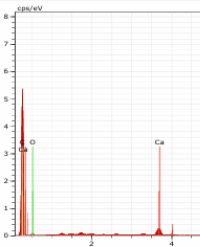
Biochar has attracted a lot of attention as a possible carbon-sequestration material because pyrolysis converts carbon produced from biomass into an extremely durable, carbon-rich solid. This work evaluated the carbon-stability characteristics of wood-derived biochar produced by slow pyrolysis at 700 °C for 5 hours under oxygen-limited conditions using thorough physicochemical characterization. The structural, chemical, morphological, elemental, and surface properties were assessed using X-ray diffraction (XRD), Fourier transform infrared spectroscopy (FTIR), scanning electron microscopy combined with energy-dispersive X-ray spectroscopy (SEM–EDX), and Brunauer–Emmett–Teller (BET) analysis. While FTIR revealed distinctive hydroxyl, aliphatic C–H, and oxygen-containing functional groups, the XRD pattern revealed a mostly disordered structure with crystalline and mineral-associated phases. A surface morphology with pores and interparticle spaces was found to be uneven and diverse by SEM. 85.91 weight percent C, 9.34 weight percent O, and 4.74 weight percent Ca were displayed by EDX. A heterogeneous porous structure with nitrogen adsorption reaching around 140 cm³ STP g-¹ was revealed by BET analysis. Overall, the findings show that the generated biochar has qualities that are advantageous for carbon stabilization and possible long-term carbon storage. However, to quantitatively confirm carbon persistence, field research and long-term incubation are needed.

Deshraj Singh Thakur1* & Santosh Narayan Chadar2