Improved Diagnostic and Therapeutic Strategy to Treat Glioblastoma Symptoms in Preventive Care
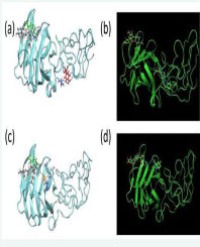
Glioblastoma multiforme (GBM) is the most aggressive and most common type of cancer originating in the brain. In this publication we discuss our approach to support the GBM standard therapy (surgery, chemotherapy and radiation) by the administration of donkey milk (200 ml per os and day) as well as by the application of the neuroleptic drug quetiapine. Our therapeutic strategy can easily be tested in a clinical context because quetiapine is often routinely applied during tumor therapy in order to suppress depressions. Donkey milk is known to stabilize the immune system which is strongly compromised in the case of GBM patients under a standard therapy. Since it is discussed in the literature that donkey milk and quetiapine have anti-tumor properties, especially, in the case of GBM, we focus on certain compounds in donkey milk and their potential interference with quetiapine. These compounds are proteins with a carbohydrate specificity, e. g. lectins which are able to bind galactose residues in a specific way, such as human galectin-3. Such lectins and their ligands are related to crucial tumor migration pathways. This can be achieved by a multimodal strategy combining molecular modeling with histological and radiological examinations. In addition, Atomic Force Microscopy (AFM) and X-ray nanotomography with synchrotron beams are extremely helpful because they enable a high-resolution three-dimensional imaging of cell- and tissue-probes. In combination with molecular modelling
Lan Li1,2#, Ning Zhang3#*, Qianye Zhang3, Athanasios K. Petridis4, Konstantinos Gousias5, Zuzana Gazova6, Zuzana Bednarikova6, Thomas Eckert7,8, Gabriele Loers9, Ruiyan Zhang3, Imke Greving10, Elena Longo11, Helen Louton12, Anirban Bhunia13, Svenja Dannewitz14 and Hans-Christian Siebert1*