Field Evaluation of a Lineage 7 PRRS MLV in Mitigating the Impact of Nadc34-Like PRRS Infection in Korean Pig Farm
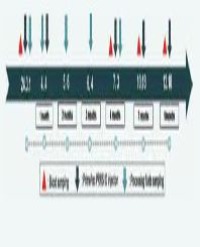
Porcine Reproductive and Respiratory Syndrome (PRRS) causes major economic losses, and cross-protection of Modified-Live Vaccines (MLV) against emerging heterologous strains remains uncertain. This study reports a field based, longitudinal before after intervention study evaluating the impact of a Lineage 7 PRRS MLV (PrimePac® PRRS) during an acute NADC-34 like PRRS outbreak in a commercial 1200-sow farrow-to-finish farm in South Korea. Following a confirmation of an NADC-34 like PRRSV outbreak, a whole-herd mass vaccination program was implemented using intradermal administration (0.2ml) of PrimePac® PRRS. Reproductive performance indicators (farrowing rate, abortions, stillbirths and mummification), vertical transmission dynamics (PRRSV qPCR testing of processing fluids), and post-weaning health outcomes (nursery and grow-finish morbidity and mortality, piglet viremia by qPCR) were monitored longitudinally before and after vaccination. After implementation of the vaccination program, key breeding-herd performance parameters progressively returned toward pre-outbreak baseline levels. PRRSV became undetectable in the processing fluid samples within one month, indicating rapid interruption of vertical transmission. Improvement in nursery and grow-finish pig performance occurred more gradually, consistent with ongoing virus circulation in a continuous-flow production system. This findings demonstrate that, although complete virus elimination was not achieved, a strategic mass vaccination program using a Lineage 7 PRRS MLV substantially mitigated the reproductive and early-life impacts of an NADC-34 like PRRS outbreak. Vaccination combined with biosecurity measures remains a critical component of integrated PRRS control strategies in farrow-to-finish systems where eradication is difficult.
Hyunju Kim1, Oyoung Kwon2, Jooyoung Lee2, Siyeoung Choi3, Hongyao Lin4, Leonardo Ellerma5*, Sungbo Cho6 and In Ho Kim7