SM Case Reports

Archive Articles

Article Image 1

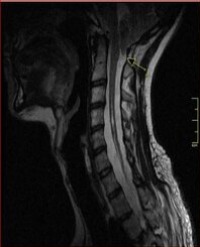
A Case of Arnold Chiari Malformation Type 1 Admitted with Hypoesthesia

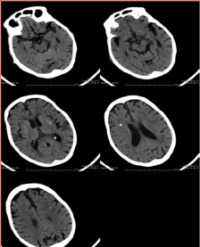
Arnold Chiari malformation type I is a developmental pathology characterized by herniation of the cerebellar tonsils towards to the spinal canal through the foramen magnum. The herniation of the cerebellar tonsils can also compress or stretch anatomical structures in the brainstem, leading to various symptoms. This condition is rarely seen, due to common and non-specific complaints, it may be confused with other diseases, and patients may get misdiagnosis. In this article, a patient who applied to hospital with the complaint of hypoesthesia and diagnosed as Arnold Chiari malformation type 1 is reported.

Aykut Aytekin¹, Adem Parlak², Sedat Develi³, Safak Ekinci⁴, and Nehir Parlak⁵*

Article Image 1

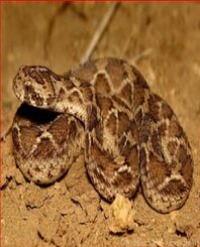
Generalized Fatigue, Amenorrhea Due to Snake Bite?

Introduction: Hypopituitarism is a clinical syndrome characterized by deficiency of pituitary hormone production. Snake bite is an uncommon cause of hypopituitarism. Envenoming by poisonous animals is an occupational hazard often faced by farmers and farm laborers in tropics. Viperine snake bites cause local cellulitis, tissue necrosis, bleeding manifestations, disseminated intravascular coagulation (DIC), acute kidney injury (AKI), shock, cardiac arrhythmia, neurotoxicity, coma, and death. Worldwide estimates vary from 1.2 to 5.5 million snakebites, 421,000 to 2.5 million envenomings, and 20,000 to 125,000 deaths

Case Report: We report case of a 37-year-old female who was bitten by a Saw scaled viper snake and developed chronic hypopituitarism diagnosed after 11 months. Patient improved with treatment of essential hormones

Conclusion: Hypopituitarism after a snake bite is often insidious in onset and a rare complication. Diagnosis is often delayed due to unawareness causing significant morbidity. Physicians should have a low threshold to suspect hypopituitarism in snake bites

Sreenivasa Rao Sudulagunta¹, Mahesh Babu Sodalagunta², Hadi Khorram³, Mona Sepehrar⁴, and Zahra Noroozpour³*


Article Image 1

Punctate Palmoplantar Keratoderma (Brauer-Buschke-Fisher Syndrome) - Report of a Case and Review of the Literature

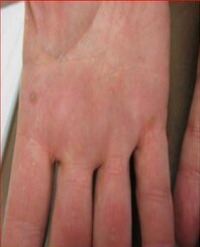
We report a 47-year-old Caucasian man, a construction worker, with multiple asymptomatic hyperkeratotic lesions on the palms and soles. The lesions developed after puberty and slowly increased in size and number thereafter. His father, sister, and son had similar lesions on the palms and soles. Examination revealed numerous yellowish brown hyperkeratotic papules varying in size from 1 to 3 mm irregularly distributed on his palms, fingers, and soles. Central depressions were observed in some of the larger lesions. Some of the papules were coalesced to form larger hyperkeratotic plaques on the weight-bearing areas of his soles. A diagnosis of punctate palmoplantar keratoderma type 1 was made based on a positive family history, typical lesions (punctate hyperkeratotic papules), typical locations (palms and soles), and typical course (lesions increased in size and number with time)

Alexander KC Leung¹ and Benjamin Barankin²*


Article Image 1

Pyrexia Due to Isoniazid

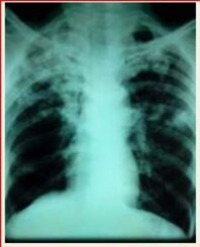
Isoniazid is one of the commonest drugs used for treatment and prophylaxis of tuberculosis especially in developing countries. The commonest adverse effects of isoniazid are mild increased liver transaminases (10-20%), peripheral neuropathy (dose-related incidence, 10-20% incidence with 10 mg/kg/d), loss of appetite, nausea, vomiting, abdominal pain and weakness. Adverse effects also include fever with rash but only fever without any other adverse effects or rash is uncommonly reported. We report a patient with pulmonary tuberculosis developing isoniazid induced pyrexia without rash with first dose of treatment. It can occur within 8 hours of starting the first dose. Patients may have drug allergies even though they might not report. High index of clinical suspicion is required for diagnosis as serology and other investigations have limited value

Sreenivasa Rao Sudulagunta¹, Mahesh Babu Sodalagunta², Shyamala Krishnaswamy Kothandapani³, Hadi Khorram⁴, and Mona Sepehrar⁵*


Article Image 1

Case Reports: The Basis of the Scientific Research

Medical knowledge is the result of individual and collective experience produced over time. It has been that way since the medicine was recognized as a science and since this is provided in a collegial way [1].

Since the knowledge of the human anatomy, physiology of its different systems, the behavior of different diseases to the application of new diagnostic technologies and innovative therapeutic techniques based on molecular medicine, this has been the result of the gathering of individual experiences based on observation and experimentation [1,2]

Carlos Guillén A*


Article Image 1

Dialysis Disequilibrium Syndrome: The Changes of Intracranial Pressure

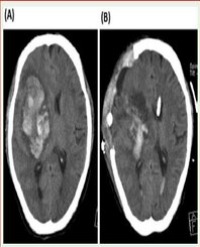
Dialysis disequilibrium syndrome is a rare but well-known serious complication of dialysis. Cerebral edema associated with increase intracranial pressure has been considered to be main reason of dialysis disequilibrium syndrome. However, the direct evident of intracranial pressure changes in dialysis disequilibrium syndrome has been rarely described. Here, we reported a case of dialysis disequilibrium syndrome in a patient with acute stroke and intermittent hemodialysis. The changes of intracranial pressure levels before and during hemodialysis were analyzed and the results provided a significant evident to support the previous hypothesis.

Kai-Chao Yang¹, Chih-Ju Chang¹², and Cheng-Ta Hsieh¹²³*


Article Image 1

An Unusual Clinical Case of Cysticercosis Mimicking a Triceps Enthesitis

We present a case report of a middle age female with a cysticercosis with a clinical feature resembling a triceps enthesitis. The absence of improvement with conventional enthesitis treatment and the inflammatory signs conducted to perform an ultrasound scan. It demonstrated two rounded lesions and an intense inflammatory reaction. Two cysticerci were surgical removed after antibiotic and antiparasitary treatment.

Carlos A Guillen-Astete¹ and Mónica Luque-Alarcon²*


Article Image 1

Fatal-Hair-Dye-Poisoning

Suicide is the 10th leading cause of death worldwide with an increasing trend and accounted for 187,000 deaths in 2010 in India. Super Vasmol 33™ is a low cost, freely available, emulsion based hair dye used with main components of Paraphenylene Diamine (PPD), resorcinol, propylene glycol and sodium Ethylene Diamine Tetra Acetic Acid (EDTA). We report hair dye poisoning in a 50 year old male patient who consumed around 50 ml of Super Vasmol 33™ and expired on day 3. PPD component of hair dye can cause rhabdomyolysis, laryngeal edema, severe metabolic acidosis, Acute Kidney Injury (AKI) and myocarditis. No known specific antidote is available at present and treatment is supportive. Public awareness of the toxic potential and regulating the PPD concentration in hair dyes is to be done

Sreenivasa Rao Sudulagunta¹, Jayadevappa Gonivada², Mahesh Babu Sodalagunta³, and Zahra Noroozpour²*


Article Image 1

Chondrodermatitis-Nodularis-Chronica-Helicis-et-Antihelicis-in-a-63-Year-Old-Man

Chondrodermatitis nodularis helicis also known as Chondrodermatitis Nodularis Chronicus Helicis (CNCH), typically presents as a tender, solitary, firm, well-demarcated, dome-shaped, erythematous or skin-colored papule/nodule on the pinna. The condition is usually unilateral, although cases of bilateral CNCH have also been described. Bilateral CNCH lesions are usually symmetrical. We herewith report a 63-year-old man with a CNCH lesion on the right antihelix and another CNCH lesion on the left helix.

Alexander KC Leung¹ and Benjamin Barankin²*


Article Image 1

The Disreputable History of Case Reports in Ophthalmology

Only authors know how tough is today to publish an interest case report in ophthalmology. Even the case is not previously described and for sure its publication will help other clinicians to better treat their patients, many submitted case reports are rejected quickly by most clinical journals.

Although it’s noticeable that some case reports still make a valuable contribution to medical literature [1], there is a trend to think that the reputation of the journal depends on the lower case report published. Often, you will find them at the end of the journal, after the editorials and scientific studies. It is true that the description of a case report takes less time that the design and the performance of a prospective study. Besides, the impact factor of the journal might easily grow publishing scientific studies. However, the reader will find more information to use in clinical practice in case reports, as it’s a challenge way to learn more about its specialty

Alfonso Casado1 *


Article Image 1

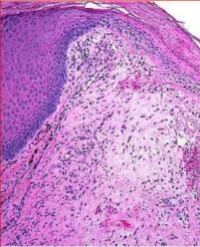
An Aggressive Epidermotropic Type of Cutaneous T-Cell Lymphoma: A Case Report

Mycosis Fungoides (MF) is the most common primary cutaneous lymphoma. Co-expression of CD4 and CD8 in a subset of atypical T-lymphocytes of MF is rare. Herein, we reported a case of CD4/CD8 dual-positive MF in a 70-year-old man. The biopsy demonstrated significant epidermotropism of atypical, hyperchromatic, cerebriform of lymphocytes. Immunohistochemical staining revealed that the lymphoid infiltrate is CD4/CD8 double positive with CD5 and CD7-positive

Jinxin Yang¹ and Zhu Shen¹*


Article Image 1

A New World for Pediatric Ophthalmology

The past decade has seen the change of habits in several cultures. Today, children spend more time in front of the TV or playing videogames than years ago. However, the changes experienced by these habits about near-activities over the past decade remain unprecedented. The use of mobile phone or tablet has achieved a principal role in children habits, not only to have fun, but also to study, even encouraged by teachers. It is clear that these devices provide a lot of information and a more attractive way to learn different signatures such as History or Natural Sciences. However, this change in daily routine might result in a change of strabismus pathologies of children, and ophthalmologists should be aware of it.

Andrea Fernández-Menéndez¹ and Alfonso Casado²*


Article Image 1

The Cinderella of Evidence-Based Medicine?

Letter to the Editor

“The stepmother gave her the meanest work in the house to do; she had to scour the dishes, tables, etc., and to scrub the floors and clean out the bedrooms. The poor girl had to sleep in the garret, upon a wretched straw bed, while her sisters lay in fine rooms with inlaid floors, upon beds of the very newest fashion, and where they had looking-glasses so large that they might see themselves at their full length. The poor girl bore all patiently, and dared not complain to her father, who would have scolded her if she had done so, for his wife governed him entirely.

Álvaro Sanz Rubiales¹ and María Luisa del Valle²*


Article Image 1

Cerebral Small Vessel Disease: Are the First Findings Too Late?

Some medical disorders have an insidious development with an asymptomatic period which may represent the authentic therapeutic window. Probably, this is the case of the Cerebral Small Vessel Disease (CSVD). This term includes several pathological processes of different aetiologies which cause an increase of parietal thickness in arterioles, capillaries and venules. This phenomenon affects basically the basement membrane and it is associated with the narrowing of the lumen and the weakening of the wall. The consequences of these alterations are the loss of proteins to interstice and the slowness of blood flow, which increase the risk of ischemia and tissue bleeding [1,2].

Alvarez-Perez FJ1 *


Article Image 1

An Unusual Case: Intensely Pruritic Eruptive Syringoma

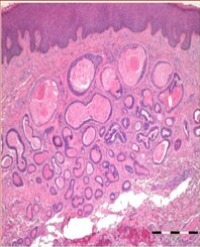
Eruptive syringoma is a generalised variant of syringomas. They are rare benign tumours of the eccrine sweat ducts typically presenting asymptomatically, but occasionally with pruritus when associated with perspiration or in individuals with a background of atopy. Although treatment is usually mostly oriented to cosmetic improvement, it often proves difficult and unsatisfactory.

We present a diagnostically challenging case of eruptive syringoma in a young woman who presented atypically, with an intensely pruritic dermatosis.

Sheena Ramyead¹ and Lucia Pozo-Garcia²*


Article Image 1

Sleep, More Than Just a Good Habit in Children and Adolescents

Sleep has been part of human life since the beginning of evolutionary time. Nevertheless, sleep
patterns have changed over the centuries according to the needs, the environmental factors and
the social life of each new generation. Between 70,000- 40,000 BC Homo sapiens adopted the
monophasic sleep pattern that concentrated sleep at night. Since then, remedies and questions
about sleep have accompanied human evolution. Although ancient civilizations became aware of
the benefits of an adequate sleep, the knowledge about this physiological function in humans has
been limited until recently. Indeed, sleep was considered over the centuries an inactive stage of
the brain caused by a lack of blood flow.

Marta Moraleda-Cibrián1*