SM Case Reports

Archive Articles

Article Image 1

Prevalence and Characteristics of Internet Addiction among University Students in Mauritius

Background: In recent years, internet penetration in the island of Mauritius has increased substantially. However, increasing internet use is also associated with adverse effects especially amongst the young internet users and there is a scarcity of research in this area.

Objectives: To assess the prevalence and characteristics of internet addiction in the student population of the University of Mauritius.

Methodology: A cross-sectional study using a shortened and contextualized Internet Addiction Test (IAT) (Young, 1998) was carried out amongst 372 participants.

Results: It was observed that 5.1% of all students (4.9% males and 5.4% females) showed features of severe internet addiction. Although 42.5% perceived themselves to be addicted to the internet, they did not have significantly higher IAT scores than those who did not. There was no statistically significant difference between the prevalence of internet addiction in males and females. Main online activities comprised preferentially of information searching (94.9%) chatting/communicating (90.6%) and downloading media content (87.9%). The mean daily time online was 4.9 hours (standard deviation=3.1 hours). The mean years of internet use was 7.1 years (standard deviation=2.7 years). Results of simple linear regression showed a negative correlation and a small effect size of years of internet use on IAT scores and daily time online was positively correlated with and had a mild effect on IAT scores.

Conclusion: This study provides useful information on prevalence rates and characteristics of internet addiction in young people in Mauritius. Further studies are required to follow-up the evolution of this condition to assess its impact on young people’s health over time.

Goorah Smita* and Fuzoolla Ahmad Azhar


Article Image 1

Cefepime Neurotoxicity in a Patient Undergoing Hemodialysis: A Case Report

Neurotoxicity is a rare complication of cephalosporin therapy. This side effect has been reported mainly in patients with renal insufficiency. Patients with chronic renal failure treated with cefepime can be more sensitive to neurotoxicity despite dose adjustment. We report a 65-year-old male patient who underwent hemodialysis treated with cefepime who experienced neurotoxicity while receiving adjusted dose cefepime.

Aynur Atilla¹*, Banu Ramazanoğlu², Özgür Günal¹, and Sırrı Kiliç¹


Article Image 1

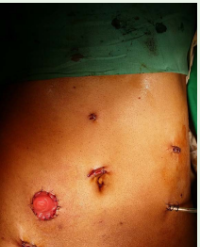
Total Laparoscopic Anterior Resection and L/Adrenalectomy for Rectal Adenocarcinoma with Concurrent Adrenal Adenoma Mimicking Metastasis: Decision Making Process in an Unusual Case and Brief Review of Literature

The most common sites of metastasis of the Colorectal Cancer (CRC) are liver and lung. Though Adrenal metastasis is a relatively frequent finding during autopsy, clinically significant adrenal metastasis is rare. Adrenal adenoma mimicking colorectal metastasis is extremely rare and poses significant challenge in the diagnosis. Simultaneous adrenal adenoma mimicking colorectal metastasis and colorectal carcinoma has not been described in literature. We describe a 62-year-old Sri Lankan male with adenocarcinoma of recto-sigmoid junction and a solitary lesion in the left adrenal gland which was found incidentally on Computed tomography. Since the possibility of an adrenal metastasis could not be ruled out he underwent total laparoscopic anterior resection and left adrenalectomy. His histology revealed an adenocarcinoma of upper rectum with L/adrenal cortical adenoma. A review in the literature showed that synchronous solitary adrenal adenoma with atypical features suggesting a metastasis coexisting with colorectal carcinoma is very rare.

Duminda Subasinghe¹*, Sonali Gunatilake², Suchintha Tilakarathana¹, Amarabandu PN³, and Amal Priyantha TG⁴


Article Image 1

A Case of Koolen de Vries Syndrome or 17q21.31 Microdeletion Syndrome Associated with Infertility: A Case Report

The chromosome 17q21.31 microdeletion syndrome (Koolen de vries Syndrome) is a genomic disorder in patients with unexplained mental retardation that has originally been identified using high resolution genome analyses such as array CGH. Here we report the clinical characterization of a man with the 17q21.31 microdeletion syndrome and infertility. Clinical examination reveals that mild developmental delay, poor speech development, stutter, facial dysmorphisms including a long face, high narrow palate, a tubular or pear-shaped nose and a bulbous nasal tip, a friendly behavior and the main characteristic features to refer was infertility. Other clinically important features include hypothyroidism, bilateral asymmetry in brain MRI, without any anomalies in urogenital examination and echocardiography. Using array CGH we found pathologic loss of 921 kb on 17q21.31compatible with Koolen de Vries syndrome. The chromosome 17q21.31 microdeletion syndrome or Koolen de Vries syndrome recognizable as a genomic disorder with broad features and infertility may be occur.

Azra Moradalibeigi¹, Neda Asgarzade², and Hojatolah Rezaei³*


Article Image 1

A Case of Koolen de Vries Syndrome or 17q21.31 Microdeletion Syndrome Associated with Infertility: A Case Report.

The chromosome 17q21.31 microdeletion syndrome (Koolen de vries Syndrome) is a genomic disorder in patients with unexplained mental retardation that has originally been identified using high resolution genome analyses such as array CGH. Here we report the clinical characterization of a man with the 17q21.31 microdeletion syndrome and infertility. Clinical examination reveals that mild developmental delay, poor speech development, stutter, facial dysmorphisms including a long face, high narrow palate, a tubular or pear-shaped nose and a bulbousnasal tip, a friendly behaviour and the main characteristic features to refer was infertility. Other clinically important features include hypothyroidism, bilateral asymmetry in brain MRI, without any anomalies in urogenital examination and echocardiography. Using array CGH we found pathologic loss of 921 kb on 17q21.31compatible with Koolen de Vries syndrome. The chromosome 17q21.31 microdeletion syndrome or Koolen de Vries syndrome recognizable as a genomic disorder with broad features and infertility may be occur.

Hojatolah Rezaei¹, Neda Asgharzadeh², and Azra Moradbeigi³


Article Image 1

An Unexpected Case of Ulceroglandular Tularemia in a Pediatric Patient on Long Island

Tularemia is a zoonotic infection caused by the bacteria Francisella Tularensis. It is a small, fastidious, non-spore- forming aerobic gram negative coccobacillus which in addition to humans affects more than a 100 animal species particularly ground squirrels, rabbits, hares, voles and muskrat.

Aderonke Adefisayo* and Christy Beneri DO


Article Image 1

Carcinosarcoma of the Breast in a Pregnant Patient: A Case Report and Review of Literature

Breast carcinosarcoma is a rare tumor of the breast consisting of 0.08 to 0.2% of all cases of breast cancer [1]. The incidence of this type of tumor is very low and in this case the patient presented with the malignancy in her 3rd trimester of pregnancy. Due to her presentation while pregnant the case becomes even more rare.

Daniel Fegely¹* and Adriana Suarez-Ligon²


Article Image 1

Appendiceal Mass - Determining Resection with Frozen Section: A Case Report and Review of Literature

Guidelines for the type of resection to be done for an appendiceal mass are usually determined by the size and location of the mass in the appendix. This is because most masses of the appendix are found intraoperatively or after pathological examination. In this case an appendiceal mass was seen on CT scan and intra-operative frozen section of the appendix was utilized to determine the type of resection that was required. The patient was found to have adenocarcinoma of the appendix on frozen section and a right hemicolectomy was then done during the same case. This case is also worth discussion as primary adenocarcinoma of the appendix is a rare tumor representing 0.03% of all appendiceal pathology.

Daniel Fegely* and Rodolfo Colaco


Article Image 1

Ultrasound Appearance of Acute Hepatitis A: A Case Report in the Wake of a Recent Outbreak in Utah Causing 2 Deaths

Outbreaks of acute hepatitis A in the developing world are infrequent. When an outbreak occurs, it is common to affect people living in areas with unsanitary living conditions. The symptoms of acute hepatitis A infection are nonspecific, including fever, malaise, nausea, and abdominal pain. There was a pervasive hepatitis A outbreak documented in Salt Lake and Utah counties in the spring of 2018. This epidemic resulted in 2 deaths. This case report is a rare example of the ultrasound appearance of acute hepatitis A demonstrating marked gall bladder wall thickening, followed by a discussion of its clinical course, proposed physiologic mechanisms, and a review of its classic ultrasound imaging features.

Adam Binneboese* and Ahmed Salem


Article Image 1

Managing Intracranial Pressure in HIV-associated Cryptococcal Meningitis Saves Lives: Case Report of Two Patients Admitted to a Tanzanian Hospital

Cryptococcal meningitis remains a major cause of HIV-related mortality worldwide with majority of cases occurring in sub Saharan Africa. Raised intracranial pressure is a common complication of cryptococcal meningitis and if left untreated is associated with irreversible blindness, deafness and other neurological and neurocognitive impairment. We present two cases which highlight the importance of therapeutic lumbar puncture in the management of raised intracranial pressure in HIV-associated cryptococcal meningitis.

Rehema H Simbauranga¹*, Sokoine L Kivuyo¹, Sayoki G Mfinanga¹,⁵, Thomas S Harrison², and Rob Peck³,⁴


Article Image 1

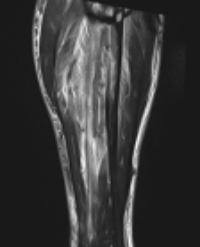
Acute Compartment Syndrome Complicating Deep Venous Thrombosis

A 40-yr old, heavily-built man initially presented to his general practitioner 2 days before admission with recent onset of pain and swelling in his left calf. A duplex ultrasound scan demonstrated a popliteal and lower leg deep vein thrombosis [DVT], extending 15 cm above the knee into the femoral vein. He was started appropriately on enoxaparin 130 mg bd. Despite the treatment, the pain got worse, particularly when standing, and he was admitted for symptom control.

Senthil Dhayalan¹, David Jardine¹, Tony Goh², and Nicholas Lash³