SM Journal of Nephrology and Kidney Diseases

Archive Articles

Article Image 1

Accidental Transplantation of a Deceased Donor Kidney with a Large Calculus: Case Review and Management

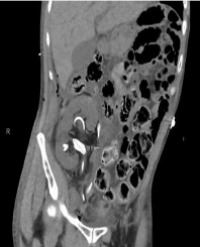
Historically, the presence of stones in a donor kidney has been a contraindication to kidney use for transplantation. However, favorable experiences transplanting living donor kidneys with isolated stones as well as successful management of de novo stone formation following living or deceased donor kidney transplantation have provided insights regarding the benefits and risks of this strategy. The limited supply of available donor kidneys has led to a reexamination of donor selection criteria to meet demand. This reevaluation is also influenced by medical advancements that have allowed for the safe management of allograft kidney stones without compromising outcomes. Herein we report the accidental transplantation of a kidney with a large pre-existing calculus from an otherwise acceptable deceased donor. Based on literature review and given the benefits of kidney transplantation versus dialysis in the setting of prolonged waiting times, expansion of the donor pool to include kidneys with large or multiple stones may be a feasible option to improve utilization and access without necessarily compromising subsequent outcomes.

Keywords: Donor-Gifted Stone; Donor Selection; Kidney Nonuse; Percutaneous Nephrolithotomy; Urolithiasis

Abbreviations: CT: Computerized Tomography; eGFR: Estimated Glomerular Filtration Rate; KDPI: Kidney Donor Profile Index.

Jigish B. Vyas1, Randy K. Casals2, Colin E. Kleinguetl2, Bradley M. Swinson3, Christopher J. Webb1, Alan C. Farney1 and Robert Stratta1*
Article Image 1

Transplant Renal Artery Stenosis Following Ex vivo Renal Artery Endarterectomy: Report on Two Cases

Introduction: Transplant renal artery stenosis (TRAS) is the most common vascular complication following kidney transplantation. Deceased donor kidneys exhibiting severe atherosclerosis involving the renal artery, if untreated, represent one cause of TRAS.

Methods: We report herein two cases of TRAS that occurred following back bench ex vivo eversion endarterectomy (EE) prior to deceased donor kidney transplantation (DDKT).

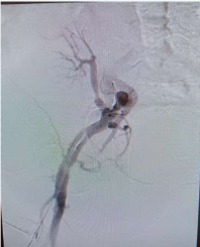
Results: Both patients presented in the first year following DDKT with worsening hypertension and one patient experienced acute kidney injury. Duplex ultrasonography was suspicious for markedly elevated renal artery velocities in the proximal to mid-renal artery segment with evidence for distal turbulence. Subsequent arteriography through an ipsilateral femoral approach confirmed severe TRAS that was successfully treated with balloon angioplasty and stenting. Both patients experienced improvements in blood pressure control, and one patient had resolution of acute kidney injury.

Conclusion: Ex vivo EE may be performed successfully as a rescue procedure to prevent nonuse of donor kidneys with severe intrinsic atherosclerosis. However, these patients may still be at risk for developing TRAS, possibly from a localized dissection occurring secondary to an intimal flap.

Keywords: Deceased Donor; Eversion Endarterectomy; Renal Atherosclerosis; Transplant Renal Artery Stenosis

Abbreviations: BMI: Body mass index; DDKT: Deceased donor kidney transplant; EE: Eversion endarterectomy; GFR: Glomerular filtration rate; KDPI: Kidney donor profile index; TRAS: Transplant renal artery stenosis.

Rana Kumar, Arianna Cabrales, Giuseppe Orlando, Christopher Webb, Emily McCracken, Alan C. Farney, and Robert J. Stratta*