SM Journal of Pediatric Surgery

Archive Articles

Article Image 1

Hepatopulmonary Fusion in a Newborn Diagnosed during Surgical Repair of Right Congenital Diaphragmatic Hernia

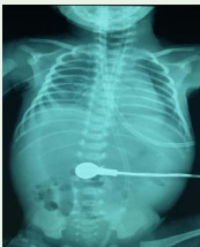
Hepatic Pulmonary Fusion (HPF) is a rare malformation in which adhesion between the liver and the right lower lobe of the lung occurs. This situation is frequently associated with right Congenital Diaphragmatic Hernia (CDH), and often only discovered during surgical repair of the defect.

Few cases have previously been reported in the literature [1]. In this paper we are reporting a case of HPF diagnosed fortunately in a tow days old female baby, at time of surgical repair of right side CDH and we discuss the modalities of diagnosis and the difficulties encountered during surgery.

Rechid Khemakhem¹*, Mohamed Raiz Elhaq Rao¹, Refeat Mohamed Sadek¹, Adel Metwali Fadhl¹, Majdi Gueessa², Mohamed Yousef², and Houda Rahay²


Article Image 1

Bedside Repair of Ruptured Omphalocele in Newborn: A Case Report

Newborn presenting with ruptured omphalocele is an emergency which threatens the life of baby. We are reporting a case of a male newborn baby, born in hospital and had ruptured omphalocele sac during vaginal delivery. After reduction of herniated bowel excess omphalocele sac was excised and remaining sac was closed using absorbable suture material. Patient was kept NBM for 4 days and gradually started on feeds. On further evaluation patient was found to have Beck with –Widemann syndrome. Patient’s karyotype was normal. Patient kept on regular follow-up with serial USG-KUB after discharge. To our knowledge, there are only few reported cases of bed-side repair of ruptured omphalocele sac. This case is presented for its simple and effective bedside management.

Prashant S Patil*, Rahul Kumar Gupta, Paras Kothari, Abhaya Gupta, Ravikiran Kamble, K Vishesh Dikshit, and Geeta Kekre


Article Image 1

Duplicate Bladder Exstrophy with Superior Vesical Fistula in a Male Infant, A Rare Variant

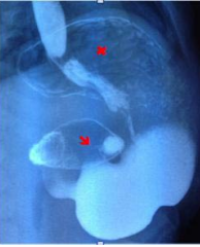
We report a rare variant of exstrophy-epispadias complex, a duplicate bladder communicating with exstrophy bladder via a fistula. On presentation appeared to be a case of classical bladder exstrophy with diastasis of the pubis and rectus muscles, a low lying umbilicus and a form of epispadias. On careful examination phallus appeared normal with normal external urethral meatus.The micturating cysto-urethrogram was done which elicited a rare anomaly; duplicate bladder exstrophy.

Sajni I Khemchandani¹*


Article Image 1

Gastric Perforation in Two Neonates: Spontaneous? Secondary to Feeding Tube: A Case Report

Gastric perforation in neonates is an uncommon entity. Definite causes are found in few patients. Iatrogenic perforation secondary to introduction of a hard nasogastric tube has been reported in literature. Majority of cases have no obvious reasons.

We present two cases of gastric perforation in preterm babies probably caused by nasogastric tube. One baby had pneumoperitoneum while other one did not show gas under diaphragm. Etiopathogenesis of gastric perforation in preterm babies is discussed along with a comment on Spontaneous Intestinal Perforation (SIP).

Patil Prashant S¹*, Gupta Abhaya¹, Kothari Paras L¹, Kekre Geeta¹, Patil Shalil H¹, Deshmukh Shahaji¹, Drvishesh Dikshit¹, and Kulkarni Apoorva¹


Article Image 1

Hepato Biliary Ascariasis with Pancreatitis in a Young Child

Ascariasis is the most common helminthic infestation in the tropical countries and hepatobiliary complications are less common in children. We report a young girl who presented with acute abdomen due to hepato biliary ascariasis with pancreatitis managed by endotherapy using forward view gastroscope.

Sumathi Bavanandam¹*, Nirmala Dheivamani¹, and B Bhaskar Raju¹


Article Image 1

Laparoscopy Approach for Non-Traumatic Acute Intestinal Perforation in Children

Background: Non-traumatic acute intestinal perforation secondary to Enterocolitis is a severe event that requires immediate treatment. Exploratory laparotomy has been the gold standard in the past decades. Recently, several reports described that minimal invasive surgery has been successfully applied to colonic perforation in emergent settings for both adult and children. The aim of this study is to evaluate the efficacy of laparoscopy on non-traumatic intestinal perforation in children.

Method: Between June 2009 and September 2013, patients under 18 year-old who underwent laparoscopic surgery for non-traumatic acute intestinal perforation were enrolled. The demographics of the patients, operative details, postoperative complications and the time resuming oral intake were retrospectively collected by chart review.

Result: There were consecutive 7 patients, including 5 boys and 2 girls. The mean age was 8.3 ± 4.2years (range: 2-15 years). A diversity of operative procedures was undertaken, encompassing tube cecostomy in 1 case, primary repair with tube cecostomy in 1 case, primary repair in 4 cases, and appendectomy in 1 case. Conversion to laparotomy was not necessary. The time resuming oral feeding was between postoperative day (POD) 6.3 ± 1.4th (range: 5-8 days). For two cases receiving tube cecostomy, constant stool leaking beside the tube predisposed to chronic wound infection and granolomas which required further surgeries. Otherwise, there was no complication recorded, such as surgical site infection, intestinal obstruction.

Conclusion: Laparoscopic surgery for non-traumatic acute intestinal perforation in children is technically feasible and providing benefits of low complication rate and satisfactory cosmetic outcomes. Minimally invasive surgery could be considered as first-line approach for non-traumatic acute abdomen. For cases of solitary perforation, primary repair can be safely performed through laparoscopy.

Wen-Chun Sun¹, Chin-Hung Wei²*, Nien-Lu Wang², and Yu-Wei Fu³


Article Image 1

Choledochal Cyst: A Different Disease in Newborns and Infants

Choledochal Cysts (CC) is a rare entity with incidence of 1:10,000 - 1:150,000 live births and 4 times more common in females. CC in childhood frequently categorized into an “infantile” group (patients less than one year old) and “classical pediatric” (CP) group (age more than one year but less than 18). Infantile group differ markedly from classical pediatric group in their clinical presentation and pathological anatomy. Todani et al [1] have characterized the infantile CDCs as follows: (1) Cystic choledochal dilatation, (2) Abdominal mass with jaundice and acholic stools, (3) No symptomatic association with acute pancreatitis and (4) A low amylase level in bile.

Vijai Datta Upadhyaya¹*


Article Image 1

Cervical Ganglioneuroma in a Child

Ganglioneuroma is a rare, benign, non-invasive and neurogenic tumor. These tumours usually present as a slowly enlarging mass, predominantly in single form. Due to its rarity and the lack of specific signs and symptoms, it is often difficult to reach a definite diagnosis prior to pathological examination. We are presenting a case of 18 month old child who presented with a neck swelling of short duration, which was completely excised.

Hemonta Kr Dutta1*


Article Image 1

Do Medical Professionals Need Skill Development?

Not only a medical post-graduate, but also a medical graduate is a professional in all respects. What is required of a professional is skill, knowledge and professionalism.

Sushmita Bhatnagar¹*


Article Image 1

Prevention of Birth Defects: A Priority for Nations

Under the aegis of the United Nation’s Millennium Development Goal 4 (MDG 4), the global under five childhood mortality rate (U5MR) has declined from 12.7 million in 1990 to 6.3 million in 2013. But despite these gains, the Infant Mortality Rate (IMR) in 2013 was 4.6 million (74% of U5MR)

Hemonta Kr. Dutta¹*


Article Image 1

Urodynamic Challenges in Pediatrics

Purpose: To list and comment urodynamic studies in several Pediatric urological diseases and mention possible improvements.

Methods: Give a Pediatric Urologist opinion and review recent selected literature.

Results: The type of urodynamic investigation has a different purpose depending on the urological pathology we want to study and treat. The following are listed and commented: Vesicoureteral Reflux (VUR), Posterior Urethral Valves (PUV), sacral agenesis, occult spinal dysraphism, exstrophy epispadias complex, Prune-Belly syndrome, anorectal or cloacal malformations, dysfunctional voiding and enuresis

Conclusions: Currently urodynamic studies still require research in different ways such as clinical relevance, methodological and interpretational aspects. Nowadays is necessary determine the role, indication, predictive value, and effect on treatment outcomes of urodynamic in the pediatric population.

Jose Antonio March Villalba, MD, PhD¹*


Article Image 1

Neurally Adjusted Ventilator Assist Mode

Normal breathing patterns determined by the respiratory center are dynamic and synchronous. A signal from the respiratory center is transmitted via the phrenic nerve to the diaphragm leading to contraction and descent of the diaphragm initiating respiration.

Vicki L. Mahan¹* and Monika Gupta¹*


Article Image 1

Recent Advances in Pediatric Surgery

Pediatric surgery-the surgical care of children from the fetus to adolescent-is a comparatively new surgical specialty, which began shortly after the Second World War.

Smriti Choradia¹*


Article Image 1

Scientific Expansion or Scientific Directions: Manifestation of Suspense

Scientific researches show enormous growth in 5 or 6 decades. As public well-being has always been an attractive subject, health investigations are superior studies among scientific branches. This charm has been affecting dynamically various sectors to produce health material for idealistic and/ or economic reasons.

Atilla Senayli¹*


Article Image 1

An Unusual Cause of Neonatal Intestinal Obstruction: Left Paraduodenal Hernia

Left paraduodenal hernia (LPDH) is a rare congenital anomaly usually diagnosed in adulthood. Less than 1% of all cases of small bowel obstruction are due to PDH. We present a case of LPDH in an 18-days-old female and emphasize on considering this uncommun diagnosis in newborns to prevent fatal complications.

S Ammar*, M Jallouli, H Zitouni, M Ben Dhaou, and R Mhiri


Article Image 1

H-Type Tracheoesophageal Fistula in New Born. How to Avoid Delay in Diagnosis?

H type oesotracheal fistula is a rare congenital malformation of the esophagus that poses difficult problems of diagnosis that can sometimes be delayed till the adulthood. Multiple radiologic investigations are necessaries to make diagnosis. Surgical repair is indicated once diagnostic done.

A 2 days old male baby was admitted in NICU for respiratory distress. History start since birth with caught, cyanosis and tachypnea after each oral feeding. A gastric tube was inserted and chest X ray shows it in the stomach. Congenital trachea-esophageal fistula was suspected and oesophagram was done confirming this diagnosis. Surgical repair was performed through cervical incision and post-operative evolution was simple.

Clinical futures, pathogenesis and management of this pathology are discussed.

Rachid Khemakhem¹*, Muhammad Riazulhaq¹, and Magdi Cherbini²


Article Image 1

Umbilical Vein Superficialization and Preservation in Neonates: A Valid Way for Central Line Insertion: First Experience

Objective: We evaluated the feasibility and safety of a new technique of operative Superficialization and preservation of the umbilical vein during neonatal laparotomy with central venous catheter insertion.

Methods: 25 neonates were subjected to this new technique during laparotomy. The technique is performed as follows: after transverse or transumbilical laparotomy incisions, the umbilical vein is dissected 2-3 cm cephaled to the umbilicus. A proximal area of the vein almost of 2 cm is skeletonized and passed to be superficial to the rectus muscle. A very small stab equal to the catheter diameter is done 1- 1.5 cm proximal to the incision site, where the end of the vein is passed via the subcutaneous tissue and skin then fixed by sutures to skin after passage of the suitable size catheter.

Results: In 23 cases, no difficulty was encountered. Operative difficulty was reported in 2 cases where there is anomalous course of the vein in one case. Another case with already inserted catheter, need to be flushed with change of the catheter. Catheter slippage, infection and deep insertion reported each once.

Conclusion: This is the first report of operative Superficialization and preservation of the umbilical vein during neonatal laparotomy which is feasible and safe technique.

Sherif M Shehata¹*, Akram El Batrany², and Abdel Motaleb Effat²


Article Image 1

Preliminary Assessment of Sacral Transcutaneous Electro Stimulation in Pediatric Patients Undergoing Colorectal Surgery

Purpose: The aim of this study was to assess the changing on anorectal manometry pattern and clinical outcome of patients who underwent sTENS to treat constipation after a pull-through procedure for congenital megacolon or who underwent a posterior sagittal approach for anorectal malformations.

Method: Eighteen patients, 12 boys and 6 girls, 8.5 years mean age (1-17 years), who developed constipation on postoperative evolution and did not respond to medical therapy were submitted to sacral transcutaneuos electrical nervous stimulation from January 2015 to December 2015 and had their charts evaluated.

Results: There was remission of constipation in 11.1% of patients (2 out of 18). Manometrically, the resting pressure values (p=0.0125) and maximal contraction (p=0.0217) showed statistically significant differences between pre and post TENS and the percentage of asymmetry of the anal canal, here translated as asymmetry index (%), was lower after performing sTENS and has established a statistically significant difference against pre-sTENS (p = 0.0148).

Conclusion: sTENS has significantly altered some manometrical parameters and has influenced the outcome of these patients. Anorectal manometry is a useful tool in the physiological and functional assessment of the anal canal and sphincter muscle complex in pre and post sTENS.

Elaine CS Martins-Moura¹, Geraldo MN Marques²*, Fábio L Peterlini³, Alcides A Salzedas Netto⁴, and Jose L Martins⁵


Article Image 1

Post-Traumatic Splenic Pseudocyst in Children: A Complication of a Successful Conservative Approach

Blunt abdominal trauma is a major cause of morbidity and mortality among children and the spleen is the most frequently affected solid organ. Splenic conservation has become the accepted treatment for splenic blunt trauma. We report a case of a successful conservative approach with a consequent uncommon complication. The emphasis of this case lies in the fact that despite surgical intervention required to treat the splenic pseudocyst it was possible to preserve this important organ, especially in the paediatric age.

Ana Teresa B Silva¹*, Rui Quintanilha¹, and António Silva Melo¹


Article Image 1

Pediatric Liver Transplantation: A Beacon of Hope

Liver transplantation is an accepted therapy for end stage disease and fulminant hepatic failure. One-year survival has progressively increased to nearly 90% in patients transplanted for most forms of liver disease. Parallel advances in organ procurement, operative technique, use of safe and potent immunosuppressive drugs, and infection control are responsible for improved patient survival. The history of pediatric liver transplantation has clearly shown that success is dependent on strict and integrated multidisciplinary collaboration among pediatricians, pediatric transplant hepatologists, transplant surgeons, nurses, transplant coordinators, psychologists and social workers.

Simi Mohan¹*


Article Image 1

Acute Segmental Necrotising Enteritis, Presenting with Transient Protein Losing Enteropathy and Bleeding Diathesis in a Child Managed Surgically: A Case Report

Background: Necrotizing enteritis is a rare cause of small intestinal obstruction reported mainly from Asian sub-continent. The clinical presentation is of acute gastroenteritis followed by features of bowel obstruction. We present a child who had a rare complication of necrotizing enteritis, unreported in literature.

Case Characteristics: Five year old girl presented with 1 month history of worsening vomiting, altered bowel habits and recently developed petechiae and pedal edema. Child had features of small bowel obstruction and after resuscitation underwent emergency surgery.

Intervention/Outcome: Laparoscopy showed features of necrotizing jejunitis and a formal laparotomy with resection of diseased segment lead to rapid recovery.

Conclusion: High index of suspicion is needed to diagnose necrotizing enteritis. Though most cases can be managed conservatively, clinical deterioration and development of complications may necessitate surgical intervention.

Priyantha Goyall¹, Satish Nunna¹, Shaji Thomas John², and Satish Kumar Kolar Venkatesh³*


Article Image 1

Situs Inversus Abdominis in Association with Intestinal Malrotation and Ladd

Situs inversus is a rare condition. But situs inversus in association with malrotation of the gut and Ladd’s bands not reveled in new-born period is extremely rare. This report describes a girl of 4 years with persistent bile-stained emesis during two months. Her radiological investigations revealed reverse position of stomach and duodenum whereas the heart located in normal position. Surgical exploration noticed stomach and spleen in the right side and liver in the left side with gallbladder in the epigastric area. Intestinal malrotation with Ladd’s band was also noticed. Two levels of obstruction were found. The duodenal obstruction was partial and due to extrinsic compression by Ladd’s band. Jejunal obstruction linked to an intramesenteric “8” crossing immediately downstream the Treitz angle and was also partial. Only jejunal derotation and Ladd procedure allowed the girl healed with an eventful postoperative period. Treatment of duodenal or jejunal obstruction with or without situs inversus is the same.

Missoki Azanlédji BOUME¹*, Komlan ADABRA², Komlan Anani MIHLUEDO-AGBOLAN¹, Serge Codjo METCHIHOUNGBE¹, and Gamedzi Komlatsè AKAKPO-NUMADO¹


Article Image 1

Evaluation of Hemodynamic Parameters during Laparoscopic Cholecystectomy in Children with Sickle Cell Disease and Non-Sickle Cell Disease

Background: Aim of this study is to evaluate if there is any difference in terms of hemodynamic parameters during Laparoscopic Cholecystectomy (LC) in children with Sickle Cell Disease (SCD) and Non-Sickle Cell Disease (NSCD).

Methods: Twenty children with asymptomatic cholelithiasis, recruited for elective LC were allocated into two groups: group 1 (n: 10) children without SCD (control group), and group 2 (n: 10) children with SCD. All of the patients with SCD had preoperative hematological evaluation for the surgical procedure. Study parameters included: heart rate, mean blood pressure, Peak Inspiration Pressure (PIP), end-tidal carbon dioxide concentration (PETCO2), expiratory tidal volume (Vt), O2 saturation, arterial blood gases (pH, PaCO2, PaO2, HCO3), hematocrit and intra-abdominal pressures. Parameters were recorded at five moments: before CO2 insufflation, 15, 45, 60 minutes after insufflation in reverse Trendelenburg position and 5 minutes after CO2 insufflation in the supine position.

Results: Regarding all parameters, before and after CO2 insufflation and after CO2 insufflation, there were insignificant changes in each group and between the two groups. Intra-abdominal pressure changes did not affect the hemodynamic parameters. No postoperative complication was observed and the post-operative hospital stay in two groups was similar.

Conclusion: Although sample size is not enough this study reveal that laparoscopic cholecystectomy does not have any adverse effects on hemodynamic parameters of children with sickle cell disease. Laparoscopic cholecystectomy may be feasible and as safe as in NSCD patients.

Önder Özden¹, Murat Alkan¹, Şeref Selcuk Kılıç¹, and Zehra Hatipoğlu²


Article Image 1

Abdominal Cystic Lymphangioma: About Seven Cases

Cystic Lymphangioma (CL) is a rare benign tumor of malformative etiology. It is seen mainly in children and sits at the neck and axilla. Abdominal localization is rare and representing only 10% of cases.

Aim: To study the clinical, radiological and therapeutic management of abdominal cystic lymphangioma.

Patients and methods: This is a retrospective study of seven cases of abdominal CL collected over a period of 11 years in the department of pediatric surgery, of the children’s hospital of Tunis. These are four boys and three girls with a mean age of 2 years 7 months. The diagnosis was made prenatally in only one case and in postnatal period in the remaining cases due to abdominal pain in 3 cases, an abdominal mass in 4 cases and an acute intestinal obstruction in 2 cases. The radiological diagnosis was made by abdominal ultrasound in 6 cases, and during surgical exploration in emergency in case of acute intestinal obstruction. All patients were operated. The localization of CL was the mesentery in four cases, the left meso-colon in one case, the spleen lodge in one case and the retro-peritoneum in a case. The lesion was totally removed in five cases and partially in 2 cases. The outcome was favorable in all cases outside of flange on occlusion occurred late postoperatively in one case and who has advanced medical treatment.

Conclusion: Abdominal cystic lymphangioma is a benign tumor malformation, preferably sitting in the mesentery. Surgical resection should be as complete as possible but without sacrifice of body, putting the patient free from complications and recurrences.

Rachid Khmekhem¹*, Houda Rahay¹, Sofiene Ghorbel¹, Said Jlidi¹, Wiem Douira², and Ibtisem Bellagha²


Article Image 1

Hydatid Cyst of the Kidney Open in the Urinary Tract: About One Observation

Echinococcosis or hydatic cyst disease of the kidney is extremely rare in children and constitutes only 2-4% of all cases of hydatid disease. It can be complicated by opening in the urinary tract and cause obstructive renal failure.

We present a pediatric case of hydatid cyst of the kidney opened in the urinary tract and causing obstruction and urinary tract dilatation. The presentation is as acute pyelonephritis and the diagnosis was confirmed by renal ultrasound and CT. Surgical treatment is urgent and must be as conservative as possible by excision of the cyst and preservation of the renal parenchyma.

The kidney location of hydatic cyst is uncommon and represents only 2-5% of visceral involvement. The rupture of the cyst in the urinary tract is a complication that can be sometimes the first manifestation of this disease. Treatment should be undertaken urgently to best preserve the renal parenchyma.

Rachid Khemakhem¹, Houda Rahay¹, Faouzi Nouira¹, Sofiène Ghorbel¹, Fouzia Chennoufi¹, Wiem Douira², Lamia Gharsallah³, Ibtisem Bellagha², Sihem Barsaoui³, and Said Jlidi¹


Article Image 1

Gastric Duplication Cyst in Children: A Case Report and Literature Review

Objective: Gastric duplication cyst is rare. The symptoms and signs are nonspecific. Thus, preoperative diagnosis often becomes difficult. It should be differentiated from other possible cases of gastric outlet obstruction. Inspite of this, the prognosis has improved due to improvised operative techniques. We report a rare case of gastric duplication cyst which was successfully treated by mucosal tripping of the cyst wall.

Case Report: A 1-year 5-months boy presented with features of gastric outlet obstruction. A thorough preoperative investigation failed to reach the diagnosis. On exploration, a gastric duplication cyst was detected. It shared a common wall with the stomach and thus, complete excision was not possible. The major part of the cyst was excised. Rest of the cyst wall was treated by mucosal stripping to avoid major resection of the stomach. At 2-year follow up, there was no evidence of recurrences of the symptoms.

Conclusion: Gastric duplication cyst should be kept as a differential diagnosis while dealing with any case of gastric outlet obstruction in children. And when the cyst is not amenable for complete resection, mucosal stripping can be done safely to achieve the fruitful outcome.

Pankaj Halder¹*, Kartik Chandra Mandal¹, Bidyut Debnath¹, and Madhumita Mukhopadhyay²


Article Image 1

Intrauterine Foreign Body in a Child

Foreign bodies in the genital tract are reported more commonly in women. Symptoms are not specific. In our report a child consulting for chronic pelvic pain, was diagnosed with intrauterine foreign body and managed successfully. Early diagnosis and emergent treatment may avoid serious complications. Removal under scope control is a safe therapeutic way.

Saloua Ammar¹*, Mohamed Jallouli¹, Ahmed Kotti¹, Hayet Zitouni¹, Mahdi Ben Dhaou¹, and Riadh Mhiri¹


Article Image 1

Apert Syndrome: Case Presentation

Apert syndrome belongs to acrocephalosyndactyly group of disorders, and it is a autosomal dominantly inherited rare disorder characterized by craniosynostosis, midline facial hypoplasia, severe symmetrical cutaneous syndactyly of the hands and the feet, as well as central nervous system, heart and kidney abnormalities. It is caused by a mutation of the fibroblast growth factor gene located in the 10th chromosome (10q25-26). Clinical presentation of the disease was first described in 1906 by Apert, and it is an easily recognizable disorder with particularly typical physical examination findings. In the light of the current literature, this article reviews and presents a case of Apert syndrome diagnosed based on physical examination findings and chromosomal analysis.

Atiye Fedakâr¹* and Zakir Sakc²


Article Image 1

Accessory Urethra, Accessory Phallus, and Accessory Scrotum: Varied Clinical Scenarios

Introduction: We presented 4 cases managed and operated with varied clinical scenarios; accessory urethra, accessory phallus and accessory scrotum, the study encountered these rare anomalies describing our findings for both anatomical and morphological variations.

Methods: All studied cases were operated in single pediatric surgery unit. All workup was done on basis of clinical presentation accordingly. All patients arranged for chromosomal karyotyping and evaluation of SRY and ATL1 gene loci on X and Y chromosome respectively using polymerase chain reaction amplification PCR. All sites excised sent for histopathology.

Results: Case 1: An 8-months old infant was evaluated for a history of purulent discharge from the opening of the sinus in the midline pre pubic area on the dorsal radix of the penis. Case 2: A 3- days old baby was presented with a mass in the gluteal region with bisexual ambiguity. On evaluation, both vaginal structure and welldeveloped phallus (small penis attached parasitic twin caudally) were present. Case 3: A 4-months old male infant presented with caudal mass (cystic perineal structure) grossly resembling testicle with well prominent phallus covering the anal opening. Case 4: A 2-year old male baby presented with a neighboring ipsilateral bulging peduncular perineal mass resembling phallus measuring 4.7 cm in length and 1.3 cm in width with narrow meatus and a history of drippling urine from this phallus like.

Conclusion: Crucial workup must be submitted including clinical, radiological, chromosomal karyotyping and cytogenic study to asses and resolve such scenarios

Mohammed Joudi Aboud¹*