SM Vaccines and Vaccination Journal

Archive Articles

Article Image 1

Immunotherapy and Vaccination as Cancer Treatments

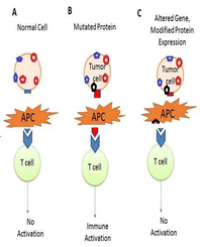
Cancer can eventually develop randomly in anyone at any age. However, characteristic to most cancer cases is a loss of identity in the affected cells. At the birth of each cell, the cell is recognized as “self” by the body’s defense against illness- the immune system. However, if cells develop into a cancer cell line in their lifetime, they ultimately lose their “self-ness” and begin to develop new proteins, now known as novel antigens, that are no longer seen as “self” by the body. This feature makes cancer cells an optimal target for treatment via elimination by the immune system. By arming and modulating the immune system through immunotherapy, it is possible to assist the immune system in the elimination and prevention of cancer. In this review, we will discuss all the current viable treatments of cancer, and why immunotherapy and vaccination maybe our best bets for future prevention and treatment.

Kyle Sutherland1 , Adryan Perez1 and Chuanhai Cao1,2,3*


Article Image 1

BCG Vaccination - Still a Concern

Tuberculosis is a major world public health problem. In 2011, approximately 30% of the world’s population was thought to be infected with Mycobacterium tuberculosis, with more than 1 million deaths attributed to this organism.

BCG vaccine, which contains a live attenuated Mycobacterium bovis strain, is part of the vaccination schedule of several countries worldwide since 1960. Because BCG vaccine has been considered as part of efforts to control tuberculosis, billion doses were applied and it remains one of the most widely used of all current vaccines worldwide. So, million newborns are vaccinated every year through national childhood immunization programs, because in several countries around the world it is administered to all children during the neonatal period.

Persio Roxo-Junior1*


Article Image 1

Vaccination against Influenza

An important aspect that should be further considered in any strategy meant to increase the adhesion rate to vaccinations is the role of doctors in Primary Health Care, particularly in the vaccination against influenza, which in many countries is administered mainly by them. To improve vaccination coverage it is necessary to act on several factors: the education of the population with direct information to parents and relatives of the patients to be vaccinated, by means of State intervention with the introduction of compulsory vaccination for groups at risk, of cost reduction or the offer of free vaccinations (something not always possible in some parts of the world). Proper information to people about the risks and the benefits of vaccination is still the “gold standard” of medical intervention. It is often associated to systems of “call-reminder”, which are meant to assist the individual to become aware of when and how to respond to the call of vaccination in the various stages of life. Among these useful tools are now absolutely considered e-mails, SMS, traditional letters, social networks. The results, of course, are not the same at all ages and for all vaccinations.

Filippo de Nicolellis1*


Article Image 1

Pharmacist as Immunization Provider in Manitoba, Canada

Background: In 2014, Manitoba introduced legislation authorizing pharmacists to administer four publicly funded vaccines to patients seven years of age and older. As part of an expanded scope of practice initiative, pharmacists could administer the Human Papilloma Virus (HPV) vaccine, Tetanus-diphtheria-acellular pertussis (Tdap) vaccine, Pneumococcal Polysaccharide (PPV23) vaccine, and seasonal influenza (FLU) vaccine. Pharmacists began administering the four vaccines as of September 1, 2014, three weeks before the influenza immunization campaign began. This study assesses the initial impact that pharmacists had on the population uptake of the seasonal influenza vaccine as well as the other three publicly funded vaccines.

Methods: The data for this study were obtained from Manitoba Immunization Monitoring System (MIMS), the population-based and province-wide immunization registry. We analyzed immunizations of the four publicly funded vaccines administered by all immunization providers in Manitoba during two periods: September 1, 2013 to January 31, 2014 (2013-2014) and September 1, 2014 to January 31, 2015 (2014-2015).

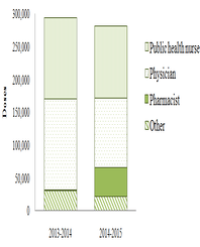
Results: Between September 1, 2014 and January 31, 2015, within the first few months after pharmacists in Manitoba began immunizing patients, they administered 44,220 doses of HPV, Tdap, PPV23 and FLU in total. They contributed significantly to the FLU immunization program, and were the third largest provider, especially for urban residents and patients aged 45 and older. Overall, they administered 43,638 FLU doses (15% of the provincial total). The number of FLU immunizations provided by physicians decreased by 32,573 doses; however, physicians administered more immunizations to the six months to five years age group in 2014-2015 (12,445) than in 2013-2014 (11,969).

Conclusion: Pharmacists’ participation in Manitoba’s publicly funded immunization program has been well accepted in Manitoba. However, the provider expansion did not increase the uptake of the FLU vaccine in the 2014-2015 season. Regardless, the participation of pharmacists in the provincial immunization program increases access to immunizations, and could reduce pressure on other primary care providers. This could potentially decrease wait times and increase availability of appointments for patients with more serious medical issues. Further studies are required.

Yichun Wei1*, Songul Bozat-Emre1,2, Inga Hossack1 and Tim Hilderman1,2


Article Image 1

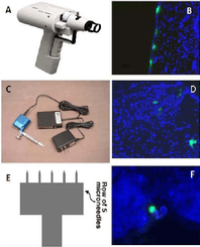
DNA Vaccines Delivered by Microneedle and Tattoo Gun Induce Protective Immune Responses to HLA-A2.1 Restricted CRPV E1 and HPV16E7 Epitopes in HLA-A2.1 Transgenic Rabbits

Objective: We assessed two novel and cost-effective DNA delivery methods as alternatives for our well established gene gun delivery system, using a preclinical rabbit papillomavirus model.

Methods: HLA-A2.1 transgenic rabbits were immunized with CRPVE1ep1-5 or HPV16E7/82-90 epitope DNA vaccines via gene gun, tattoo gun or microneedle and challenged with either wild type CRPV or CRPV containing HPV16E7/82-90. The tumor outgrowth were monitored and recorded weekly. In vivo killing was conducted in tattoo gun and microneedle vaccinated animals.

Results: Tattoo gun delivery provided comparable protection with both DNA vaccines when compared with gene gun. Microneedle provided similar protection as tattoo gun. Specific in vivo killing was detected in CRPVE1ep1-5 DNA vaccinated animals by both tattoo gun and microneedle.

Conclusion: Both tattoo gun and microneedle can be used as alternatives for the gene gun for DNA vaccination. These two methods are more cost-effective and microneedle minimized pain in animals.

Jiafen Hu1,2*, Callie E Bounds3 , Lynn R Budgeon1,2, Nancy M Cladel1,2, Karla Balogh1,2 and Neil D Christensen1,2,3*


Article Image 1

Development of a Whole-Cell Cancer Vaccine Containing Accumulated Intracellular Interleukin-15: Current Knowledge and Progression

Interest has focused on using potent immunostimulatory cytokines, such as IL-15, as an adjuvant for cancer treatment or as part of a vaccine therapy. This review presents an IFN-α-induced, whole-cell cancer vaccine in mice, contrasts this cancer vaccine with those reported in other studies, and considers its potential use as a human cancer vaccine. Initial studies focused on developing a B16 melanoma vaccine. B16 cells treated for ≥2 weeks with IFN-α become B16α vaccine cells that contain accumulated intracellular IL-15. Intraperitoneal, subcutaneous, and intravenous inoculations of irradiated B16α cells into mice have established adaptive immunity to B16 melanoma and the survival of a substantial fraction of the mice (60% survival with 4 vaccinations and >80% survival with 6 vaccinations). The immunity is specific to B16 melanoma; is active systemically against metastases; demonstrates memory; and, is dependent on the function of macrophages, NK cells, CD4+ helper T cells, and CD8+ cytotoxic T cells, by using corresponding knock-out mice. Thus, B16α cells are “bags” of IL-15 that express melanoma surface antigens. After inoculating irradiated B16α cells into mice, melanomaspecific tissue-infiltrating lymphocytes gather at the inoculation site. When the irradiated B16α cells lyse, they release their accumulated IL-15 as a bolus, activating the melanoma-specific tissue-infiltrating lymphocytes. The activated lymphocytes proliferate and kill B16 melanoma cells throughout the body. While initial studies were focused on developing B16α cells as a melanoma vaccine, the IFN-α treatment protocol has been employed to develop RM-1α cells and P388α cells as vaccines against RM-1 prostate cancer and against P388 lymphocytic leukemia, respectively. The demonstration of efficacious vaccines against multiple cancers supports the general applicability of the IL-15-containing whole-cell vaccine. The relative efficacies of the different vaccines appear to be associated with a relative down-regulation of translation of the IL-15 mRNA. To achieve the full potential of the vaccines, it will be necessary to transfect cancer cells with constructs of IL-15 that negate the down-regulatory mechanisms. Since mouse and human immune systems illustrate many common features of IL-15 function, these studies have high promise of being extended to the creation of human cancer vaccines.

Daniel P Griffin1 and W Robert Fleischmann Jr1*


Article Image 1

Global Health Challenges: Failure of Measles Vaccination Coverage in Nigeria

Vaccine-preventable diseases are the most common cause of childhood mortality, with an estimated three million deaths each year [1]. Over 20 million children across the globe are unvaccinated against measles, tetanus, rubella or polio [2]. Half of these children come from ten countries, five of which are in Africa. Nigeria, Ethiopia, the Democratic Republic of Congo, Uganda, and South Africa have the largest numbers of unvaccinated or under-vaccinated children on the continent [2]. In an era of a well-developed and cost-effective vaccine against measles, it is imperative that we address the continually high death rates from measles. A case in point is Nigeria, one of the worst performing countries in reaching universal vaccination for all vaccine-preventable diseases. Universal vaccination is defined as having at least over 90% of children less than one year vaccinated. Nigeria is the most populous country in Africa with a population of 173 million people; about 30 million are children under the age of 5 year. Nigeria is also the wealthiest in Sub-Saharan Africa. Still, one particular question remains unanswered: why does Nigeria continue to report nearly 3.5 million unvaccinated babies against measles?

Stephanie K King1 , Olivia G Mendel2 and Juliet N Sekandi2*