SM Journal of Biology

Archive Articles

Article Image 1

New Perspective on Tappeh Hesar

Since the last decades, scientists have tried to answer where human beings originated and how spread all over the world. In this way, ancient human remains can play a fundamental role to answer these questions. Tappeh Hesar is a prehistoric site located in the Damghan city (northeastern Iran). This place history dates back to more than 4 000 years. Due to the city’s key position in trade and communications, it has always been an attractive site for archaeologists. In this study ancient DNA was extracted from one human skeletal remains by considering all precautions. All mitochondrial hypervariable segments (HVS-I, HVS-II and HVSIII) were analyzed using sequencing. After comparison HVS sequences with revised Cambridge Reference Sequence (rCRS), the consensus sequences showed three transitions in HVS-II. Haplogroup H32 was determined for this sample. Haplogroup H is a Eurasian haplogroup which likely originated in Southwest Asia ∼25–30 thousand years ago (kya) and entered Europe ∼23–28 kya. Nearly half of Europeans have this haplogroup and there is a considerable frequency of haplogroup H in Middle East. Evidences indicate long-term presence of this haplogroup at western Asia.

Peyman Zargari1, Sajad Habibi Azarian1, Kamran Ahmadi1, Parastoo Erfanmanesh1 and Mahmoud Tavallaie1*



Article Image 1

Properties and Applications of Plants of Origanum Sp. Genus

The genus Origanum consists of different aromatic and medicinal plants some of which are used in folk medicine and as food additives since ancient times. These plants have numerous and varied beneficial properties, among which are antibacterial, antifungal, antioxidant, anti-inflammatory, antitumor and antiviral. While a mixture of components present naturally in these plants confers myriad of benefits phenolic compounds in particular have great importance in biocidal and antioxidants properties. In this review we focus on the genus Origanum, discussing the beneficial and probed properties that have potential implications in health-care and dietetics.

José María García-Beltrán1 and María Ángeles Esteban1*


Article Image 1

The Role of Chloroplast Signals in Cold Acclimation in Arabidopsis

In the post-genome era, one of the main problems of plant genetics is to identify functions of genes. A massive change in gene expression is an important component of the cold acclimation process [1]. Around one thousand genes have been found to be differentially expressed following cold exposure in the model plant Arabidopsis thaliana. Transcriptional re-programming occurs during cold acclimation to induce expression of around 100 Cold-Regulated (COR) genes, responsible for producing cryoprotective molecules. Central to this transcriptional regulation are the CBF (C-repeat-Binding Factor) genes that encode AP2/ERF family transcription factors [2]. A general scheme of genetic control of cold stress responses can be represented as a network of transcription factors and genes that are directly responsible for morphological changes leading to cold resistance. It is well known that there are two main pathways of cold response: ABA-dependent and ABA-independent. There is also an intersection between abiotic and biotic response pathways as well as between different kinds of abiotic response pathways such as cold, dehydration and high light [3]. However, functions of most cold response genes are still not found. On the other hand, the agricultural range of many important crop species is limited by their maximum freezing tolerance capacity, and freezing stress-related damage can result in considerable crop productivity losses [4].

Novokreshchenova MG*


Article Image 1

The Technology Explosion in Biology and its Implications for Biotechnology and the Potential of Systems and Synthetic Biology

Technological and scientific breakthroughs have added novel products to those traditionally produced by biological means. In this letter to the editor, some of these recent trends are summarized to raise the awareness of the power of Biotechnology.

J Stefan Rokem*


Article Image 1

Unravelling Rhizospheric Diversity and Potential of Phytase Producing Microbes

Phosphorus (P) is considered the ultimate limiting nutrient for plants because of its form as insoluble complexes. To address P deficiency, different organic and inorganic fertilizers are added to soils. Inorganic P instantly become unavailable by forming complexes with metal ions and excess P-fertilizers application also leads to water eutrophication of P. Phytic Acid (PA; constitutes 15-50% of total P depending on soil types) as a component of organic P also form stable complexes and its natural degradation is almost impossible. Therefore, role of P solubilizing microbes in rhizosphere become important for P cycling. Several rhizospheric bacterial and fungal species have been reported to play important role in P solubilization in soil [1]. Based on several studies on diversity of P solubilizing microbes and enzymes in varying agro-ecosystems, soil P availability and its uptake by plants is mainly attributed to microbial phosphatases and plant exudates. Phytase producing microbes have gained recent interest due to their plant growth promoting abilities and P pollution management applications [2,3].

Vinod Kumar*, Ajar Nath Yadav, Abhishake Saxena, Punesh Sangwan and Harcharan Singh Dhaliwal


Article Image 1

Isolation and Identification of Diterpenes Extracted from Annona Squamosa

A. squamosa is belongs to the Annonaceae family. Its common names are Nona, sugar apple, ata, gishta and sweet sop plant [1,2]. The genus Annona comprises 120 species. An economically significant species is A. squamosa which belongs to the Annonaceae family. Its specific native range is indefinite because of widespread commercial cultivation but is generally deemed to originate from the Caribbean region [3]. Common names for this plant are Nona, sugar apple, ata, gishta and sweet sop [1,2]. It is a small semi-evergreen tree/shrub, 3-7 m tall, with irregular or crown branches. The leaves are oblong-lanceolate and pale green on both surfaces. The flowers are greenish-yellow and produced in single or short lateral clusters [4]. The petioles are green and 0.6-1.3 cm in length. The fruit of this plant is round, heart shaped, ovate or conical. It is green-yellow in colour initially. The ripe fruit is white with the sweetly aromatic pulp also white [1]. The seeds are shiny, numerous, and blackish or dark brown in colour [5]. It is used as a medicine for a general tonic, enriches blood, relieves vomiting, cancer, vermicide, skin complaints and also used for applied wounds and ulcer [4,6,7].

Abdul Mushin M Shami*


Article Image 1

Ameliorative Effects of Punica Granatum Juice and Extracts against 7,12-Dimethylbenz (a) Anthracene and Carbon Tetrachloride-Induced Cardiorenal Toxicity in Albino Rats

Background: Both 7,12-dimethylbenz (a) anthracene and carbon tetrachloride are xenobiotics that are implicated in various toxicological effects including carcinogenesis. Punica granatum constituents have antioxidant and anti-inflammatory activities. This study is conducted to assess the preventive effects of pomegranate (Punica granatum) juice, seeds extract, husk extract and their mixture on 7,12-Dimethylbenz (A) Anthracene (DMBA) and Carbon Tetrachloride (CCl4 )-induced perturbed kidney and heart function and integrity.

Methods: Fifty male albino rats received single oral dose of DMBA (50 mg/kg b.w.) followed by consecutive oral doses of CCl4 (3 mg/kg b.w. /week) beginning from the third week for thirteen weeks and ten animals kept as normal control. Pomegranate (Punica granatum) juice (10 ml/kg b.w.), seeds extract (400 mg/kg b.w. /day), husk extract (400 mg/kg b.w. /day) and their mixture (10 ml/kg b.w. /day) were orally administered to DMBA/CCl4 treated rats beginning from the 1st day of the experiment.

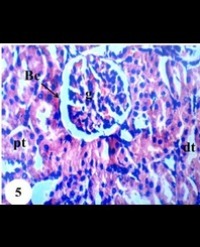
Results: The obtained data revealed a significant elevation in serum urea, uric acid, creatinine and K levels and decrease in Na concentration in DMBA/CCl4-administered animals. In addition, there are an elevation of lipid peroxidation (MDA) and Nitric Oxide (NO) in kidney tissue homogenate and depletion in antioxidant namely GSH, GPx, GST, SOD and Total Antioxidant Capacity (TAC). Furthermore, the activity of serum enzymes related to heart functions as CK, CK-MB, LDH and AST were increased in DMBA/CCl4-administered animals. These data reflect a cardiorenal toxicity which was confirmed by histopathological perturbations in the kidney and heart tissues. These deleterious changes of DMBA/CCl4 were significantly improved by treatment with Punica granatum juice and fruit extracts.

Conclusion: Based on the obtained result, it can be concluded that pomegranate has antioxidant properties and synergistic effects of its bioactive compounds in juice and extract mixture may prevent DMBA/CCl4-induced heart and kidney impaired function and integrity.

Osama M Ahmed1*, Mohamed B Ashour1, Hanaa I Fahim1, Sameh F AbouZid2, RG Ahmed3 and Mohamed A Abdel Gaid1


Article Image 1

Importance of Molecular Testing of Hepatitis C Virus Infection in Tertiary Care Hospitals

The study shows the importance of currently available molecular diagnostic tests for detection, monitoring treatment and genotyping of the HCV, their clinical applications, and how these tests shed light on the natural history of HCV and the necessity of knowing the genotype for the treatment. To determine the distribution pattern of HCV genotypes in Hyderabad, South India and its time trend over last 6 years. The present study was undertaken in the Department of Molecular biology and Cytogenetics department, Apollo hospitals, Hyderabad from January 2010 to June 2016. The study was done on 300 patients. Real time PCR followed by nucleotide sequencing using automated nucleotide sequencer was used in HCV genotyping to understand the distribution pattern of HCV genotypes in Telangana. Among the 300 patients screened, 222(74%) were males, and 78(26%) are females. Among Genotype 1, 64(21.3%) were 1a, 53(17.6%) are 1b, 22(7.3%) are 1c. Genotype 2 in 19(6.3%). Among genotype 3, 31(10.3%) are Genotype 3a, 28(9.3%) are genotype 3b, 9(3%) are genotype 3h, 14 (4.6%) are genotype 3k. Among genotype 4, 33 are genotype 4a (11%), 24(8%) are genotype 4d, 4(1.3%) are genotype 5a. There were no reports of Genotype 6 in our study. A genotype test and quantitative HCV RNA test should be performed on all patients prior to therapy to best assess probability of response and to aid in selection of appropriate therapeutic regimen. Knowing the predominant genotypes is important to plan future prevention and treatment strategies as the treatment of different genotypes and prognosis differs considerably.

Matam Kavitha1*, KalalIravathy Goud1, Adi Mahalakshmi1, Ravi Vempati1, Sargarika1, Madhuri1, Sunitha N2, Lavanya2, Abdulaziz A Alodhayani3 and Imran Ali Khan4