SM Journal of Biology

Article In Press

Article Image 1

Determinants of Above Ground Biomass Accumulation in Awuria Dry Afromontane Forest, Ethiopia

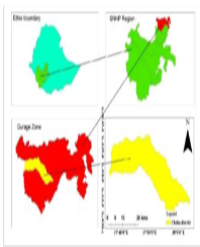
Tree spacing significantly influences its morphology, biomass accumulation, and productivity. The objective of this study was to understand factors determining the above ground biomass accumulation of selected focal trees in Awuria forest. Afrocarpus falcatus (Thunb.) C.N.Page and Juniperus procera Hochst. ex Endl. are the two most dominant tree species found in Awuria forest, hence considered as focal trees in the forest. Thirty six systematic 20 meter by 20 meter (400 m2) sized plots were established to collect data on focal and their four nearest neighbor trees. Species name, neighbor tree distance from focal tree, and DBH of focal and the four nearest neighbor trees were recorded during data collection. The biomass of each focal tree was estimated using Chave et. al. allometric equation. Mean distance, and the mean DBH of neighbor trees were determined through descriptive statistics. The competition index was analyzed using Hegyi’s competition index formula. Competition index and mean neighbor DBH showed strong potential to determine above ground biomass of the selected focal trees. Generalized additive model was used to fit the above ground biomass of the focal tree. Competition index, mean neighbor distance, and mean neighbor tree DBH were fitted as independent and potential variables in determining the above ground biomass in GAM mode. The optimum tree spacing for A.falcatus and J.procera were 1 and 1.8 meters, respectively.

Nesru Hassen1*, Sinke Mulugeta1, Wondimagegn Amanuel1, Dereje Egeta1, Abeje Eshete1, Kabtamu Girma1, Mulugeta Worku2, and Motuma Tolera1


Article Image 1

Are Xanthophylls Truly The Future Therapy For Obesity Management In Humans?

Obesity is well-known as a chronic multifactorial disease with significant health impacts, showing-up metabolic disorders, cardiovascular disease, type 2 diabetes, certain cancers, weakened quality of life, and significant economic burden on health systems worldwide. Although, lifestyle change, pharmacotherapy, and surgery, which constitute a traditional therapeutic approach, and are effective but certainly limited by adherence, side effects, cost, and long-term sustainability in managing the obesity.

Mukundaswamy Chethankumar


Article Image 1

Microbiological Response to Copper Contamination in a Irrigation Silt Soil

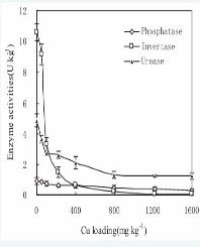
Soil contamination by copper (Cu) causes a severe loss of crop production in China due to rapid industrialization. A laboratory
incubation experiment with varied levels of Cu was conducted to study toxic effects of Cu contamination on microbiological properties
of Irrigation silt soil. Basal respiration (BR), microbial biomass C (Cmic), and microbial quotient (MQ) were stimulated low levels of
external Cu loadings (<50 mg kg-1), but were inhibited at higher rates (>400 mg kg-1). Microbial metabolic quotient (MMQ) was
significantly enhanced. Increasing Cu loading decreased enzyme activities, by 65.6% for phosphatase, 99.5% for invertase, and
74.7% for urease. Color development rate and richness were accelerated, and Shannon diversity and Shannon evenness increased
at low levels of external Cu loadings (<50 mg kg-1), but the reverse was true at higher Cu rate (400 mg kg-1), as estimated by the
Biolog procedure. External Cu loading affected the amounts of individual fatty acids and their ratios. The saturated fatty acids were
increased by 144% and 74%, respectively at the rates of 100 and 400 mg kg-1 Cu, as compared to the control. Gram negative
bacteria were increased by 10.1% and 20.6%, and actinomycete by 10% and 8% respectively, whereas fungi were decreased
11.8% and 66.1%, respectively at the loading rates of 100 and 400 mg kg-1 Cu. These results indicate that microbial biomass, basal
respiration rate, and enzyme activities and microbial community structure in the Irrigation silt soil are sensitive to Cu contamination
and can serve as indicators of Cu contamination.

Kaiyi Fan1*, Mengze Wang2,3, Jun Yao2, Bo Ma2, Ning Min2 and Tatyana Kouznetsova3


Article Image 1

From Allelic Heterogeneity to Biomechanical Phenotypes: A Functional New Genomic Model of ABCC11 Polymorphisms and their Role in Human Chemical Ecology

The ABCC11 gene, through a single nucleotide polymorphism (SNP; rs17822931), is established as a primary determinant of human axillary secretion. Such a composition dictates the presence of both a binary phenotype of earwax (dry/wet) and the absence or presence thereof of characteristic body odor. However, significant phenotypic heterogeneity exists within genotypic groups, suggesting a more complex genetic architecture. This paper proposes a functional genomic model that expands upon the current biochemical pathway to position the biomechanical properties of the secretion as a critical phenotypic trait. We hypothesize that beyond the foundational secretion of odorant precursors, the ABCC11 genotype, influenced by allelic heterogeneity and modifier genes, actually impacts ecological behaviors and human interactions. Such biomechanical properties of the viscosity, rheology, and water content of apocrine secretions. Directly impact the kinetics of odorant release, persistence on the skin, and dispersion through the air, thereby modulating the efficacy of chemical signal transmission. We outline a research program to characterize the ABCC11 variation, functionally validate novel alleles, define associated metabolomic and biomechanical phenotypes, and test their ecological consequences in behavioral assays. This model integrates population genetics, cell biology, materials science, and ethology to provide a holistic understanding of the role of ABCC11 in human chemical transmission.

Sameer Meralli**


Article Image 1

The Advantages of Mesenchymal Stem Cell-Derived Extracellular Vesicles as Drug Delivery Systems

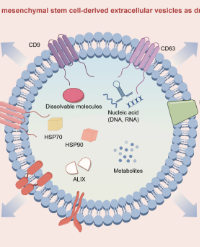
Extracellular vesicles (EVs) are nanosized particles, secreted by most, if not all cell types, enclosed by a bilayer phospholipid membrane, and mediate crucial intercellular communications by carrying and transporting many active biological molecules. These naturally occurred nanoparticles are emerging as a promising drug delivery system. In particular, EVs from mesenchymal stem cells (MSC-EVs) offer numerous advantages as drug delivery vehicles due to their unique features, as briefly reviewed below in Figure 1.

Xiubin Kuang1†, Jun Peng1†, Yingying Peng1 , Chen Huang2* and Zhengqiang Yuan1*


Article Image 1

The Protease Activity of Soy Trypsin Inhibitor, Soy Antigen Proteins, Virus Antigen Protein and Hormones

The protease inhibitors in soy protein, such as trypsin inhibitors and soy antigen proteins, are key endogenous hydrolytic enzymes, protease A1, and peptidases, involved in soybean germination. When the anti trypsin inhibitor is combined with pepsin and trypsin, the former has higher proteolytic enzyme activity and stronger stress resistance, and can degrade animal digestive enzymes instead of being degraded by them. The capsid proteins of various viruses are proteases. After binding to membrane protein receptors, the capsid protein degrades the membrane protein, causing damage to cell integrity and initiating the endocytosis mechanism, or make a crack in the cell membrane. The destroyed membrane protein, including the virus, is internalized to form intracellular vesicles, initiating the virus infection mechanism. A virus is a protease encapsulated by DNA/RNA, which helps DNA/ RNA enter host cells for replication and proliferation. The immune response is an enzymatic reaction that defends against internal proteases with viral proteases, and is a reaction between Ab proteases and Ag proteases, so the antibodies specificity appears to be high. Hormones like insulin works as protease too. Animal protease and virus protease are synthesized in the form of proenzymes. Animals and human beings themselves have almost no diseases. The diseases such as cancer, hypertension, stroke, diabetes and obesity may be caused by universal vaccination. Widespread vaccination leads to excessive activity of antibody proteases in the body, disrupting the normal mechanism of regulating protease levels. If vaccination is stop, as the source of infectious diseases is well controlled, humans will not have mass outbreaks of the above diseases. The article presents some insights into digestive physiology and preventive medicine.

Hongbiao Ding*


Article Image 1

A Review of the Reproduction of Tiger Barb (Puntius tetrazona)

Fish breeding and its trade is one of the most attractive and profitable sectors of aquaculture that is developing. Tiger barb fish, which is one of the most beautiful native fishes in Southeast Asia, belongs to the Cyprinidae family and has been kept in aquariums since the past until today due to its beautiful colors and is very popular among aquarium owners. Propagating this species is not very difficult and can be very profitable if the principles are followed. In this study, we will have an overview of tiger barb fish’s biology and reproduction stages.

Mohammad Forouhar Vajargah1* and Masoud Sattari1,2


Latest Articles

Determinants of Above Ground Biomass Accumulation in Awuria Dry Afromontane Forest, Ethiopia

Nesru Hassen1*, Sinke Mulugeta1, Wondimagegn Amanuel1, Dereje Egeta1, Abeje Eshete1, Kabtamu Girma1, Mulugeta Worku2, and Motuma Tolera1
Pages: 11

Are Xanthophylls Truly The Future Therapy For Obesity Management In Humans?

Mukundaswamy Chethankumar

Pages: 11

Microbiological Response to Copper Contamination in a Irrigation Silt Soil

Kaiyi Fan1*, Mengze Wang2,3, Jun Yao2, Bo Ma2, Ning Min2 and Tatyana Kouznetsova3

Pages: 11

From Allelic Heterogeneity to Biomechanical Phenotypes: A Functional New Genomic Model of ABCC11 Polymorphisms and their Role in Human Chemical Ecology

Sameer Meralli**

Pages: 11

The Advantages of Mesenchymal Stem Cell-Derived Extracellular Vesicles as Drug Delivery Systems

Xiubin Kuang1†, Jun Peng1†, Yingying Peng1 , Chen Huang2* and Zhengqiang Yuan1*

Pages: 11

The Protease Activity of Soy Trypsin Inhibitor, Soy Antigen Proteins, Virus Antigen Protein and Hormones

Hongbiao Ding*

Pages: 11

A Review of the Reproduction of Tiger Barb (Puntius tetrazona)

Mohammad Forouhar Vajargah1* and Masoud Sattari1,2

Pages: 11

Article Search
Features of JSM Central Journals
  • Scientific Advancements
  • Paper Presentation
  • Poster Presentation
  • Video Presentation
  • Podcasts
  • Special Issues
Latest Published Articles
Case Report

Expulsive Suprachoroidal Hemorrhage during Subluxated Lens Surgery: A Case Report

Kuo Zhao, Jun Ni, Xuegang Su, Qiang Li, Fei Leng

2024-08-09

Research Article

Dynamic Changes of Ct Values of and Laboratory Parameters in Patients with COVID-19...

Wenjing Yang, Taoran Chen, Qi Zhou, Jiancheng Xu

2024-07-29

Case Report

Lymphepitheliomatoid Carcinoma of Maxillofacial Region: A Case Report and Literature Review

Jiaqi Mei, Sicong Jiang, Juying Ke, Meiai Xu, Xuefeng Shen, Shasha Zhang

2024-08-03

News Feeds
Placeholder Image

Seth J. Worley, MD, FHRS, FACC

Director, Interventional Implant Program MedStar Heart & Vascular Institute, Washington, DC, USA

Make a Submission

JSMCentral always welcome researchers to publish and disseminate your work with us.

by phone : +302-966-3456
by e-mail : submissions@jsmcentral.org
or fill in the form on our submission page
Collaborations