SM Surgery Journal

Archive Articles

Article Image 1

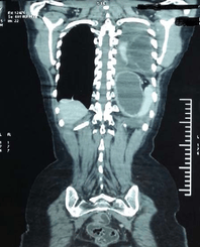
Spontaneous Diaphragmatic Hernia-A Case Report and Review of Literature

Background: Spontaneous diaphragmatic hernia without any apparent history of trauma is a very rare condition.

Case: A 38year old female who was admitted to emergency department with abdominal pain, nausea and constipation for 5 days and was diagnosed with spontaneous diaphragmatic hernia. There was no significant past history of trauma. The patient was treated with laparotomy and the diaphragmatic defect was repaired primarily.

Conclusion: Spontaneous acquired diaphragmatic hernia due to lax and thinned out diaphragm is very rare condition and very difficult to diagnose unless a very high index of suspicion is kept in mind. Surgical repair is the definitive treatment.

Rushabh Shah*, Dharmendra Shah, Mihir Shah and Jagrut Patel


Article Image 1

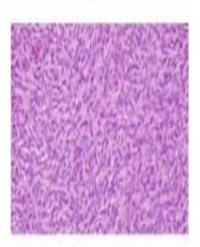
Dermatofibrosarcoma Protuberans (DFSP): Case Report and Literature Review

Dermatofibrosarcoma Protuberans (DFSP) is a slow-growing, low-grade, malignant fibroblastic mesenchymal tumor that arises from the dermis and invades deeper tissues. The precise origin of DFSP is not well known but evidence hints that the cellular origin is fibroblastic, histiocytic, or neuroectodermal.Cytogenetic abnormalities have been found in patients with DFSP, such as reciprocal translocations of chromosomes 17 and 22, t(17;22), and supernumerary ring chromosomes composed of interspersed sequences from bands 17 (17q22) and 22 (22q12). It is a relatively uncommon soft tissue neoplasm with an estimated incidence of 4.2 to 4.5 cases per million persons per year in the United States. DFSP may present as an asymptomatic, skin-colored plaque with possible dark red or blue discoloration. Clinical suspicion is confirmed by biopsy. Histologically, DFSP shows a storiform or fascicular proliferation of bland spindled cells that extend from the dermis into the subcutaneous tissues. Almost all cases of DFSP are CD34-positive (Figure 1) and factor XIIIa- negative. The treatment of choice for a DFSP is wide local excision. Every effort should be made to completely remove the tumor at the time of initial operation, considering the proclivity that DFSP has for irregular and frequently deep subclinical extensions. The margins of resection vary in the medical literature anywhere between with 2 to 4 cm. Imatinib mesylate was approved by the FDA for the treatment of unresectable, recurrent, and/or metastatic DFSP. We are reporting a case of a 28-year old male patient with a DFSP treated by our multidisciplinary team.

Rodrigo Arrangoiz*, Fernando Cordera, David Caba, Manuel Muñoz, Eduardo Moreno and Enrique Luque de Leon


Article Image 1

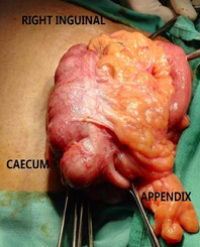
Amyand

Amyand’s hernia is defined by the presence of an appendix in an inguinal hernia. This presentation was previously deemed rare but it was noted that an increasing number of cases are being reported each year. A left sided Amyand’s hernia however is still relatively rare compared to the right variant. Appendectomy during hernioplasty is debatable and there is mixed views from surgeons worldwide.

Here we present our experience with acase series of three Amyand’s hernia that was seen in a span of three months.

Samuel Tay H’ng Chuan*, Norfaidhi Akram Bin Mat Nor, Lim Hiong Chin and Ros’aini Paijan


Article Image 1

Recurrent Regurgitation Following Complete versus Partial Ring Annuloplasty in Degenerative Mitral Valve Insufficiency

Objectives: The goal of annuloplasty in mitral valve repair is to restore the normal physiologic form and function of native valve, with a recommendation of performing an annuloplasty with the repair. One of the major differences between the types of annuloplasties is the complete versus partial ring. We aimed to determine if the incidence of recurrent mitral regurgitation was affected by the type of annuloplasty used.

Methods: A single institution, retrospective review of 262 patients with degenerative mitral valve disease from 2008-2014 who underwent mitral valve repair with an implanted annuloplasty ring. Patients with documented type of annuloplasty ring, and complete follow up echocardiograms were included. The primary outcome was recurrent mitral regurgitation. Secondary outcomes included 30-day re-admissions and 30-day mortality.

Results: 145 of 254 patients (57.1%) received the complete ring annuloplasty while 108 patients (42.5%) received a partial ring. Recurrent mitral valve regurgitation was present in 20 (13.8%) patients versus 22 (20.37%) in the complete and partial ring, respectively (p=0.164). A multivariate logistic regression analysis was performed that revealed a complete ring was significant in reducing recurrent regurgitation (p=0.038).

Conclusions: Among patients with degenerative mitral valve disease and undergoing mitral valve annuloplasty, the use of a complete ring has a trend toward decreasing recurrent mitral regurgitation compared to a partial ring. When using a multivariable logistic regression analysis to adjust for predefined baseline covariates, there is a significant reduction in recurrent mitral regurgitation using a complete annuloplasty ring. Secondary endpoints of 30-day mortality, 30-day readmission, and overall mortality demonstrate no differences between the types of ring used.

Nathaniel Melton1 , W Kurtis Childers1 , John F Lazar2* and Mubashir Mumtaz3


Article Image 1

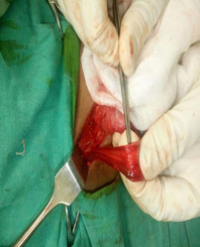
Unique Anomalies of Vas Deferens; A Case Series from Upper Egypt

Background: There are multiple variants of the anomalies of the vas deferens which may not be recognized, resulting in increased chances of intra-operative injury and subsequent complications.

Case series: We have 3 cases with unique anomalies of the vas deferens; the first case was Crossed testicular ectopia with union right vas deferens with the left vas deferens. The second case has absent distal part of the right vas deferens. The third case has absent proximal 2 cm of the vas deferens.

Conclusion: Different anomalies of the vas deferens can be discovered accidentally during routine inguinal surgical procedures. Awareness of the surgeon about these anomalies can reduce intra-operative injury to the vas deferens and subsequent complication.

Sarah Magdy Abdelmohsen1*, Mohammed Hamada Takrouney2 , Mohamed Abdelkader Osman3 and Basel Magdy Abdelmohsen4


Article Image 1

Vacuum Assisted Syringe System (V.A.S.S. Device): How to Manufacture it Step by Step

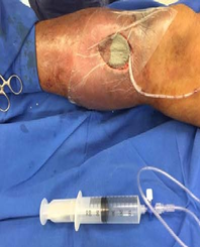
We present a versatile craft design of an ambulatory wound treatment system, easy to build with low cost manufacturing and non dependent energy, to promote and facilitate the prompt wound closure and patient rehabilitation.

Julio Palacios Juárez1*, Gustavo Ayala Azuara2 , Jesús Morales Maza3 , Jessica E Figueroa Estrada4 , Diego Colin Vega5 , Mauricio Zúñiga Zamora6 , Daniel A Vargas Velásquez7 , Ludivina A Cortés Martínez8 , Cristian B Castro Jadan6 and Ernesto Zoe Badillo Ramírez6


Article Image 1

Cribiform Otoplasty

Prominent ears are the most common congenital cause of atrial deformity. This benign condition can be treated by surgery. There are many techniques described to treat and deform the cartilage to complacency to achieve the desired shape. In this article we describe the surgical technique of cribiform otoplasty to treat these alterations of ear deformity. Cribiform otoplasty is a useful alternative technique, simple and easy to replicate to treat cartilage without damaging it, only weakening it and generating smooth contours and more natural results when treating prominent ears.

Gustavo Ayala Azuara1*, Julio Palacios Juárez2 , Jesús Morales Maza3 , Jessica E Figueroa Estrada4 , Diego Colin Vega5 , Mauricio Zúñiga Zamora6 , Daniel A Vargas Velásquez7 , Ludivina A Cortés Martínez8 , Sonia R Cortés Vázquez6 and Cristian B Castro Jadan6


Article Image 1

A deadly combination of the point mutation A1298C in the MTHFR gene, and the 4G/5G polymorphism in the PAI-1 gene of a young patient with a left MCA infarct. A case presentation and review of the literature

Background: Cerebral infarction is a potentially fatal pathological entity, which has been associated with numerous risk factors, such as family history of stroke, hypertension, dyslipidemia, diabetes mellitus, smoking and trauma. On the contrary, the role of prothrombotic gene polymorphisms as risk factors of stroke has not been yet fully established.

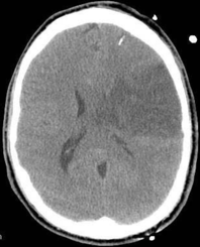
Case presentation: A 24-year old man with a thrombophilic profile sustained a left sided Middle Cerebral Artery (MCA) infarction. He was intubated due to his rapid clinical aggravation and underwent initially a left sided hemicraniectomy and soon after that a right sided hemicraniectomy without any significant response. He died due to severe sepsis in the ICU (Intensive Care Unit) the eleventh day after his admission. The laboratory exams showed that he was homozygote for the point mutation A1298C of the methylenetetrahydrofolate reductase (MTHFR) gene, and heterozygote for the 4G/5G polymorphism of the Plasminogen Activator Inhibitor-1 (PAI-1) gene.

Conclusions: Both mutations may have an association with the development of a stroke. Thus genetic testing could possibly assist physicians in prognosis and treatment strategizing of patients with stroke.

Ioannis Siasios1,4*, Aggeliki Fotiadou1 , Aspasia Tsezou2 , Charalambos Gatos1 , Dimitrios Papadopoulos3 , Vassilios Dimopoulos4 and Konstantinos Fountas1


Article Image 1

Bilateral Manta Ray Flap to Treat Congenital First Interdigital Space Contractures

Undoubtedly, the main function of the hand is to perform a palmar and pincer grasp. This capacity may be impaired in diverse conditions, specifically, when there is a hand contracture in adduction or in severe cases of decreased first interdigital space. Many techniques are available in order to free the first interdigital space; options include skin grafts, local flaps and free flaps. We describe the use of the bilateral “manta ray flap”, in order to free the space simultaneously in both hands. As described by Coombs and Thomas, this flaps confer the advantages of utilizing the skin in the first interdigital space as well as the skin from the lateral areas of the adjacent fingers in order to cover completely the defect, in addition to provide a coetaneous coverage with adequately vascularized, sensitive and tension-free skin. Furthermore, no skin grafts or free flaps, with its poor aesthetic outcome and associated morbidity were required.

Diego Colin Vega1*, Julio Palacios Juárez2 , Jesús Morales Maza3 , Gustavo Ayala Azuara4 , Rodolfo L Ríos Lara y López1 , Jessica E Figueroa Estrada5 , Mauricio Zúñiga Zamora6 , Daniel A Vargas Velásquez7 , Ludivina A Cortés Martínez8 and Cristian B Castro Jadan6


Article Image 1

Seminoma in an Undescended Testis

Seminoma in undescended testis may present as an inguinal lump. We present a case of a 32 year old gentleman who presented with a tender right inguinal lump diagnosed to be as Seminoma in an undescended testis. Serological and imaging studies were done for staging. PET-CT scan showed metastasis to retroperitoneal lymph nodes. High radicle orchidectomy with retroperitoneal lymph node dissection was done followed by radiotherapy and chemotherapy.

Sayantan Bose, Shreya Sengupta* and Ramanuj Mukherjee