Research Article | Volume 4 - Issue 1 | Article DOI :
Download PDF
Wisam Mohammed Kareem Al-Khazaali¹,²# and Seyed Ahmad Ataei²*
¹Chemical Engineering Sec., Designs Dept., Projects Div., Misan Oil Company, Misan, Iraq
²Department of Chemical Engineering, Faculty of Engineering, Shahid Bahonar University of Kerman, Kerman, Iran
#Leading author: WMK Al-Khazaali, Chemical Engineering Sec., Designs Dept., Projects Div., Misan Oil Company, Misan, Iraq
Corresponding Author:
Seyed Ahmad Ataei, Department of Chemical Engineering, Faculty of Engineering, Shahid Bahonar University of Kerman, Iran
Keywords
Biodesulfurization, biodegradation, isolation, 9k medium, Acidithiobacillus ferroxidanse, thioxidans.
Abstract
Emissions from human activities contribute to air pollution, global warming, and environmental degradation. These effects can harm human health and ecosystems, underscoring the importance of sustainable practices to mitigate the impact of emissions on the environment. By the time on the first exploration of reservoirs and first design contracts dates of refineries, there are many challenges appeared on the health, safety, and environment by conduction of the oil such as the higher contents of sulfur, nitrogen, oxygen, halogen, metals, and aromatics. There are many side effects on the human health starting from the simple to the malignant diseases such as cancer. Also, the safety of equipment and catalysts are affected by the presence of high content of these impurities in oils by many phenomena such as corrosion, erosion, and poisoning. In this study, microorganisms’ colony has been isolated from Amara crude oil by using 9k medium (ATCC 2436). It was found that this colony has the ability to make biodesulfurization (BDS) of crude oil from 4.4 to 3.845 %. Also, it was found that this isolated colony upgraded the oil in improvement API-density.
Introduction
Fossil fuel is an important source of energy or power in various fields in life and industry. Before applying it in use, it must be on specification of some related standards to avoid risks on HSE. Then, sulfur compounds are one of these constraints to be treated. Fossil fuels take many forms, ranging through crude oil, petroleum fractions, coal, tar sands, and shale oil. In order to compete the sources of clean energy, fossil fuels must care HSE, quantity assurance and quality control regulations (QQHSSE). Emissions of sulfur has resulted in related health issues due to the poor safety of corrosion leading to its leakage to the environment, like: heart diseases, asthma, and respiratory illnesses [1]. Acute toxicity by H2 S, which has caused many deaths in the workplace and in areas of natural accumulation. Also, loss of consciousness by H2 S, paralysis, and even death, and disorders of the nervous system by H2 S exposure, and in cardiovascular, gastrointestinal, and ocular disorders [2].
Emission of SOx leading to serious environmental issues after combustion or due to the poor safety of corrosion, such as acid rain, a deposition of acids that is harmful to agriculture, wildlife, and human health and severe air pollution [1]. However, the combustion of fossil fuels releases many hazardous components such as SOx , NOx, CO2 [3]. Emissions of H2 S leading to air pollution [4].
Therefore, EPA limited the total content of sulfur to 15 ppm in diesel and 30 ppm in gasoline. While EU limited to 50 ppm for both of them [4, 5].
Sulfur compounds in oils formulate a challenge towards the human being locally and globally, whereas its oxides may reach 2.28 ppm in Baghdad [6]. Whereas, the total content of sulfur in Iraq exceeded all the percentages of other countries as shown in Fig. 1 [7].

Figure 1 Total content of sulfur and API-density of various countries lower than Iraq.
These are many methods for treating that. BDS is a process that is based around bacterial potential. In this process, bacteria remove organosulfur from oil fractions without degrading the carbon skeleton of the compounds. BDS operates at ambient temperature and pressure with high selectivity, resulting in decreased energy costs, low emission and no generation of undesirable side-products. For assessing the potential of BDS as a biorefining process, pilot plants have been operated [8]. BDS is one of the modern biotechnology sciences which deal with the solving the contaminants of oils such as crude oil, its derivatives, and coal too. The content of sulfur causes various problems of health, safety, and environments, then it decrease the products quality and sustainability. In this treatment, it is necessary to test the concentration of sulfur and other biological indicators before, after, and through the treatment. The following sections show these important tests.
To achieve that limitations of quality, there are many methods such as ODS and HDS. In this study, BDS is presented and evaluated. While to achieve the limitations of pollution of soil, there are some methods such as biodegradation.
The isolates of microorganisms from crude oil were identified as Acidithiobacillus strains as provided in Fig. (2), Fig. (3), Tab. (1).

Figure 2 Proposed morhology of isolated microorganisms
A. Acidithiobacillus ferrooxidans magnification 30,000 times.[Henry Lutz Ehrlich,Geomicrobiology,2nd edition,(New York: Marcel Dekker, 1990)]
B. Acidithiobacillus thioxidans isolated by 9k medium [9].

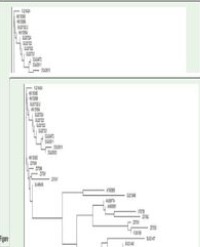
Figure 3 Alignment of the nucleotide sequences of the coxC genes from named AF1,AF3 and AFc strains [10].
Also these strains gave biodesulfurization and biodegradation pathways as shown in Fig. (4).

Figure 4 Alignment of the nucleotide sequences of the coxC genes from named AF1,AF3 and AFc strains [10].
Materials and Methods
A sample of crude oil was brought from storage tanks in Amara Oilfield from Iraq and iron concentrate from mountains of Kerman in Iran. These samples should not be sterilized in order not affecting the microorganisms in it. A 5-litre was withdrawn to cover all the experiments. The culture 9k medium (ATCC 2436 or PTCC 106) was used in the isolation. This medium is composed of FeSO4 .7H2 O 45 g, glucose 10 g, (NH4 )2 SO4 3 g, K2 HPO4 0.75 g, MgSO4 .7H2 O 0.5, KCl 0.1 g, CaNO3 0.01 g. This medium is prepared separately with FeSO4 .7H2 O in order to avoid the sedimentation of it after the sterilization. pH of this solution must be adjusted to 5.5 with H2 SO4 then autoclaved at 120 oC and pressure 15 psi for 20 minutes. While the FeSO4 .7H2 O solutions is sterilized by using microfilter (0.4 μm) and adjusted pH 1.4 by H2 SO4 . After cooling, they were mixed and kept in a dark place.
The emulsifier or surfactant Tween 20 was used in order to make dispersion of oil phase in the aqueous phase. In this study, the 9k medium was used for each of isolation culture, growth, and incubation.
XRF analyzer was used for measurement of the total content of sulfur in the crude oil. The sulfur measurement was tested by Misan Oil Company and Asfahan University. Also, some decanters was used in the primary separation. The centrifuge was used for deeply purification of separation as a secondary stage. Finally, a reverse-emulsifier was used in the tertiary separation such as n-heptane.
IP 77 and STM D473 have been used to ensure the crude oil is free of salts and sediments respectively. This is important for the selectivity of significant microorganisms comprised with salts and constitutes of apllied medium which is 9k medium. Also, ASTM D4006 was used to make sure of oil is not wet. ASTM D1298 and ASTM D5002 had been applied to measure the density. All these tests have been reported from Misan Oil Company.
The operation conditions must be carefully selected to study the upgrade and improvement of heavy crude oil such as the temperature, speed of rotation, pH, oil water ratio (OWR), and the surfactant dose, and the time of isolation, cultivation, and incubation. the isolation was done by using a solidified 9k medium with agar 1.5 %. The operation conditions for the isolation were temperature 30 oC and time 3 day. The initial conditions of incubation were speed of rotation 150 rpm, temperature 35 oC, OWR 5 %, surfactant dose 1 % of oil volume, time 3 day.
Table 1: Preferential of thiobacillus strains on the 9k medium and similar [11].
| Microorganism |
Name |
Microorganism codes |
Medium codes |
pH |
Remarks |
| |
Acidithiobacillus |
PTCC 1646 |
PTCC 105 |
1.4 |
Same 9k |
| |
ferroxidans |
DSM 583 |
| |
Acidithiobacillus |
PTCC 1647 |
PTCC 106 |
2-2.3 |
9k medium |
| Acidithiobacillus ferroxidans |
ferroxidans |
PTCC 132 |
| |
Acidithiobacillus ferroxidans |
PTCC 1746 |
PTCC 105 |
1.4 |
|
| |
ATCC 23270 |
PTCC 132 |
1.8 |
Same 9k |
| |
DSM 14882 |
|
|
|
| |
Thiobacillus thioparus |
PTCC 1668 |
PTCC 158 |
6.6 |
Same constitutes of 9k |
| |
DSM 5368 |
medium |
| |
|
|
| |
|
PTCC 1692 |
|
|
|
| Acidithiobacillus thiooxidans |
|
ATCC 8085 |
|
|
|
| |
Acidithiobacillus Thiooxidans |
IFO 12544 |
PTCC 119 |
4.2 |
Same positive roots and different negative bases. |
| |
|
NBRC 12544 |
|
|
|
| |
|
NCIMB 9112 |
|
|
|
| |
Acidithiobacillus |
PTCC 1717 |
PTCC 123 |
3.5 |
Same |
| |
Thiooxidans |
DSM 9463 |
Results
The colony was isolated firstly by using the solidified 9k medium in a petridish. Then inoculated in Erleynmeyer for decreasing the growth in the incubator. The strains was yellow form colony (YFC). As shown in Fig. 2.
The Metabolism Ability
The incubation biomixture was made by using Erlynmeyer 250 ml as shown in Fig. 2 (C). The metabolism reaction ability was found according to the change in measurement of total content of sulfur, salts, pH, electric conductivity, and density. Based on the XRF analysis of the treated and untreated crude oil, it was found the capability of bio-upgrade and bio-improvement for the applied microorganisms on the crude oil from Amara oilfield. It was that the isolated colony from Amara Oilfield is able to make the desulfurization of oil. Table (2) shows the results of before and after the incubation of crude oil by the colony.
Discussion
This isolate have the ability of metabolism bioreaction of crude oil because the tendency of investment of organosulfur compounds as the sole source of sulfur [12, 13]. This colony could contain some bacteria such as multi strains of Acidithioballus which have the ability to desulfurize or defrade the crude oil and its derivative [14,15]. But mainly, 9k medium encourages the growth of the strains of thiobacillus [16, 17] in addition to preferential tendency to medium PTCC 105 [11,18]. It was founded that 9k medium can extract four stains of Acidithiobacillus ferrooxidans which have been identified by phenotypicand 16S rDNA sequence analyses as shown in Fig. 3.These isolates could make use of Fe2+,S, or pyrite as a sole source of energy in different activities in various preferences of pH, temperature, resistance to chloride (KCl) and heavy metal ions, and oxidation rates of Fe2+,S and pyrite [10]. In general, 9k medium and its similar give the Acidithiobacillus strains as mentioned by ATCC [19] and shown by PTCC in Table 2.
Table 2: Effect of incubation on the physical and chemical properties.
| |
Initial |
Final |
Unit |
| Total content of sulfur |
4.4 |
3.845 |
% |
| Total content of salts |
49.36 |
40 |
g/l |
| pH |
2 |
1.75 |
- |
| Electric conductivity |
155 |
88 |
μS/cm |
| API-Density |
23.6 |
22.5 |
API |
The pH value of 9k medium gives a hint that the predominant microorganisms in the colony are Acidithiobacillus ferroxidans strains, because the Acidithiobacillus thiooxidans strains prefer higher pH values, i.e., lower acidity. Therefore, Acidithiobacillus ferroxidans ATCC 23270 is applied in bioleaching or biomining due to the acidity of microorganism and Fe ions in 9k medium [20]. The lower efficiency can explain the presence of biodegradation (BDG) microorganism as in the case Acidithiobacillus strains on some organosulfur compounds [21]. Also, the lower efficiency can be attributed to the competence among various biological strains in colony and chemical species in medium [22]. Due to the limited rate of BDS in addition to the chemical methods such as HDS, then sometimes deep desulfurization is studied and applied such as the physical methods like extraction to improve the quality of fuels [23], and deep biodegradation for the environmental improvement. These different pathways are shown in Fig. 3.
Conclusions
It was found that the heavy crude oil can produce bacteria strains which have the ability of BDS. This isolate colony was able on bioupgrade in addition to the biodesulfurization. For more accurately, this colony can be purifies to get pure cultures such as Acidithiobacillus ferroxidans. This can give clearer philosophy of each microorganisms functions as BDS or BDG because the competence among the various microorganisms on the sources of sulfur compounds in crude oil. Whereas, in the case of pure culture, the efficiency of desulfurization can be increased significantly.
References
1. Sadare, O.O., F. Obazu, and M.O. Daramola, Biodesulfurization of petroleum distillates—current status, opportunities and future challenges. Environments, 2017. 4(4): p. 85.
2. Rashidi, S., et al., Removal of sulfur and nitrogen compounds from diesel fuel using MSU-S. Iranian Journal of Oil and Gas Science and Technology, 2015. 4(1): p. 1-16.
3. Pacheco, M., et al., On the road to cost-effective fossil fuel desulfurization by Gordonia alkanivorans strain 1B. RSC advances, 2019. 9(44): p. 25405-25413.
4. Yen, T.F., H. Mei, and S.H.-M. Lu, Oxidative desulfurization of fossil fuels with ultrasound. 2002, Google Patents.
5. Chen, S., et al., Biodesulfurization of diesel oil in oil–water two phase reaction system by Gordonia sp. SC-10. Biotechnology letters, 2019. 41: p. 547-554.
6. Jasim, I.M., A. Al-Kubaisi, and A. Al-Obaidy, Test the Efficiency of some Plants in the Tolerant of Air Pollution within the City of Baghdad. Iraq. Baghdad Science Journal, 2018. 15(1): p. 0009-0009.
7. Ahmad, A., et al., Bacterial Biological Factories Intended for the Desulfurization of Petroleum Products in Refineries. Fermentation, 2023. 9(3): p. 211.
8. Mohebali, G. and A.S. Ball, Biodesulfurization of diesel fuels–past, present and future perspectives. International Biodeterioration & Biodegradation, 2016. 110: p. 163-180.
9. Panyushkina, A., et al., Physiological and morphological characteristics of acidophilic bacteria Leptospirillum ferriphilum and Acidithiobacillus thiooxidans, members of a chemolithotrophic microbial consortium. Microbiology, 2018. 87: p. 326-338.
10. Chen, H., B. Yang, and X. Chen, Identification and characterization of four strains of Acidithiobacillus ferrooxidans isolated from different sites in China. Microbiological Research, 2009. 164(6): p. 613-623.
11. PTCC, Official website of Persian Type Culture Collection. https://irost. org/ptcc/en/micro-oraganism-databases.
12. Kalita M, C.M., Jha DK, Subrahmanyam G. Mechanistic understanding of Gordonia sp. in biodesulfurization of organosulfur compounds. Current Microbiology. 2022 Mar;79(3):82.
13. Alkhalili, B.E., et al., Biodesulfurization of sour crude oil. Mod Appl Sci, 2017. 11(9): p. 104-113.
14. Wen, H., et al., Desulfurization of hydrophilic and hydrophobic volatile reduced sulfur with elemental sulfur production in denitrifying bioscrubber. Chemosphere, 2023. 316: p. 137806.
15. Baghaie, A.H. and A. Daliri, Effect of Sulfur Granular, Iron Sulfate, and Thiobacillus Bacteria on Biodegradation of Diesel Oil. Journal of Advances in Environmental Health Research, 2022. 10(1): p. 73-82.
16. Nie, H., et al., Isolation of Acidithiobacillus ferrooxidans strain Z1 and its mechanism of bioleaching copper from waste printed circuit boards. Journal of Chemical Technology & Biotechnology, 2015. 90(4): p. 714-721.
17. Wang, Y.J., et al., A novel liquid mixture in iron chemical-biological process using immobilized Acidithiobacillus ferrooxidans. Advanced Materials Research, 2013. 610: p. 368-371.
18. Al-Khazaali, W. and S. Ataei, Optimization and Utilization of Biodesulfurization of Heavy Sour Crude Oil. Available at SSRN 4372013.
19. ATCC, ATCC Medium: 2436 9K medium for Acidothiobacillus ferrooxidans. .
20. Valdés, J., et al., Acidithiobacillus ferrooxidans metabolism: from genome sequence to industrial applications. BMC genomics, 2008. 9: p. 1-24.
21. Primadani, I., R. Ratnaningsih, and A. Rinanti. Removal of crude oil by Thiobacillus sp. and Clostridium sp. at various temperatures and concentration of pollutant in liquid media. in IOP Conference Series: Materials Science and Engineering. 2021. IOP Publishing.
22. Sikkander, M., Bio desulfurization of Petroleum. Petro Chem Indus Intern, 5 (3), 153, 2022. 155.
23. Qader, I.B., et al., Novel phenolic deep eutectic solvents for desulfurisation of petrodiesel. Karbala Int. J. Mod. Sci, 2021. 7(12.10): p. 33640.
Citation
Al-Khazaali WMK, Ataei SA (2023) A Method for Preparation of Desulfurizing Biomass from Crude Oil. Ann Appl Microbiol Biotechnol J 5: 6.