Back to Journal

SM Journal of Cardiology and Cardiovascular Diseases

Anesthetic Management for a Parturient With Calcified Subaortic Membrane and Pulmonary Hypertension Undergoing Cesarean Delivery: A Case Report

[ ISSN : 3068-0034 ]

Abstract
Details

Received: 05-Nov-2019

Accepted: 02-Dec-2019

Published: 05-Dec-2019

Abdurahman Alrefai¹, Abdelrady Ibrahim², Waleed Farrag², Ahmed Sallam³, and Maged Habashi³*

¹Head of Anesthesia Council, Kuwait Ministry of Health, Egypt
²Department of Anesthesia, Assiut University Hospital, Egypt
³Department of Anesthesia and ICU, Maternity Hospital, Kuwait Ministry of Health, Egypt

Corresponding Author:

Abdelrady S. Ibrahim, Department of Anesthesia, ICU and pain management, Assiut University Hospital, Faculty of Medicine, Assiut, Egypt, Tel: 201026249924/+965751949; Email: aradys2000@ yahoo.com

Keywords

Cesarean delivery; Subaortic stenosis; Pulmonary hypertension; General anesthesia

Abstract

Physiological changes in the cardiovascular system during pregnancy present unique problems to the parturient with underlying heart disease. Anesthetic management for cesarean delivery in parturient with subaortic stenosis and pulmonary hypertension is a challenging task. Both general and regional anesthesia has been used and both have significant risks. In this report we describe the anesthetic management of a parturient having calcified subaortic membrane with pulmonary hypertension requiring elective cesarean delivery under general anesthesia.

Citation

Alrefai A, Ibrahim A, Farrag W, Sallam A, Habashi M (2019) Anes thetic Management for a Parturient With Calcified Subaortic Membrane and Pulmonary Hypertension Undergoing Cesarean Delivery: A Case Report. SM J Cardiol Cardiovasc 5: 3.

Other Articles

Article Image 1

Silent Giant Left Atrial Myxoma: Letter to Editor

A 33-year-old woman was referred to cardiology assessment 3 months after the delivery of her f irst child because of fatigue. Her past medical history was insignificant. She had no other history of cardiovascular disease. Her physical examination findings were unremarkable. Her laboratory results, including ECG were within normal limits. An echocardiogram showed a notched, highly mobile, 13.0x4.0 cm huge left atrial myxoma covered with thrombi, which nearly fills the left atrial chamber with prolapsed of the tumor mass across the mitral annulus into the left ventricle in diastole (Figure1A-B). Neither significant mitral regurgitation nor mitral stenosis was seen. There was no evidence for patent foramen ovale or other intra-cardiac shunts by color flow Doppler. She subsequently underwent an uneventful surgical removal of the mass at another cardiac surgery center.

Mustafa Yurtdaş1*, Nesim Aladağ1, Mahmut Özdemir1, Yalin Tolga Yaylali2, Yemlihan Ceylan1 and Çağın Zaim3
Article Image 1

Bioprosthetic Valves with a Novel Support System with Heart Shape Commissural Posts

Background: Continuous improvement in the mechanics, preservation and anticalcification treatment made bioprostheses the standard mode of valve replacement in the aging population. A novel Support System with large openings at the Commissural posts has been developed and the performance and durability of bioprostheses constructed went under evaluation.

Methods: This stent was used to create Three trileaflet composite porcine valves of 23mm (titanium), 27mm and 31mm (POM-C) in diameter were constructed. and one 25mm (titanium) bovine pericardial valve. All valves were tested in a heart valve duplicator system. The porcine valves underwent fatigue accelerating testing.

Results: For the porcine valves the peak pressure was measured as 12.5mmHg, 9.1 mmHg and 7.3mmHg for the 23mm, 27mm and for the 31mm valve respectively and the valve area were 2.5 cm², 2.6 cm² and 2.7 cm² respectively. The 25mm pericardial valve showed a peak pressure of 5.5mmHg and a valve area of 3.1 cm². The durability test showed deterioration after 225x106cycles for the 23mm, 265x106 cycles for the 27mm and 240x106 cycles for the 31 mm.

Conclusion: This novel stent for bioprosthetic valves offers excellent hydrodynamic performance for a variety of biological issues tested and above the standards durability.

Andreas Agathos E*


Article Image 1

New Insights into Regulation of FGF23 in Chronic Kidney Disease and its Role in Cardiovascular Disease

Patients with Chronic Kidney Disease (CKD) have 2.8 to 3.4-fold higher mortality compared to individuals with normal kidney function, mostly attributed to increased risk for Cardiovascular (CV) events [1,2]; however, this increased risk is not fully explained by the traditional CV risk factors such as diabetes, hypertension, hyperlipidemia, smoking etc [1]. Over last decade, Fibroblast Growth Factor-23 (FGF23) has emerged as a strong predictor of CV disease and all-cause mortality in both general and CKD population [3-5]. In this context; however, it is not clear if the relationship of FGF23 with morbidity and mortality is causative or merely associative. Uncertainties also linger about the regulation of FGF23 in CKD patients. Here is the new insight into the role and regulation of FGF23 in CKD. FGF23 was originally discovered as a phosphaturic hormone. It is produced and secreted by osteoblasts and osteocytes with 1,25(OH)2D as a major direct known stimulus and FGF23 in turn induces phosphaturia by down regulating type IIa and IIc sodium-phosphorus co-transporters on the apical surface of the proximal tubular renal epithelial cells [6]. FGF-23 also down regulates the 1-α-hydroxylase enzyme causing decrease in the active form of vitamin D with resultant decrease in intestinal phosphate absorption. FGF23 exerts these actions by binding to the FGF receptor Klotho complex in kidney and, thus maintains the phosphorus homeostasis. The various FGF23 activating mutations have known to lead to disorders characterized by hyperphosphaturia, hypophosphatemia, fatigue, bone pain and deformities in face of inappropriately low or normal vitamin D levels. Conversely, loss-of-function FGF23 mutations cause hyperphosphatemia, ectopic calcification, premature aging and death [7].

Shweta Bansal*


Article Image 1

Prognostic Role of Resting Heart Rate in Cardiovascular Diseases: Just a Risk Marker?

The prognostic influence of many risk factors, such as hypertension or hypercholesterolemia, in several cardiovascular disorders has been widely proved. It has appeared, growing knowledge about the role of resting s (HR) and its association to other known cardiovascular risk factors. Resting HR takes an important place in cardiovascular physiopathology. Oxygen supply-demand balance, endothelial function, atherosclerosis development and vascular stress leading to plaque disruption are all directly influenced by increasing resting HR. Information obtained from recent trials, specially performed in heart failure patients, demonstrate the great benefits of decreasing resting HR. In this field, every increase in baseline beats per minute (bpm) is associated to increasing mortality rates and elevated risk of adverse cardiovascular outcomes. This shows the role, not only as risk marker but also as important risk factor, in cardiac diseases. Furthermore there is no optimal and homogeneous cut-off value of baseline HR for the different cardiovascular disorders. Despite of this, it seems desirable to maintain patient HR as lower as possible, below 70 bpm, in order to minimize risk of adverse events. So lowering baseline heart rate is a target to achieve,to improve prognosis.

Sem Briongos Figuero1* and José Luis Zamorano Gómez2


Article Image 1

An Unusual Presentation of Secundum Atrial Septal Defect in Pregnancy

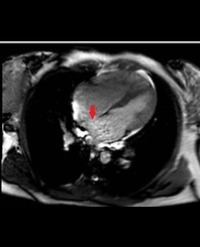
We describe a woman who presented in her third trimester of pregnancy with progressive dyspnea. Physical exam showed a hyperdynamic right ventricular impulse and a widely split fixed S2. Echocardiography showed moderately enlarged right sided chambers and linear insertion of the atrioventricular valves. This echocardiographic finding is typically consistent with a partial atrioventricular septal defect (AVSD). However further imaging with cardiac MRI revealed a large ostium secundum atrial septal defect (ASD), with a pulmonary to-systemic flow ratio of 2.4. This appears to be the first documented case in the literature of a secundum ASD presenting with linear insertion of the atrioventricular valves. In conclusion, we describe an unusual case of secundum atrial septal defect in pregnancy presenting with dyspnea and linear insertion of the atrioventricular valves.

Satish Jacob Chacko and Christopher Gans*


Article Image 1

New Insight in to an Old Therapy for the Treatment of Acute Decompensated Heart Failure and Associated Renal Dysfunction

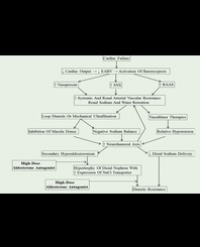
Acute Decompensated Heart Failure (ADHF) is one of the most common causes of hospital admission and is associated with poor outcome. More than often, currently available treatments including high-dose loop diuretics don’t provide patients with adequate decongestion due to either worsening renal function or diuretic resistance resulting in high readmission rate and early mortality. Moreover, the recent trials studying newer strategies such as the mechanical ultrafiltration, low dose dopamine or nesiritide have demonstrated no benefit over diuretic regimens in terms of volume removal or elevation of creatinine leaving no further choice for management of diuretic resistant ADHF patients. Patients with heart failure share the same pathophysiology of decreased effective arterial blood volume as patients with cirrhosis; because of splanchnic vasodilatation in cirrhosis and decreased cardiac output in heart failure with resultant stimulation of the renin-angiotensin-aldosterone system. Hyperaldosteronism plays a major role in the pathogenesis of ascites and contributes to resistance to loop diuretics. Therefore, the use of high doses of aldosterone antagonist (spironolactone up to 400 mg/day) is the main therapy to produce a negative sodium balance in cirrhotic patients with ascites. However, similar approach has not been adopted in ADHF patients to achieve negative sodium balance. This article reviews the pathophysiology of worsening renal function and diuretic resistance associated with the use of loop diuretics, mechanical ultrafiltration and other vasodilator therapies in ADHF patients and identifies the potential role of an old therapy, i.e. aldosterone antagonists in the high dose for management of these patients.

Shweta Bansal*


Article Image 1

An Unusual Cause for the Sudden Death: Short QT Syndrome

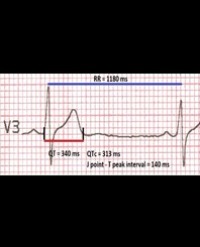
The short QT syndrome (SQTS) is a cardiac channelopathy associated with a propensity for cardiac arrhythmias in persons with a structurally normal heart [1-3]. Although victims of sudden cardiac death (SCD) tend to fit in certain categories, the cause of SCD may be sometimes completely unpredictable. Herein, we present the case of a young man with a history of succesfully resuscitated SCD and recurrent syncopal attacks with unknown etiology. A 20-year-old man presented to our cardiology out-patient clinic due to several episodes of transient loss of conciousness not associated with emotional stress or exercise during the last 6 months. The patient was afebrile with blood pressure of 110/70 mmHg, heart rate of 60 bpm, and oxygen saturation of 99% by pulse oximetry. Cardiac examination showed a regular heart rhythm with no murmurs. The rest of the physical examination was unremarkable. Electrocardiography (ECG) demonstrated a sinus rhythm, 55 bpm; PR interval: 132 ms; QRS duration: 85 ms; QTc: 313 ms (Bazzet formula); and J-point to T-wave-peak interval: 140 ms (Figure 1).

Mustafa Yurtdaş1*, Nesim Aladağ2 and Yalin Tolga Yaylali3


Article Image 1

Role of Nutraceuticals in Ischemic Heart Disease

Cardiovascular Disease (CVD) is now the most common cause of death in the 20th century and driven by industrialization, urbanization and associated lifestyle changes, it is taking place in every part of the world among all races, ethnic groups and cultures. In India CVD has increased in an alarming rate and has accounted for 32% deaths in 2000. According to the World Health Organization (WHO) 60% of the world’s cardiac patients will be Indian by 2010 [1]. Ischemic Heart Disease (IHD), to a large extent, is preventable. This is evident from studies in some countries where incidence of heart attacks and strokes has come down by over 25% by an aggressive approach on preventive aspects like avoiding smoking, doing more physical exercise, control over eating (especially fats, cholesterol rich foods and refined sugars), mental relaxation and effective control of high blood pressure, preferably by non-drug measures [2] Nutrients as dietary supplementation like vegetables and fruits decreasing the risk of development of various diseases including cardiovascular disease (CVD) [3]. Huge amount of antioxidants present in the vegetables and fruits may protect the myocardium either by inhibition of development of atherosclerosis or by inhibiting the oxidation process of Low Density Lipoprotein (LDL) [4]. Polyphenolic compounds are majorly present in the fruits, vegetable and other plant sources like oils with possible cardio protective and other medicinal properties [5]. Various researchers proved the antioxidant, antithrombotic effect of flavonoids and also inhibiting the cellular oxidation process [6-8]. Apples, Onions, tea, various cooking oils, broccoli and red wine are rich in flavonoids and most of the population in the western countries like USA, Europe and North America including these in their diet, but effect of these nutrients in CVD not well documented [5].

Mohamed Saleem Thattakudian Sheikuduman1*


Article Image 1

Echocardiography and Doppler Imaging In Cardiology: Multi-Valvular Involvement in Chronic Rheumatic Heart Disease

43 year female patient with multivalvular chronic rheumatic heart disease with Transthoracic 2- Dimensional Echo cardiographic (TTE) and Doppler evidence of 1. Severe Mitral valve stenosis MS with Mitral Valve Area (MVA) 1.01cm2 with mild to moderate mitral regurgitation, dilated Left Atrial Appendage (LAA). 2. Severe Aortic valvular stenosis with Aortic Valve Area (AVA) 0.74 cm2 calculated by continuity equation (CE) with moderate to severe Aortic Regurgitation (AR). 3. Severe Tricuspid Stenosis (TS) with TVA: 0.75 cm2 with moderate Tricuspid Regurgitation (TR). 4. Moderate Pulmonary Hypertension (PH) with PAP: 36.4 mmHg. 5. Mild pulmonary stenosis with thickened pulmonary valves [Figures 1-4].

Virendra C Patil1*


Article Image 1

Yoga and Cardiovascular Health: Exploring Possible Benefits and Postulated Mechanisms

Background: Yoga as a mode of therapy has become extremely popular, and a great number of studies and systematic reviews offer scientific evidence of its potential in treating a wide range of psychosomatic conditions. Healthy life can be considered as a by-product of practicing yogic techniques since it has been observed that yoga practitioners are physically and mentally healthier and have better coping skills to stressors than the normal population.

Aims and objective: This review paper details some of the health promoting benefits of yoga with regard to cardiovascular health and discusses mechanisms for such beneficial physiological, biochemical and psychological effects. Psycho-neuro-endocrine changes including correction of Gamma Amino-Butyric Acid (GABA) activity, and parasympathetic activation coupled with decreased reactivity of sympathoadrenal system and Hypothalamo-Pituitary-Adrenal (HPA) axis are highlighted.

Conclusion: Though most studies and reviews suggest a number of areas where yoga may be beneficial for cardiovascular health, more research is required to establish these benefits conclusively. It is important to develop objective measures of various mind-body therapies and their techniques while including them in intervention trials. In conclusion, we can say that yoga has preventive, promotive as well as curative potential as an adjunct therapy and that a yogic lifestyle confers many advantages to the practitioner.

Ananda Balayogi Bhavanani1*