Research Article | Volume 3 - Issue 1 | Article DOI :
Download PDF
Xingyang Yi1, Jing Lin2*#, Chun Wang1, Ruyue Huang2, Zhao Han3*# and Jie Li1
1Department of Neurology, People’s Hospital of Deyang City, China
2Department of Neurology, the Third Affiliated Hospital of Wenzhou Medical University, China
3Department of Neurology, the Second Affiliated Hospital and Yuying Children’s Hospital of Wenzhou Medical University China
Corresponding Author:
Jing Lin, Department of Neurology, the Third Affiliated Hospital of Wenzhou Medical University, 108 Wanson Road, Ruan City, Wenzhou 325200, Zhejiang, China, Tel: 86-577-65866013; Fax: 86-577-65866013
Zhao Han, Department of Neurology, the Second Affiliated Hospital and Yuying Children’s Hospital of Wenzhou Medical University, Wenzhou 325027, Zhejiang, China
Keywords
Aspirin; Ischemic stroke; Resistance; Platelet function testing; Nonresponse
Abstract
Background: Antiplatelet therapy nonresponse is associated with worse clinical outcomes. The aim of this study was to investigate the association of clinical outcomes with platelet function-guided modifications in antiplatelet therapy in patients with ischemic stroke.
Methods: This is a retrospective, multicentre study. From August 2010 to December 2014, 812 patients with ischemic stroke underwent platelet function testing using platelet aggregation. Aspirin nonresponse was defined as a mean platelet aggregation ≥20% with 0.5 mM arachidonic acid and/or ≥70% with 10 μM adenosine diphosphate. Antiplatelet therapy modification was defined as any increase in antiplatelet therapy after testing. Clinical outcomes were compared between patients with and without antiplatelet therapy modifications using univariate and propensity score-adjusted analyses.
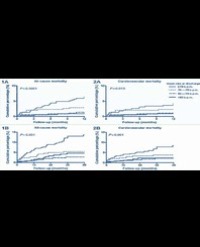
Results: Among 812 patients, 223 patients had aspirin nonresponse, 204 patients were modified in antiplatelet therapy after platelet function testing. The incidence rates of ischemic events, death, or bleeding events were not significantly different between the patients with and without antiplatelet therapy modification. However, in patients with aspirin nonresponse, antiplatelet therapy modification was associated with decreased ischemic events (hazard ratio, 0.68; 95% CI, 0.61-0.95; P = 0.01) and ischemic stroke (hazard ratio, 0.71; 95% CI, 0.64-0.99; P = 0.04) compared with no modification in antiplatelet therapy. No differences in bleeding events were observed between two groups.
Conclusions: In patients with aspirin nonresponse, platelet function-guided modification in antiplatelet therapy after an ischemic stroke was associated with significantly lower rate of ischemic events. The platelet function testing is may be useful to guide antiplatelet therapy modification.
Citation
Yi X, Lin J, Wang C, Huang R, Han Z and Li J. Platelet Function-Guided Modification in Antiplatelet Therapy after Acute Ischemic Stroke is Associated with Clinical Outcomes in Patients with Aspirin Nonresponse. SM J Cardiolog and Cardiovasc Disord. 2017; 3(1): 1008s1.