Back to Journal

Annals of Burns and Trauma

Risk Factors for Infection and Mortality in Burned Children: Where are we going?

[ ISSN : 3068-0905 ]

Abstract Citation Buenos Aires -Argentina However what can we change to avoid them? References
Details

Received: 22-Sep-2017

Accepted: 26-Sep-2017

Published: 29-Sep-2017

Rosanova MT*, Stamboulian D and Lede R

Department of Epidemiological and Infectious Diseases, Hospital J P Garrahan, University of Buenos Aires, Argentina

Corresponding Author:

Rosanova MT, Department of
Epidemiological and Infectious
Diseases, Hospital J P Garrahan,
University of Buenos Aires, Argentina;
Tel: +54 11 4122-6000;

Keywords

Burns; Morbidity; Mortality; Infection; Grafting; Balneotherapy; Risk factors

Abstract

Burns are very frequent and affect approximately 1% of the general population every year. The
immunocompromising effects of burns, hospital stay; diagnostic and therapeutic procedures put
those patients at increased risk of morbidity and mortality. Pediatric burn patients are susceptible
to a broad spectrum of infections representing the most common and severe complication in this
population.

Over the last few years patient survival after burn injury has increased; however, despite advances
in the management of burn patients, infections remain the most common cause of morbidity and
mortality.

Citation

Rosanova MT, Stamboulian D and Lede R. Risk Factors for Infection and Mortality in Burned Children: Where are we going? Ann Burns and Trauma. 2017; 1(1):1002.

Buenos Aires -Argentina

Burns are very frequent and affect approximately 1% of the general population every year.The immunocompromising effects of burns, hospital stay; diagnostic and therapeutic procedures put those patients at increased risk of morbidity and mortality. Pediatric burn patients are susceptible to a broad spectrum of infections representing the most common and severe complication in this population.

Over the last few years patient survival after burn injury has increased; however, despite advances in the management of burn patients, infections remain the most common cause of morbidity and mortality.

In burn units in developing countries mortality is very high and an important to prevent.

Reported mortality varies between 3.5% and 7%, and infections are the main cause of death in burn units.

Studies on mortality focusing on risk factors in the pediatric population remain scarce. Studies on risk factors associated with the development of infection and mortality are necessary.

In our multivariate analysis published about risk factors for infection in burn children [1] the presence of venous lines, antibiotic prophylaxis, and graft requirement were independent risk factors for infection in burned children.

However what can we change to avoid them?

The presence of a line or catheter was an independent risk factor for infection and, since this may be a modifiable risk factor, prevention measures should be maximized at the time of line or catheter insertion and while the vascular access is maintained.Infection prevention has been attempted with the use of antibiotics-impregnated lines or catheters, more frequent line or catheter replacements, a strict control of the insertion procedure, among other measures. Results have been variable.Colonization was registered more frequently in the catheter close to the burned area.Thus some authors concluded that the line or catheter should not be inserted near the burned area or replacements should be more frequent. In pediatric patients, this is complicated by the lack of venous access and burn extension on the child’s total body surface area.

A graft is considered as the best definitive treatment and has proven to be useful for infection prevention. Graft requirement was an independent predictive factor for infection in our patients. However, since this is correlated with burn depth and a greater burned body surface area, it could be concluded that these factors would be related to the fact that the graft was not a protection factor against infection or that, in average, the graft was placed later in the infected group.

One of the challenges in burn units at the time of preventing infections is the adequate use of antibiotics, whether topical or systemic.We concluded that, in children, the routine use of prophylactic antibiotics is not beneficial and may increase the risk of multi-resistant germs so education for the prudential use of antibiotics is very important tool in burn units.

Other risk factors associated with infections are mechanical ventilation which has been related to ventilator-associated pneumonia in critical patients.In our study, it was not an independent risk factor for infection. A urinary catheter is associated with the risk of urinary tract infection.In our series, it was not an independent risk factor for infection. Balneotherapy can be a potential source for microorganism transmission that may be avoided if recommendations for prevention are adequately followed. In this study, balneotherapy was not an independent risk factor for infection.

A burn patient may die because of different causes: shock in the first hour’s post-burn, respiratory failure, usually secondary to inhalation syndrome, multiple organ failure secondary to the extension and deepness of the burn wound, among others.

Risk factors for mortality are not well known and strategies for their prevention and the prompt referral of the patients to specialized centers cannot be implemented sometimes.

Awareness of risk factors related to increased mortality in burn patients allow for extreme safety measures and adequate referral of patients to tertiary care centers to be implemented.

In our study about risk factors for mortality in burn children [2] the high mortality rate (15%) could be attributed to the fact that our facility is a referral center for critical patients, and may have caused patient selection bias. Infection was the leading cause of death.

Age ≤ 4 years,Garcés’ score 4 (severity´ score),colistin use in documented multi-resistant infections,mechanical ventilation and graft requirement were independent variables associated with mortality.

Age less than four years has been considered as a major risk factor for mortality in children in line with our report.

A high Garcés’ score was significantly associated with a higher risk of death.Type B,“full thickness” burns has been viewed as a risk factor by several authors a finding that was confirmed in the present study.

Inhalation syndrome is a clear and strong predictor of mortality. In univariate analysis inhalation syndrome was a predictor of mortality in our patients but not significant in multivariate analysis. Nevertheless, requirement of mechanical ventilation was significantly related to mortality and may indirectly reflect this condition in some cases.

Infectious complications are associated with increased risk of mortality and the development of sepsis is a predictor of poor outcome. The majority of patients in our study died because of sepsis. Multiresistant Acinetobacter spp. and P. aeruginosa have emerged as important microorganisms in critical areas such as burn units and are related with increased mortality. A high proportion of infections in our study were caused by multi-resistant P.aeruginosa and Acinetobacter spp.

The use of Colistin in documented multi-resistant infections was associated with mortality in our series. It is possible that this association indirectly reflects the impact of multiresistant Gram negative bacteria, although univariate and multivariate analyses did not show a relationship between type of infection, type of microorganism and mortality.

Early surgical excision and temporary or permanent closure with grafts are important measures for prevention of infections. In our series graft requirement was a protective factor for mortality as pointed out in the literature.

Knowledge on risk factors for infection and mortality could be useful for the development of strategies to prevent this outcome which together with adequate referral to specialized centers will warrant a better management of these vulnerable patients.

Although the sample size of the papers commented are not large enough to draw definitive conclusions, these findings are important and serve as the foundation to continue studying these patients to collect a larger population to evaluate risk factors for infection and mortality in burn children and how to prevent them.

There remains much to be done to prevent infection and death in burned children: An important future challenge!

References

1. Rosanova MT, Stamboulian D, Lede R. Infections in burned children: epidemiological analysis and risk factors. Archivos Argentinos de Pediatria. 2013; 111: 303-308.

2. Rosanova MT, Stamboulian D, Lede R. Risk factors for mortality in burned children. The Brazilian Journal of Infectious Diseases. 2014; 18: 144-149.

Other Articles

Article Image 1

Skin Reaction on Face Following the Use of Cloves (Syzygium aromaticum)

Clove (Syzygium aromaticum) (Figure 1) is a plant-derived spice that has been traditionally used for centuries as food preservative and as medicinal plants [1].

The anti-inflammatory, antioxidant and bactericide activities of clove are mainly due to its major components, which is the eugenol with a concentration rate ranging from to (77-95%) [2,3].

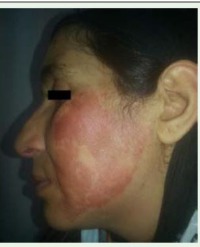
Clove is generally safe when taken in foods in lower concentrations [4], however, it is not recommended as a topical application on skin due to insufficiency of safety and toxicity data [5]; it was found to be highly cytotoxic for human fibroblasts and endothelial cells [6] leading to allergic skin reactions (burning, hives, itching, irritation, rash…), ulcer formation and/or tissue necrosis [7].

Samir El Mazouz1, Abdelmoughit Echchaoui1*, Narjis Badrane2 and Majda
Askour3


Article Image 1

Chemical Burn Injury Secondary to Airbag Deployment: A Case Report and Literature Review

Background: Burn wounds caused by airbags deployment are infrequent, and with the increasing use of these safety feature in cars the documentation and sharing of the information related to these injuries is important to help improve the design of airbags and give the treating clinicians some background knowledge when treating injuries of similar nature.

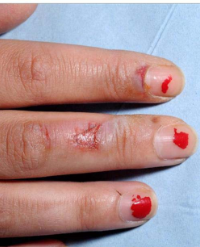
Case presentation: This is a case report of lady who sustained a chemical burn injury to her finger following the deployment of airbags when she had a frontal car collision. The pH of the wound has helped to establish the pathophysiology of the wound.

Conclusion: Thorough history and examination help to detect minor injuries which can be overlooked otherwise. Airbags are associated with both friction and chemical burns, and pH of the burn wound helped in differentiating between them, and decides on first aid and appropriate management and follow ups.

Diaa Othman*, Farhan Akram and Mohammad Anwar


Article Image 1

MRI-Induced Burns from ECG Leads: Thermal or Electrical Burns?

Burns are a common global cause of injury; however iatrogenic burns are rare and preventable mode of injury. We report two cases who sustained superficial partial thickness burns from ECG monitoring leads during Magnetic Resonance Imaging (MRI). The two patients have sustained 0.2% and <1% superficial partial thickness burn of their Total Body Surface Area (TBSA) respectively. Common features included a relatively long duration of spine MR scanning (90 and 30 minutes) and high Body Mass Index (BMI). Both patients made uneventful recovery and were discharged within 24 hours of admission. It is still uncertain whether injuries were thermal or electrically-induced, however several mechanisms have been implied. These include electromagnetic inductionheating, the antenna effect and current induction through a closed loop. In this report, we discuss the proposed mechanisms of injury and highlight the fundamental need for staff education, and preparing national guidelines and safety checklists to prevent similar injuries in the future.

Othman D*, Abdel-Rehim S and OBoyle C


Article Image 1

Epidemiology of Burns Patients in a Tertiary Care Hospital in South India -A Retrospective Analysis

Burns are major health hazards which are associated with high mortality and morbidity rates. Burns management in developing countries is a major challenge due to inadequate access to burn care facility along with poorly equipped health care system. Although we are faced with a high burden of burns in our country, appropriate research on burns is still inadequate. We present our data of burns patients from a single center tertiary care hospital in south India.

Aim: To analyze various demographic characteristics, clinical and microbiological profile along with outcome of all burns patients admitted to our hospital.

Methods: This study was a retrospective analysis of burns patients admitted to the Critical Care Unit of Apollo Speciality Hospital, Vanagaram and a tertiary care facility in Chennai over a period of 3 years. Data such as age, gender, co-morbidities, type and degree of burns, percentage of burns and length of stay, mortality rate and infection rate were analyzed.

Results: There were a total of 94 burns patients included in the study. Amongst these, 61 patients (65%) were males and 33 patients (35%) were females. A majority of our burns population, 72% (n=68), belonged to age group from 21-50 years with a mean age of 40.50 years (SD±17.18).Mean total body surface area involved among burns was 48.56 (SD±21.08). Thermal burns were the commonest type of burns seen in 70%patients (n=66). These included flame burns in 49% patients (n=46) and scald burns in21% patients (n=20).Patients who presented to us within 6 hours post burns were 46% (n=43). Around 60% (n=56) patients had a hospital stay duration of ≤ 2 weeks. Infection rate among our patients was 62.8% and a mortality rate of 37% (n=35) was observed.

Conclusion: We highlight key demographic, clinical and microbiological data of all burns patients from a single center tertiary hospital in south India. This knowledge should help develop better strategies for management and prevention of mortality due to burns.

Ebenezer R1*, Rohit V1 , Isabella P2 , Nagarajan Ramakrishnan1 and Ganapathy

Krishnan3


Article Image 1

Pattern of the Burn Wounds Infections in Bahrain Defence Force Military Hospital

Background: Loss of skin as the first line of defence suppress immune system, extend hospital stay and makes burn patients more vulnerable to acquire healthcare associated infections. Such infections become the reason for mortality and morbidity in burn patients. Therefore, continuous monitoring of the pattern of nosocomial infection and drug resistance is necessary for assuring patient safety and healthcare quality improvement.

Aim: To describe the microbial profile of infections among burn patients admitted to Bahrain Defence Force Military Hospital.

Method: This is a retrospective cohort study involving 295burn patients. Wound swab method was used to isolate the microorganisms first on admission and then on suspicion of infection. The overall percentage of wound culture positive cases was 11.8% and the wound infection percentage was 5% of the total number of patients admitted to the unitA total of 126 swabs was performed from the burn wounds.

Results: Gram+ bacteria S.aureus was predominant in initial cultures. It was however, succeeded by Gram- bacteria, Pseudomonas, from third culture onwards. Fungal infection with Candida was most prevalent (n=21,16.7%). With TBSA >30% polymicrobial growth was observed which tend to increase with increase length of hospitalization. A greater proportion of patients (42.9%, n=15) had acquired healthcare associated infections and was negatively associated with increased length of hospitalization(r=-0.418, p=0.012).

Conclusion: 5% of the total patient population was categorized as health care associated infection cases. Gram negative bacteria, Pseudomonas were the prevalent microorganism isolated from wound infection of the burn patients.

Mohammad Abdulaziz Dahag, Nayef A Louri*, Nigamananda Dey and Siji Susan Philip


Article Image 1

Mesenchymal Stem Cells and Regenerative Quantum Medicine: The Novel A, B and C of Burns Treatment

Large burns are extensive soft tissue injuries with severe deep skin damage associated with high mortality [1-2]. This type of lesions can also lead to mental distress and chronic ilness but specially to scars, contractures, limitation of motion and bad quality of life [3-5]. Treatment of large burns as well as chronic nonhealing wounds have always been difficult medical problems and many different methods have been used to treat such injuries [6-7]. Current wound treatments are ineffective in many cases, so alternative novel types of therapy are needed and should urgently be understood and correctly explored. Abnormal damaged body environments can promote wound healing and tissue regeneration by local biochemical “alarm signals”, but usually these innate mechanisms are not enough to reach complete restoration of normal skin, specially in an acceptable time [8-12].When these impairments in wound healing arise, it is also often followed by an increased susceptibility to infection, further complications, failure of other organs and death [13-14]. In these circumstances, time management should be a crucial fundamental issue to be considered. In the near future we will not only ask for better novel therapeutic approaches but also for those that could lead to complete skin healing, restoration of function and acceptable aesthetics in the shortest period of time [ 15-16]. The development of tissue engineering and living skin substitutes started more than 40 years ago with the in vitro culture of keratinocytes as established by Howard Green in 1975 [17-18]. His outstanding discoveries led to the possibility of replacing the epidermis of extensively burned patients by using cultured keratinocytes autografts [19].

Mansilla E1*, Drago H2 , Marín GH1 , Jorrat R2 and Sturla F2


Article Image 1

Eikenella corrodens Wound Infection Secondary to Self-Bite: Case Report

Since Eikenella corrodens is part of the normal oral flora, it can be isolated from fist fight and human-bite injuries. Suspicion of the clinician, collection of adequate specimen, and proper culture technique will improve its isolation in the laboratories. Here we report a case of wound infection due to Eikenella corrodens in a 27-year-old female patient after biting herself during examination at the emergency ward.

Kuzucu EA, Çalışkan E, Bayrak ZS, Öcal D, Çağatay M, Saltaş H and Erdem G*


Article Image 1

Fatal Multi-Organ Failure Following Occupational Chemical Burn after Exposure to Phenolic Acid: A Case Report and Literature Review

Aim: Describe the complications and management of a rare case of burn injury by phenolic acid.

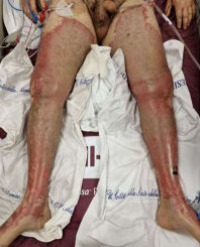
Methods: A 45-year-old truck driver sustained a 35% total body surface area (TBSA) burn from an accidental phenolic acid injury. After initial treatment and decontamination with a polyethylene glycol solution, he arrived at the hospital intubated and on vasopressor support. No other traumatic injuries were found. Local assessment revealed a 35% TBSA burn of partial and full thickness on the perineal region, legs, right arm, and a small area of the abdomen. His Revised Baux score was 97. During his recovery, the patient developed hepatic insufficiency followed by renal failure, which required dialysis. A few days later, a total body CT scan revealed multiple ischemic cerebral areas. After 12 days from admission and episodes of bronchial bleeding, the patient died due to a multiorgan failure. A skin biopsy and toxicological analysis for phenol levels were performed during his hospital stay.

Results: In addition to the clinical case analysis, a review of the medical literature regarding cases of death following phenol burns, a histological analysis of the biopsy tissue collected and an analysis of the blood levels of phenol and its derivative o-cresol were conducted.

Conclusions: This case report illustrates the lethality of phenol chemical burns and emphasizes the critical role of multidisciplinary management in addressing multi-organ complications

Alberto Schiarillo1, Anna Pensa1, Filippo Mariano2,3, Francesco Lupariello4, Catalina Ciocan5,6*, Daniela Risso1 and Maurizio Navissano1