SM Virology

Archive Articles

Article Image 1

The Oncogenesis of John Cunningham Virus

The John Cunningham Virus (JCV) was isolated in culture from the brain of a case of Progressive Multifocal Leukoencephalopathy (PML) complicating Hodgkin’s disease. JCV contains icosahedral capsids that are composed of three structural viral proteins and small, circular, double-stranded DNA genomes. JCV is a member of the polyomaviridae family and infects a large proportion of the population worldwide and may cause PML upon immunodeficiency. When the immune system is defective, JCV may be activated. JCV can be found in tonsillar tissue, and the respiratory and digestive tracts are deemed to be the leading sites for JCV to enter human body. Transgenic mouse model showed that T antigen might induce lung and lens tumors with tissue specificity, which is not linked to alternative splicing of its intron. Taken together, T antigen is considered to play a significant role in JCV oncogenesis. In future, we will establish transgenic mice expressing T antigen in various cells using cell-specific promoter and clarify the pathomolecular mechanisms of T-antigen-related tumors and its tissue specificity of oncogenesis.

Lei Fang1 and Hua-chuan Zheng2*


Article Image 1

Effects of Antiviral Treatment on Chronic Hepatitis B-Related Hepatocellular Carcinoma and Recurrence after Surgical Treatment

Hepatocellular Carcinoma (HCC) is one of the most common and aggressive malignancies, and the high rate of recurrence is a major obstacle to improving prognosis. Chronic Hepatitis B Virus (HBV) is one of the major causes of HCC, and high viral replication rate and related hepatic inflammation are major risk factors of HCC recurrence after surgical resection. Current approved antiviral medications for the treatment of chronic hepatitis B are interferon-α (IFNα) and nucleos (t) ide analogues (NAs), including lamivudine, adefovir dipivoxil, telbivudine, entecavir, and tenofovir disoproxil fumarate. IFNα treatment significantly reduces HBV-related HCC in sustained responders, but its usage is limited by adverse effects. NAs treatment significantly reduces disease progression into cirrhosis and thus HCC incidence, especially in HBV e antigen-positive patients. However, the long-term continuous treatment of NAs may result in drug resistance due to viral mutations. The effect of IFNα treatment on HCC recurrence remains controversial, while evidence has suggested that postoperative NAs therapy can improve both recurrence-free survival and overall survival in patients with HBV-related HCC. There is a great need to develop more effective and affordable new agents with a better safety record. More high-quality prospective trials are needed to quantitatively estimate treatment efficacy and identify predictive factors of HCC development and progression.

Xiaomei Hou1, Jue Wang2 and Yan Du2*


Article Image 1

Advances in GCRV Research: Virus Molecular Type and Immunogen

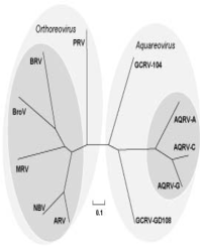
Grass carp reovirus, GCRV, belongs to the genus Aquareovirus (AQRV). It is the most virulent species of AQRV, and infection by GCRV causes hemorrhagic disease in grass carp. A new strain, GCRV-GD108, was found in China. Significant differences were found between GCRV-GD108 and GCRV as well as between GCRVGD108 and other known AQRVs. Moreover, similarities were found between GCRV-GD108 and Orthoreovirus (ORV), suggesting a closer evolutionary relationship between GCRV-GD108 and ORV than between GCRVGD108 and the known AQRVs. The discovery of different virus molecular types of GCRV indicates the importance of molecular diagnosis and the development of a specific vaccine. Vaccines have been developed that include inactivated tissue vaccines, inactivated cell vaccines, and attenuated viral vaccines. Great efforts have been made in recent years to investigate immunogen for the preparation of genetically engineered vaccines, which are expected to provide protection for the cultured grass carp.

Xing Ye*and Yuan-yuan Tian


Article Image 1

The Power of GPR for Predicting Liver Fibrosis and Cirrhosis May Be Affected By Different Scoring Systems of Liver Fibrosis in Patients with Chronic Hepatitis B

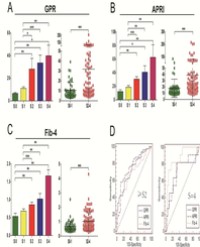
We read with interest the article by Maud Lemoine et al [1] recently published in Gut. They found that Gamma-Glutamyl Transpeptidase (GGT)-to-Platelet Ratio (GPR) may be acted as a simple, non-invasive and inexpensive alternative to liver biopsy and Fibro scan laboratory model in sub-Saharan Africa. The GPR was significantly better than Aspartate Transaminase-To-Platelet Ratio Index (APRI) [2] and Fib-4 (based on age, ALT, AST and platelet count) [3] in predicting liver extensive fibrosis (≥F2) and cirrhosis (≥F4) in patients with Chronic Hepatitis B (CHB) in the Gambia and Senegal, but not in France. So we hypothesized that the predictive efficiency of these 3 markers may be heterogeneous in different race.

Xueping Yu1,2, Jiming Zhang2* and Zhijun Su1*


Article Image 1

Vital Role of Phylogenetic Analysis as Evidence in Illegal Investigation of Virus Transmission

During recent years phylogenetic analysis has become progressively popular as a tool for the criminal investigation of viral transmission, where it is used to derive the ancestral relationships of viral infections from sampled genome sequences. It has been used to cases involving the transmission of the fast-evolving human immunodeficiency virus (HIV) [1], Hepatitis B Virus (HBV) [2,3], hepatitis E (HEV) [4] and for tracking viral transmission in animal field. For example, for the first time phylogenetic analysis determined that the source of viral disease in aquaculture [5,6,7]. Aspects of the transmission of these viruses are impressed on the genetic variation of genomes [8]. These data revealed information about the patterns of virus emergence, viral epidemiology and evolutionary dynamics [9,8]. Analysis of molecular phylogenetic relationships must be based on a domain with a suitable level of evolution for the issue under investigation. Evaluation of recent transmission events requires the analysis of fast-evolving regions, whereas older events must be studied by sequencing more stable regions [2]. This analysis investigates small difference in virus genome using computational methods to calculate the variation between strains of viruses. This process is a critical complex scientific process which undertaken by virologist. The result of phylogenetic analysis has recently applied in illegal trials as evidence of responsibility for virus transmission [10]. In these events, the expert analysis of virologist has been discovered to be of critical importance. In the other hand, these trials can be applied to acquit individuals and keep out the possibility that defendant was responsible for virus transmission [10,11,8]. It is important to note that molecular analysis cannot prove the transmission virus between two individual, but it can support any information on the direction of that transmission [10,1]. It is necessary for molecular phylogenetic analysis to use the right comparison samples, because inappropriate samples could overstate the relationship between two viruses (of different geographical origin) as being conspicuously unique. In addition, many viruses frequently recombine and cause further opportunity for genetic novelty viral transmission from data commonly based on phylogenetic analysis [8]. Also, models of virus transmission and early diversification are the most important result of phylogenetic study. For example, Zika virus emerged in Africa and now circulates on all inhabited continents [12,13]. In another study demonstrated that isolated Dengue virus type 1 strain from Indonesia has a close phylogenetic relationship with strains of Japan [14]. In the recent decade, phylogenetic studies have matured with focus on the human RNA viruses such as influenza virus, HIV, dengue virus and HCV [8-10,15]. However, there are wide ranges of viruses to which phylogenetic analysis are used [9,16-18]. This review shortly outlines the importance of phylogenic analysis for viral transmission with focus on virus origin and shows phylogenetic approach to identify ecological and biological of virus transmission.


Maryam Dadar*


Article Image 1

Serosurveillance of Foot-and-Mouth Disease in Ruminant Population of Karnataka, India

Foot-and-Mouth Disease (FMD) is endemic in India and three serotypes viz, O, A, and Asia-1are prevalent in the country. In the current study a total of 7923 serum samples were collected randomly from 4639 cattle, 1363 buffaloe, 1187 sheep and 734 goats from different districts of Karnataka state, India. The samples were screened for antibodies against Non-Structural Proteins (NSPs) and Structural Proteins (SPs) of FMD virus to gather evidence with respect to the FMD virus circulation. The study revealed NSP antibodies in 33% bovines and 16% small ruminants. Higher level of NSP antibodies was observed in cattle (35%), buffaloes (27%), goats (23%) and lower prevalence in sheep (12%).The antibodies against SP was observed in 78% bovines and 18% small ruminants. The study reiterates the importance of strengthening of FMD surveillance in small ruminants as they could pose a potential risk of virus transmission to cattle.

Raveendra Hegde1*, Madhusudan Hosamani2 , Sreevatsava V1 , Rashmi KM1 , Srikanth Kowalli1 , K Nagaraja1 , NK Dharanesha1 , CM Seema1 , GV Nagaraj1 , K Srikala1 , KJ Sudharshana1 , SheshaRao1 , Rajashekar B1 , P Giridhara1 , and SM Byregowda1


Article Image 1

Discovery and Roles of Virus-Encoded RNA Silencing Suppressors

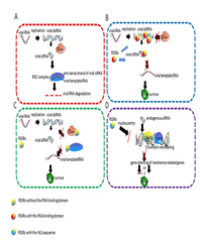
RNA silencing is a general surveillance system in plants and animals which could protect hosts from virus infection. However, many virus species survived by expressing a series of proteins named as RNA Silencing Suppressors (RSSRs) to counteract this defense system. This review elaborated the newly discovered RSSRs encoded by virus including the recently discovered polymerase slippage product and some newly-identified RSSRs in mammalian cells. This review will also provide a comprehensive understanding of the role of RSSRs during the virus infection, especially with regard to its newly identified function in epidemic modification in hosts.

Ma Lin*


Article Image 1

Zika and Its Preparedness in Nepalese Scenario

Zika virus came to known to public in 1947, when it was first isolated from a Rhesus monkey from Uganda [1-3]. Due to its unremitting spread in past decade, zika virus created havoc and gained its recognition as one of the prominent threat in public health across the globe [4-7]. In the March of 2015, Brazil confirmed its first zika infection. Following the zika cases, country had to face erupted increment in microcephaly cases [8]. In next nine month span, the cases of microcephaly increased from 150 cases to 400. After observing this trend, PAHO (Pan American Health Organization) issued an epidemiological alert on December 1st 2015, warning a suspected link between Zika and microcephaly [9].

Bishnu Prasad Upadhya1, Rajani Malla1, Krishna Das Manandhar1, Birendra Prasad Gupta2*, Anurag Adhikari2 , Ramanuj Rauniyar3, Chirik Shova Tamarkar4 , Bimlesh Kumar Jha5 and Roshan Kurmi6


Article Image 1

Long-Term Risk of Hepatocellular Carcinoma in Patients with Chronic Hepatitis B with Normal Alanine Aminotransferas

Background: The Alanine Aminotransferase (ALT) level is considered as a risk factor for the progression to liver cirrhosis and Hepatocellular Carcinoma (HCC) in patients infected with Hepatitis B Virus (HBV) and remains a subject of debate.

Methods: We prospectively compared the incidence of HCC between HBV infected patients with normal ALT and those with elevated ALT.

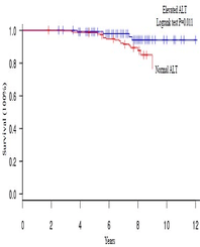
Result: A total of 378 HBV-infected patients (102 with normal ALT and 276 with elevated ALT) were included. The median follow-up period was 8.2 years. The incidence rates of HCC development were significantly lower in the normal ALT patients than in patients with elevated ALT (0.55 vs 2.20 per 100 person-years, P = 0.021, while the incidence rates of hepatic decompensation (0.43 vs 1.23 per 100 person-years) and survival (53.8% vs 47.4% at 10 years) did not significantly differ between the two groups (Kaplan-Meir analysis). The main causes of death were on-hepatic diseases in patients with normal ALT. Multivariate Cox analyses model revealed that the risk of HCC was lower in patients with normal ALT than in patients with elevated ALT (hazard ratio (HR), 0.28, Confidence intervals (CI) (0.14-0.78)), while the risk of hepatic decompensation and mortality was the same in the two groups of patients.

Conclusion: The risk for HCC and liver decompensation normal ALT was markedly reduced in HBV-patients with normal ALT. Aged patients with HBV with normal ALT should therefore maintain long-term surveillance for HCC. Future studies aimed to better identify those with remaining long-term risk for HCC are needed.

Blaise K Kutala1,2,3*, Emilie Estrabaud1 , Nathalie Boyer2,3, Corinne Castelnau³, Nathalie Giuily2,3, T Asselah1,3 and P Marcellin1,2,3


Article Image 1

LncRNA: A Rising Star in Virus-Host Cross-Talk during HIV-1 Infection

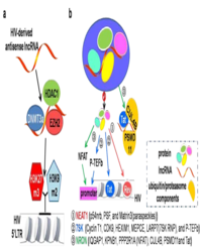
The Human Immunodeficiency Virus (HIV) is a retrovirus that has been aroused worldwide concern, due to its chronic and persistent infection, ultimately leading to a causal result of Acquired Immunodeficiency Syndrome (AIDS). Long noncoding RNAs (lncRNAs) are non-protein coding transcript longer than 200 Base Pairs (bp) and being considered to be key regulators that involved in various biological processes, such as chromatin modification, transcriptional regulation, post-transcriptional regulation, intracellular trafficking and etc. What deserves to be noticed is that lncRNAs are recently being reported to link with viruses closely, and lncRNAs are differentially expressed after a variety of virus infections, including HIV-1 infection. In this paper, we review the rapidly advancing field of lncRNAs, focus on the current progress of lncRNAs in HIV-1 infection, and briefly discuss their different roles in host gene regulation and viral replication during the establishment or maintenance of viral latency. Interestingly, lncRNAs may emerge as novel biomarkers of antiviral drugs and provide potential targets for new therapeutics of AIDS.

Liujun Chen1 , Shanshan Xu1 , Luoshiyuan Zuo3 , Song Han1,2, Jun Yin1,2, Biwen Peng1,2, Xiaohua He1,2 and Wanhong Liu1,2*