Low Frequency Magnetic Field in a CT Area
Introduction : Throughout history it has been proven that electromagnetic fields at uncontrolled levels can be harmful to health. The Computerized Axial Tomography (CT) is a high electromagnetic field generator. In TAC areas where workers are exposed to these radiations for extended periods of time, it is necessary to keep not only ionizing radiation under control, but also non-ionizing radiation.
Goals: Carry out magnetic field measurements in a CT area in a hospital in the city of Havana, compare them with international standards and check the state of the electromagnetic environment.
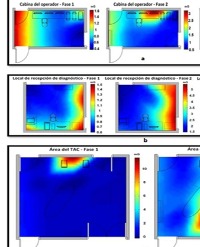
Methods: The magnetic field measurements were carried out using a gaussmeter located one meter above the floor level and punctually meter by meter. To verify the state of the environment, the recommendations of the International Commission on Non-Ionizing Radiation Protection (ICNIRP) in 2010 were used as a point of comparison.
Results: The results showed values below those recommended by the ICNIRP, but very close to those provided by some authors as causing leukemia.
Conclusions: It was concluded that the non-ionizing radiation values obtained in µT do not exceed those recommended by this commission, with respect to occupational exposure, but strict surveillance must be maintained.
Yenisel Díaz Roller1, Janet Carvajal de la Osa1*, Ignat Pérez Almirall1, Alejandro Rivas Gamallo1, Miguel Castro Fernández1 and Iosvany Aguiar Ramos2